Can Eyebrow Hair Transplant in Dubai Improve Brow Symmetry?
Learn how Eyebrow Hair Transplant in Dubai may improve uneven brow density through facial mapping, selective grafting, and precise placement.
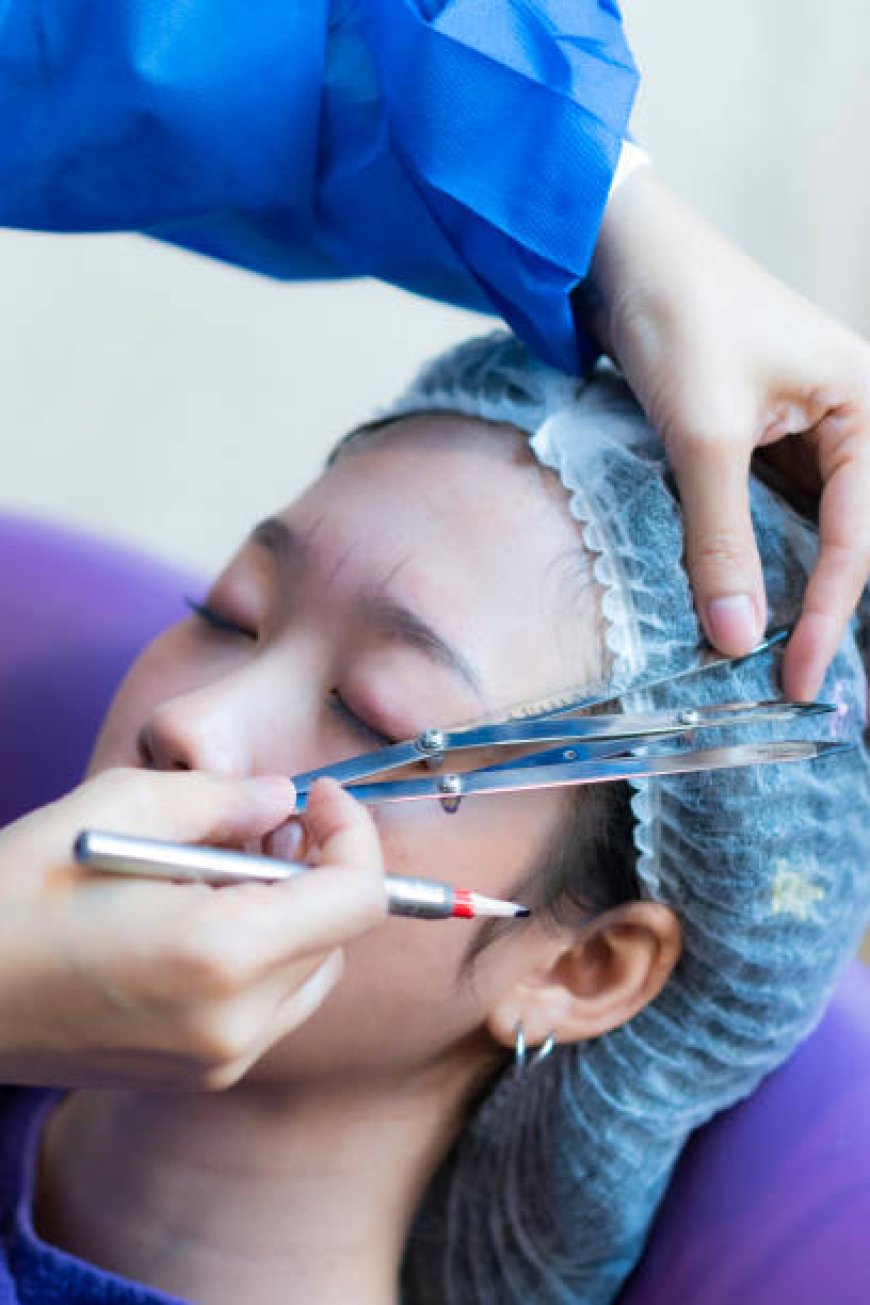
Eyebrows naturally differ slightly from one side of the face to the other, but noticeable differences in hair distribution can make one brow appear heavier, shorter, or less defined. Eyebrow Hair Transplant in Dubai may help address asymmetrical hair density by selectively restoring follicles where one eyebrow has permanently lost coverage.
Why Eyebrow Symmetry Is More Complicated Than Matching Shapes
Symmetry does not mean creating two mathematically identical eyebrows.
The two sides of the face can have different bone contours, muscle activity, skin characteristics, and existing follicle patterns. A successful restoration therefore focuses on visual balance while respecting the patient's natural anatomy.
Density Can Create the Appearance of Asymmetry
One brow may have the correct overall shape but contain fewer hairs through the central section or tail.
This can make that eyebrow appear narrower or positioned differently even when the underlying brow landmarks are relatively similar.
Hair Direction Also Changes Perception
Two eyebrows with similar numbers of follicles can still look different if the hairs grow in different directions.
The angle and orientation of each graft therefore influence the apparent fullness and contour of the brow.
Natural Facial Asymmetry Remains Normal
Minor differences between the left and right side are part of normal facial anatomy.
The objective of treatment is generally to improve a noticeable imbalance without forcing the brows into an unnatural identical pattern.
What Can Cause Uneven Eyebrow Density
Before planning transplantation, the reason for the difference between the brows should be considered.
Previous Plucking
Repeated grooming may affect one eyebrow more heavily than the other, particularly when the patient has historically tried to make both sides look identical.
Trauma or Scarring
An injury affecting one eyebrow can permanently remove follicles and create a localized density difference.
Aging-Related Changes
Hair caliber and density can change over time, sometimes making one side appear more depleted than the other.
Previous Cosmetic or Medical Procedures
A procedure involving the brow or surrounding tissue can alter the visible hair pattern. The clinician should establish whether the difference is caused by actual follicular loss or simply by a change in brow contour.
How Eyebrow Hair Transplant in Dubai Can Address Asymmetry
When asymmetry results from permanent follicular loss, transplantation can be planned selectively rather than adding the same amount of hair to both sides.
Comparing Both Eyebrows
The existing brows are assessed together to identify exactly where the imbalance originates.
The clinician can compare the inner brow, central section, arch, and tail instead of relying on the overall appearance alone.
Mapping the Deficient Side
The eyebrow requiring additional coverage can be mapped according to its own anatomy and the visual relationship with the opposite side.
This avoids simply copying one eyebrow onto the other.
Restoring Only What Is Missing
Selective graft placement can reinforce areas with genuine density deficits while preserving healthy native hair elsewhere.
This conservative approach can be particularly useful when the asymmetry is limited to one section.
The Importance of Direction in Symmetry Correction
Eyebrow hair has a distinctive growth pattern that changes across the brow.
The inner portion, central region, arch, and tail each require consideration of local follicular direction.
Inner Brow Direction
Hairs toward the beginning of the eyebrow generally follow a different orientation from hairs farther outward.
Replicating the existing pattern helps the restored area merge with native follicles.
Arch Direction
Around the arch, the orientation changes as the brow transitions toward its highest point.
A graft placed with an inappropriate angle can become visually prominent even if its density is correct.
Tail Direction
The outer brow gradually tapers and changes direction toward the endpoint.
Adding excessive density or using the wrong orientation can make the tail appear blunt rather than naturally tapered.
Why Selective Grafting Can Be Better Than Equal Grafting
A common misconception is that improving symmetry means placing identical graft numbers on both eyebrows.
That approach may actually preserve the underlying imbalance.
| Situation | Less Suitable Approach | More Targeted Planning |
|---|---|---|
| One brow has a small central deficit | Add equal density to both sides | Reinforce the deficient area |
| One tail is visibly thinner | Redesign both tails | Restore the weaker tail |
| Arch density differs | Copy the denser side exactly | Match visual transition |
| One side has scar-related loss | Treat both brows identically | Assess scar tissue separately |
| Both brows are naturally uneven | Force identical contours | Preserve facial anatomy |
The table illustrates planning principles rather than a guaranteed treatment protocol.
Donor Hair Selection for Symmetry Restoration
Eyebrow transplantation typically uses donor follicles from the scalp. The donor hair needs to be evaluated for characteristics that will work within the eyebrow.
Matching Hair Characteristics
Hair thickness, texture, and growth behavior influence how naturally the grafts integrate.
When only one section is being treated, compatibility can be especially important because the transplanted hairs sit directly beside unaffected native follicles.
Preserving Donor Resources
Selective asymmetry correction may require fewer grafts than full eyebrow reconstruction, but donor planning remains important.
The objective is to use appropriate follicles efficiently while avoiding unnecessary harvesting.
The official treatment information describes individual donor-hair extraction and preparation according to the desired eyebrow shape, direction, and size before implantation.
For patients exploring eyebrow symmetry restoration in Dubai, this individualized approach allows the treatment plan to focus on the specific side or section that lacks density.
How the Procedure Is Performed
Eyebrow transplantation is performed under local anesthesia, and the treatment information describes an approximate two-to-four-hour procedure.
Pre-Procedure Mapping
The brows are assessed from multiple angles and compared with the patient's facial structure.
The intended recipient sites are planned around existing follicles, not simply drawn as a new eyebrow outline.
Individual Donor Extraction
Suitable donor follicles are extracted individually with attention to maintaining their viability.
The characteristics of the donor hair are considered before the grafts are assigned to recipient locations.
Fine Recipient-Site Creation
Small recipient openings are created at carefully selected angles.
This is particularly important for symmetry because an incorrectly oriented follicle can make the treated side appear different from the untreated side.
Individual Implantation
Grafts are placed according to the planned density and directional pattern.
The transition should remain subtle so that new hairs become part of the existing eyebrow rather than forming a separate implanted section.
Recovery and the Symmetry Timeline
Early postoperative appearance does not represent the final level of symmetry.
Temporary swelling or redness can make the treated side look different from the untreated side during the first days.
Early Healing
The treatment information describes redness, swelling, tenderness, and scabbing during the initial recovery period.
Patients should protect the recipient area from rubbing, scratching, and unnecessary manipulation while the follicles establish themselves.
Temporary Shedding
Some implanted hairs may shed during the early growth cycle.
This can occur even when the transplanted follicles remain viable beneath the skin.
Gradual Final Development
The treatment information indicates that visible growth may begin after several months, with fuller maturation developing toward approximately one year.
The final assessment should therefore be made after sufficient time for both growth and hair-direction maturation.
Dubai Factors That Can Affect Recovery Planning
Patients in Dubai may need to consider environmental exposure when scheduling an eyebrow restoration procedure.
Sun Exposure
Strong sunlight is an important consideration during early healing.
Patients should follow their clinician's instructions for avoiding direct exposure and determining when normal sun-protection practices can safely resume.
Heat and Exercise
Outdoor heat and perspiration may make the first recovery days less comfortable.
Strenuous activity should be resumed according to the treating team's instructions.
Air Conditioning
Indoor air conditioning is common in Dubai and can make surrounding facial skin feel dry.
A simple, approved aftercare routine is preferable to experimenting with multiple cosmetic products around the newly treated area.
When Transplantation May Not Be Necessary
Not every difference between the eyebrows represents permanent hair loss.
Mild Natural Asymmetry
Small differences may be part of normal facial anatomy and may not require intervention.
Temporary Shedding
If the follicles are expected to recover, permanent donor-hair transplantation may be premature.
Cosmetic Styling Differences
Brows can appear asymmetric because of trimming, makeup, tinting, or grooming technique. In such cases, a non-surgical approach may be sufficient.
Questions About Eyebrow Symmetry and Transplantation
Can an eyebrow transplant treat only one eyebrow?
Yes. When one side has a localized permanent density deficit, treatment can potentially be limited to that area.
Can transplantation make both eyebrows identical?
The objective is usually improved visual balance rather than mathematical identicalness. Natural facial differences remain part of the final appearance.
Can existing eyebrow hairs be preserved?
Yes. Planning can be performed around healthy native follicles so that the transplanted hairs complement rather than replace functioning hair.
How long before symmetry can be judged?
The result develops gradually. Early swelling and shedding can temporarily affect appearance, while fuller hair growth develops over subsequent months.
Will the transplanted hairs require grooming?
Yes. Scalp-derived eyebrow hairs can continue growing and may need trimming after maturation.
What Patients With Uneven Brows Should Do Next
The first step is to identify whether the asymmetry comes from follicular density, hair direction, brow position, scarring, or natural facial structure.
A specialist assessment can compare both eyebrows, evaluate the donor area, examine the recipient skin, and determine whether selective graft placement could address the specific deficiency.
Patients should also bring photographs from earlier periods when possible. Historical images can help distinguish long-standing natural asymmetry from progressive or acquired hair loss.
The Strategic Investment
Eyebrow symmetry is achieved through controlled restoration rather than simply adding equal amounts of hair to both sides. Accurate mapping, selective grafting, donor-hair compatibility, shallow-angle implantation, and preservation of existing follicles all contribute to a balanced appearance.
For patients considering eyebrow restoration in Dubai, an individualized assessment can establish whether the asymmetry is caused by permanent hair loss and which areas genuinely require additional follicles. Tajmeels Clinic provides personalized eyebrow assessment and restoration planning based on facial anatomy, existing hair distribution, and the specific pattern of brow imbalance.
What's Your Reaction?
 Like
0
 Dislike
0
 Love
0
 Funny
0
 Angry
0
 Sad
0
 Wow
0