FUSS Hair Transplant in Dubai for Large Bald Areas
Explore how FUSS Hair Transplant in Dubai can address extensive bald areas through donor assessment, strip harvesting, graft planning, and placement.
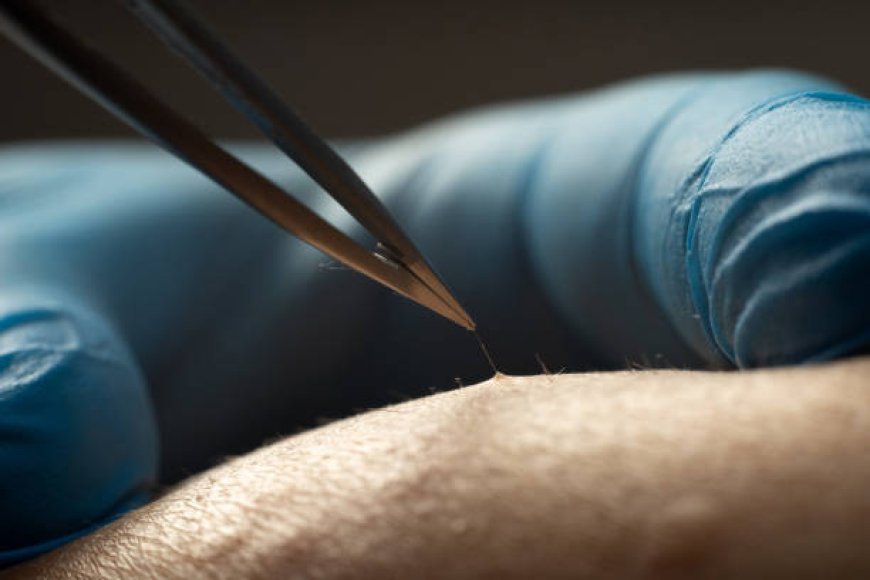
Extensive baldness requires more than simply moving hair into empty scalp; the available donor supply must be matched carefully to the size and priority of the recipient area. FUSS Hair Transplant in Dubai can be considered for selected patients requiring substantial follicular-unit harvesting because the strip technique allows a large number of grafts to be prepared from a defined donor segment during a planned procedure.
The important question is not whether every bald area can be completely covered, but whether the donor region can provide enough viable follicular units to create useful coverage while preserving an appropriate long-term reserve.
FUSS Hair Transplant in Dubai for Extensive Hair Loss
Large bald areas can develop after years of androgenetic alopecia, producing substantial loss across the frontal scalp, mid-scalp, crown, or several regions simultaneously.
In advanced cases, the surgeon has to think in terms of donor-to-recipient ratio rather than treating each bald section independently. The International Society of Hair Restoration Surgery describes FUT/FUSS as strip harvesting in which follicular units are microscopically dissected from the removed strip before transplantation.
Why Donor Supply Determines the Plan
The donor zone is finite. Hair from the permanent or relatively stable donor region cannot simply be replaced after excessive harvesting.
Assessment therefore includes donor density, available surface area, hair characteristics, scalp laxity, previous procedures, and the expected progression of native-hair loss.
Large Bald Areas Need Prioritization
When the recipient area is extensive, the surgeon may prioritize the regions that produce the greatest visible improvement.
For many patients, this means considering the frontal zone and mid-scalp before attempting uniform coverage of the entire scalp. The precise allocation depends on the patient's anatomy and restoration objectives.
FUSS Hair Transplant in Dubai and Graft Allocation
The central challenge in extensive restoration is deciding where each available graft creates the most useful visual coverage.
A patient with a large bald crown may require a different strategy from someone with severe frontal and mid-scalp recession even if their overall bald surface appears similar.
Frontal Zone Allocation
The frontal region usually receives careful attention because it defines the visible hairline and frames the face.
Fine follicular units can be used toward the leading edge, with progressively greater density behind it. This prevents the transplanted hairline from appearing like a sharply drawn boundary.
Mid-Scalp Coverage
The mid-scalp can connect the frontal restoration with the remaining native hair. Density requirements depend on the existing hair pattern and the degree of miniaturization.
If native hairs are still present but weakened, the surgeon must account for them rather than treating the area as completely bald.
Crown Planning
The crown has a different growth pattern from the frontal scalp. Its whorl requires attention to natural direction and radial distribution.
Attempting to fill a large crown with uniform graft placement can consume substantial donor resources, so crown coverage often requires careful prioritization.
A Practical FUSS Hair Transplant in Dubai Planning Model
| Recipient Area | Main Surgical Consideration | Graft Planning Priority |
|---|---|---|
| Frontal hairline | Transition, angle, facial proportions | Fine grafts and controlled density |
| Frontal forelock | Visual framing and central coverage | Moderate-to-high density where appropriate |
| Mid-scalp | Connection with native hair | Strategic density |
| Crown | Whorl direction and surface area | Coverage based on donor availability |
| Extensive diffuse loss | Remaining native hair and future progression | Long-term allocation |
This type of planning prevents the available donor follicles from being distributed evenly simply because the bald area looks evenly exposed.
FUSS Hair Transplant in Dubai and Strip Harvesting
FUSS, commonly referred to as FUT or follicular unit strip surgery, uses a strip of donor scalp rather than extracting follicular units individually with a punch.
After removal, the strip is divided under magnification into follicular-unit grafts. Tajmeels describes donor-strip removal, microscopic follicle dissection, recipient-site preparation, and implantation as distinct stages of its FUT procedure.
Why Strip Harvesting Can Support Extensive Restoration
One characteristic of strip harvesting is that the surgical team can obtain a substantial number of follicular units from a defined donor area.
Clinical literature has described strip harvesting as capable of providing a large follicular-unit yield while minimizing unnecessary follicular transection when the dissection is performed carefully.
This does not mean FUSS is automatically appropriate for every patient with extensive baldness. Donor characteristics remain the limiting factor.
The Importance of Donor Strip Assessment
The width and length of the strip must be planned in relation to scalp laxity, donor density, and the desired graft yield.
Overly aggressive harvesting can increase tension at closure and compromise the long-term donor appearance. The objective is to obtain useful grafts without treating the donor area as an unlimited source.
FUSS Hair Transplant in Dubai for Patients With Advanced Baldness
Advanced hair loss frequently develops over many years. By the time a patient considers surgical restoration, some areas may be completely bald while other regions still contain progressively miniaturized follicles.
This mixed pattern changes the surgical strategy.
Distinguishing Permanent Loss From Miniaturization
A bald-looking scalp is not always biologically identical across its entire surface. Some areas may contain very fine miniaturized follicles that are difficult to see without close examination.
A detailed scalp assessment helps determine which regions actually require transplanted grafts and which may still contain salvageable native hair.
Considering Future Hair Loss
A restoration plan should account for the possibility that existing native hair may continue to thin.
If all available grafts are placed into currently bald areas without considering future progression, the patient may later develop a visually isolated transplanted zone.
Long-term donor management therefore becomes part of the initial surgical design.
Dubai-Specific Considerations During FUSS Recovery
Dubai's hot outdoor environment creates practical recovery considerations for patients returning to work and daily activities.
The scalp should be protected from direct sun exposure during early healing, while strenuous exercise and excessive sweating should be limited according to the surgeon's instructions.
Outdoor Heat and Scalp Protection
Direct ultraviolet exposure is undesirable while the recipient and donor areas are healing. Patients who commute or spend time outdoors may need to modify their routine temporarily.
Protective measures should follow the surgeon's postoperative instructions rather than relying on ordinary cosmetic hair products.
Air Conditioning and Scalp Comfort
Dubai's indoor environments can involve prolonged exposure to air conditioning, which may contribute to a dry or uncomfortable scalp sensation.
Gentle cleansing and adherence to the prescribed postoperative routine are more appropriate than adding unapproved moisturizers, oils, or styling products during early healing.
FUSS Hair Transplant in Dubai Recovery After Extensive Coverage
A large procedure does not mean the transplanted follicles immediately produce visible coverage.
The donor incision and recipient sites heal first, while the transplanted follicles move through their normal growth cycle.
Early Donor Recovery
Tajmeels describes early postoperative effects such as mild swelling, redness, tenderness, tightness, and scabbing. The donor incision requires specific care because strip harvesting creates a linear surgical wound.
Patients should avoid unnecessary touching or scratching and follow the prescribed washing and medication instructions.
Temporary Shedding
Transplanted hair can shed during the early postoperative period. This is different from losing the transplanted follicle itself.
The follicular unit can remain viable beneath the scalp while the visible hair shaft temporarily disappears before subsequent growth.
Gradual Density Development
Hair restoration is measured over months, not days. Tajmeels' FUT information describes initial growth developing after the early shedding and dormant phases, with further maturation continuing toward approximately the first year.
When FUSS Hair Transplant in Dubai May Not Provide Full Coverage
A large bald area does not automatically mean that complete scalp coverage is surgically achievable.
The limiting factor can be donor availability rather than the size of the recipient area.
Limited Donor Density
If the donor region contains insufficient density, attempting to achieve complete coverage may require unrealistic graft expectations.
A responsible plan may instead focus on improving the most visible zones.
Extensive Crown Loss
The crown can consume a significant number of grafts because of its size and circular growth pattern.
When donor resources are limited, the surgeon may need to decide whether frontal restoration or crown improvement should receive greater allocation.
Previous Hair Transplant Procedures
Previous surgery can reduce donor availability and introduce scar tissue. It can also alter the direction and density of existing transplanted hair.
Revision planning therefore requires a different assessment from a first-time procedure.
Questions About FUSS Hair Transplant in Dubai for Large Bald Areas
Can FUSS treat extensive baldness?
It can be appropriate for selected patients because strip harvesting can provide a substantial number of follicular-unit grafts, but suitability depends on donor capacity and the pattern of hair loss.
Can one procedure cover the entire scalp?
Not necessarily. The achievable coverage depends on donor supply, recipient size, existing hair, and the patient's long-term restoration plan.
Does FUSS work better for large areas than small areas?
The technique can be useful when a substantial number of grafts are required, but the appropriate harvesting method must be selected according to individual anatomy and surgical objectives.
Will transplanted hair immediately cover a bald scalp?
No. Initial healing and possible shedding occur before visible growth develops, and density continues maturing over subsequent months.
Does FUSS leave a scar?
Yes. Strip harvesting creates a linear donor scar. Its eventual visibility depends on healing, closure technique, scar characteristics, and the surrounding hair.
The Strategic Investment
For extensive baldness, the most important surgical question is not simply how much scalp is empty. It is how effectively a finite donor supply can be converted into natural-looking coverage while preserving options for future hair loss.
FUSS Hair Transplant in Dubai offers a strip-based follicular-unit harvesting approach that can be considered when substantial graft numbers are required and the donor area is suitable. The final plan should be based on scalp examination, donor density, recipient priorities, hair characteristics, and long-term progression rather than bald surface area alone.
Patients researching a personalized hair-restoration plan can explore the treatment approach and broader services offered by Tajmeels Clinic in Dubai.
What's Your Reaction?
 Like
0
 Dislike
0
 Love
0
 Funny
0
 Angry
0
 Sad
0
 Wow
0