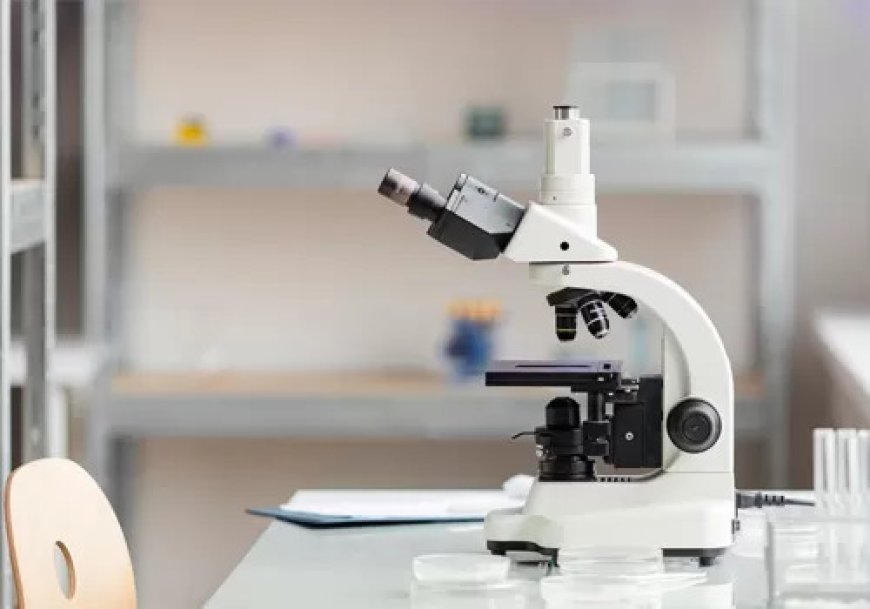
In the rapidly evolving landscape of scientific discovery, the ability to see beyond the human eye is not a luxury—it is a necessity. From cellular biology to material sciences, advanced laboratory studies depend on one fundamental tool: the Research Microscope. Unlike basic educational models, a high-grade research instrument provides the resolution, ergonomics, and adaptability required for rigorous experimentation and data integrity.
Today’s laboratories demand more than just magnification. They require precision engineering, consistent lighting, and durable mechanics. Whether you are investigating microbial resistance or analyzing tissue samples, a professional-grade Research Microscope transforms complex hypotheses into observable, verifiable facts. This article explores how these powerful instruments elevate scientific work—and what to look for when quality matters.
The Role of Precision Optics in Modern Science
A standard microscope might show you a cell. But a true research-grade system allows you to measure its nucleus, track its movement, and document changes over time. This distinction is critical in fields like pharmacology, where a single micron of miscalculation can alter an entire study.
High-performance laboratory equipment is built around several non-negotiable features:
-
Plan Achromatic or Plan Fluorite Objectives – These correct color aberrations across the field of view, ensuring flat, sharp images from edge to edge.
-
Binocular or Trinocular Heads – A trinocular port allows for camera attachment, enabling real-time data sharing and digital documentation.
-
Köhler Illumination – This technique provides even, glare-free lighting, reducing eye strain during long analysis sessions.
-
Mechanical Stage Control – Smooth X/Y movement allows precise slide navigation, essential for blood smear or sperm analysis.
When these components work in harmony, a Research Microscope becomes a quantitative tool—not just a viewing device.
Beyond Magnification: Features That Drive Discovery
Many researchers mistakenly prioritize magnification power above all else. In reality, resolution and contrast often matter more. For example, a 100x oil immersion lens is useless without a high numerical aperture (NA) and a stable condenser. This is where advanced engineering comes into play.
Illumination Systems: The Unseen Hero
Modern laboratories are shifting from halogen to LED illumination. Why? LEDs offer consistent color temperature (approx. 5700K), last over 25,000 hours, and generate less heat—protecting live specimens. A quality Research Microscope also includes an adjustable aperture and field diaphragm, allowing the user to optimize contrast for transparent or unstained samples.
Ergonomic Design for Extended Use
Pathologists and lab technicians often spend 6–8 hours a day behind an eyepiece. Poor ergonomics lead to neck pain, fatigue, and reduced accuracy. Top-tier models feature:
“Precision is not just about the lens—it’s about the user’s ability to focus without physical distraction.”
How Different Research Fields Benefit from Advanced Microscopy
No two laboratories are identical. A cancer research center has different needs than a water quality testing facility. Below are specific use cases where a high-quality Research Microscope proves indispensable.
Biomedical and Clinical Research
-
Analyzing blood samples for abnormal cell morphology
-
Counting platelets or performing differential leukocyte analysis
-
Observing bacterial growth in culture plates (using phase contrast)
Material Science and Failure Analysis
-
Examining metal fractures, polymer blends, or composite materials
-
Measuring grain boundaries in metallurgical samples
-
Inspecting printed circuit boards (PCBs) for soldering defects
Pharmaceutical Quality Control
-
Verifying drug crystal structures
-
Checking for particulate contamination in injectable solutions
-
Performing dissolution testing with integrated camera systems
In each scenario, the common thread is reliability. You need a system that holds calibration, resists mechanical drift, and provides reproducible results across multiple users and shifts.
What Defines a Trustworthy Manufacturer?
With countless brands available globally, choosing the right supplier can be overwhelming. However, one name that consistently appears in conversations about reliable Indian manufacturing is Opxica Industries. They focus on real-world usability—crafting optics and mechanical bodies in-house to ensure consistent quality. Instead of assembling generic parts, they design for clarity, durability, and everyday lab performance.
When evaluating a Research Microscope, ask these questions:
-
Are the lenses made from lead-free, anti-fungal glass?
-
Is the focus mechanism rack-and-pinion with adjustable tension?
-
Does the manufacturer offer a warranty on both optical and mechanical parts?
-
Are replacement bulbs or fuses readily available?
A professional laboratory cannot afford weeks of downtime waiting for repairs. That is why partnering with a responsive manufacturer is as critical as the instrument itself.
Actionable Tips for Optimizing Your Microscopy Workflow
To get the most from your investment, follow these small but impactful steps:
-
Clean optics before and after each session – Use lens paper and approved cleaning solution (never ethanol on coated lenses).
-
Calibrate the condenser alignment weekly – Misalignment kills contrast.
-
Use immersion oil only with designated objectives – Clean immediately to prevent residue hardening.
-
Store the microscope under a dust cover – Dust on the prism or eyepieces creates artifacts.
Additionally, train all team members to adjust diopter rings before adjusting the main focus. This simple habit eliminates eye strain and improves group viewing consistency.
Future Trends: Digital Integration and AI-Assisted Analysis
The Research Microscope is not standing still. Today’s advanced models integrate WiFi-enabled cameras, automated stage movement, and even AI-powered cell counters. Imagine uploading a live feed to a cloud-based analysis tool that flags abnormal cells in real time. That is now possible with modular digital adapters.
However, digital tools are only as good as their optical foundation. A blurry 4K image is still useless. Start with a rock-solid optical platform—then add the camera, software, and automation later. This modular approach protects your capital investment while keeping your lab at the cutting edge.
Conclusion: Elevate Your Laboratory’s Capabilities
From undergraduate teaching labs to Nobel Prize-winning research centers, the Research Microscope remains the cornerstone of scientific observation. It bridges the gap between theory and evidence, allowing researchers to see, document, and share the invisible world. By prioritizing optical quality, ergonomic design, and a dependable manufacturing partner, you equip your team for breakthrough discoveries.
Remember to maintain your instrument with care, stay curious, and never underestimate the power of a clear, well-lit view. After all, science moves forward one focused image at a time.






















 Like
0
Like
0
 Dislike
0
Dislike
0
 Love
0
Love
0
 Funny
0
Funny
0
 Angry
0
Angry
0
 Sad
0
Sad
0
 Wow
0
Wow
0