

























How Can a Laser Handheld Welder Improve Modern Metal Welding
Modern manufacturing and metal fabrication require welding solutions that can deliver accurate results while keeping production processes efficient

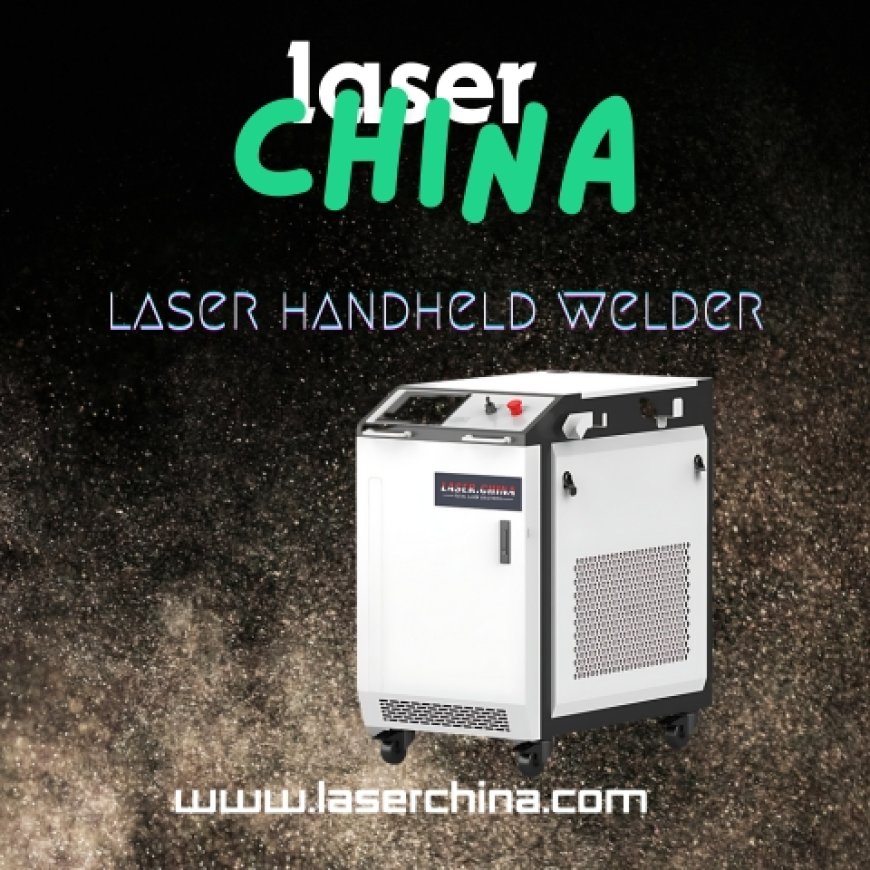
Modern manufacturing and metal fabrication require welding solutions that can deliver accurate results while keeping production processes efficient. As industries continue to work with stainless steel, carbon steel, aluminum, galvanized materials, and other metals, advanced welding equipment has become increasingly important. A laser handheld welder provides a practical approach for businesses looking to perform precise welding work across different applications.
Unlike traditional welding methods that often require extensive preparation and finishing, laser welding uses a concentrated beam of energy to create controlled welds. The handheld design allows operators to move the welding head across the workpiece with greater flexibility, making the equipment suitable for workshops, fabrication facilities, repair operations, and manufacturing environments.
Understanding Laser Handheld Welding
A laser handheld welder is a laser welding system designed with a portable welding gun that an operator can guide manually. The laser beam is focused onto the welding area, where concentrated energy melts the material and forms a strong connection as it cools.
The equipment generally consists of a laser source, handheld welding gun, control system, cooling unit, and supporting components. Depending on the model, wire feeding can also be incorporated for applications that require additional filler material.
This configuration provides a convenient alternative for businesses that need accurate welding without relying entirely on large, fixed welding equipment. Operators can work on different components and adjust their movements according to the shape and position of the material.
How Does a Laser Handheld Welder Work?
The welding process begins when the laser source generates a concentrated beam of light. The beam travels through the optical system and reaches the welding gun. When the operator positions the gun over the joint, the focused laser energy heats the metal within a small working area.
The material reaches its melting temperature and forms a small molten pool. As the laser moves along the joint, the molten material gradually solidifies and creates the weld.
For certain applications, welding wire can be introduced into the molten pool. The amount of energy, welding speed, wire feeding rate, and other settings can be adjusted according to the material and thickness being processed.
Because the laser energy is concentrated in a relatively small area, the operator can achieve controlled welding while limiting unnecessary heating around the joint.
Materials Commonly Processed
One important reason businesses consider handheld laser welding equipment is its ability to work with a range of commonly used metals. Stainless steel is frequently used in fabrication, kitchen equipment, architectural products, machinery, and industrial components.
Carbon steel is another common material for workshops and manufacturing facilities. Aluminum can also be processed with suitable laser welding equipment and appropriate settings.
Depending on the machine configuration and laser source, applications may include galvanized sheets, mild steel, brass, and other compatible metals. Material thickness and joint design should always be considered before selecting welding parameters.
Applications in Metal Fabrication
A laser handheld welder can be used in many areas of metal fabrication. Workshops may use it for joining sheets, tubes, frames, panels, cabinets, and machinery components.
In stainless-steel fabrication, laser welding can be used for products such as kitchen equipment, decorative structures, metal furniture, and industrial enclosures. Automotive and transportation-related manufacturers may also use laser welding for selected components where controlled heat input and accurate joints are required.
Repair workshops can benefit from the flexibility of a handheld welding gun when working on different component shapes. The operator can position the welding head according to the accessibility of the joint instead of being restricted to a fixed setup.
Welding Different Joint Types
Joint design plays an important role in achieving consistent welding results. Depending on the workpiece, handheld laser welding systems can be used for butt joints, lap joints, corner joints, and other common configurations.
A clean and properly aligned joint helps the laser energy interact effectively with the material. Before welding, operators should inspect the surfaces and remove contaminants such as oil, dirt, rust, or other residues.
The appropriate welding approach depends on material type, thickness, joint configuration, and the desired appearance of the finished product.
Choosing the Appropriate Laser Power
Laser power is an important consideration when selecting welding equipment. Different materials and thicknesses require different levels of energy to create an effective weld.
Lower-power systems may be suitable for thinner sheet-metal applications, while higher-power equipment can be considered for thicker materials and more demanding industrial work.
Businesses should evaluate their typical workload rather than selecting equipment based only on the highest available power. A suitable configuration should match the materials, thicknesses, production volume, and welding requirements of the workshop.
Welding Speed and Production Workflow
Welding speed can have a direct effect on production workflow. A handheld laser welding system allows operators to move along the joint while maintaining a controlled welding process.
For businesses producing repeated components, establishing suitable parameters can help create a consistent workflow. Operators can also organize workstations around material preparation, welding, inspection, and finishing.
Before beginning large-scale production, test pieces should be used to determine suitable settings. This approach helps operators understand how different combinations of power, speed, focus, and wire feeding affect the final weld.
Surface Preparation Before Welding
Proper preparation remains important even when using advanced welding equipment. Metal surfaces should be clean and properly aligned before welding begins.
Oil, dust, oxidation, coatings, and other contaminants can affect the welding process and the appearance of the joint. Operators should inspect the material and prepare the welding area according to the requirements of the specific application.
Correct fit-up is equally important. Large gaps between components may require additional filler material or a different welding approach. Careful preparation helps the operator maintain a more controlled welding process.
Operator Training and Workplace Safety
Although handheld laser welding equipment is designed for practical operation, laser safety should always receive serious attention. Laser radiation can present hazards to eyes and skin, so appropriate protective measures are essential.
Operators should receive proper training before using the equipment. The workspace should be arranged according to applicable laser safety requirements, and suitable protective equipment should be used.
Fume extraction and ventilation should also be considered because welding different metals and coatings can generate fumes. The machine manufacturer's operating instructions should be followed for installation, maintenance, and safe operation.
Maintenance for Reliable Operation
Regular maintenance helps keep welding equipment operating consistently. Operators should inspect the welding gun, protective components, optical parts, cooling system, cables, and other relevant components according to the manufacturer's recommendations.
The cooling system is particularly important because laser sources and related components require appropriate temperature control during operation. Clean working conditions can also help reduce contamination around sensitive optical components.
Scheduled inspections allow potential problems to be identified before they interrupt production. Maintenance records can be useful for workshops that operate their equipment frequently.
Selecting Equipment for Your Workshop
When choosing a laser handheld welder, businesses should consider more than laser power. The laser source, welding gun design, cooling system, control interface, wire feeder, available settings, material compatibility, and after-sales support can all influence the overall suitability of the machine.
It is also important to consider the typical size and thickness of the workpieces. A machine intended for occasional workshop jobs may have different requirements from equipment used continuously in industrial production.
Reliable technical support and access to replacement components can make equipment management easier over the long term.
Growing Role of Handheld Laser Welding
The increasing demand for accurate and efficient metal fabrication is encouraging more workshops to explore laser-based welding technologies. Handheld systems combine the controlled energy delivery of laser welding with a flexible operating format.
For businesses handling different metal products, this technology can provide an adaptable addition to the workshop when properly selected, installed, and operated.
Final Thoughts
A laser handheld welder offers a modern approach to joining metal components while providing operators with a flexible handheld working format. From stainless-steel fabrication and machinery production to repair work and customized metal products, the technology can be applied across numerous industries.
What's Your Reaction?
 Like
0
 Dislike
0
 Love
0
 Funny
0
 Angry
0
 Sad
0
 Wow
0





