














How Rhinoplasty Can Change the Appearance of Your Nose
How Rhinoplasty Can Change the Appearance of Your Nose

How Rhinoplasty Can Change the Appearance of Your Nose
The nose is the undisputed anchor of the face. Because of its central location and distinct three-dimensional geometry, even subtle modifications to its structure can create a dramatic ripple effect across your entire facial appearance.
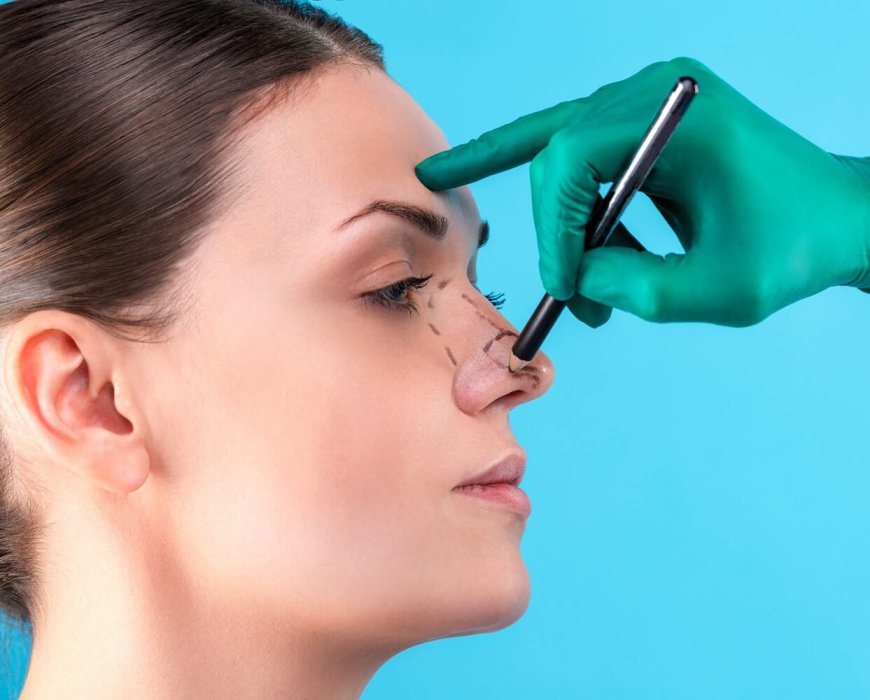
Rhinoplasty—commonly known as a nose job—is uniquely powerful because it combines artistic refinement with precise surgical mechanics. Whether you want to correct a prominent feature, restore symmetry, or achieve better balance with your cheekbones, lips, and chin, understanding how rhinoplasty alters nasal anatomy helps clarify what is achievable.
Rhinoplasty in Jeddah offers individuals an opportunity to explore nose reshaping options to improve facial harmony, address nasal concerns, and achieve natural-looking results based on their needs and expectations.
1. Smoothing the Bridge (Dorsal Hump Reduction)
One of the most frequent requests in aesthetic plastic surgery is addressing a prominent dorsal hump—the bony or cartilaginous bump along the bridge of the nose.
-
Before: A prominent hump can create a harsh, hooked, or aggressive profile, drawing attention away from the eyes and casting shadows down the center of the face.
-
How Rhinoplasty Changes It: By carefully lowering the nasal bones and upper lateral cartilages, the surgeon creates a straight or a gently curved, smooth profile line. This simple adjustment instantly softens the profile, making the nose appear more refined and balanced from the side.
2. Refining, Elevating, or Narrowing the Nasal Tip
The nasal tip is composed entirely of delicate, flexible cartilage, making it one of the most complex areas to sculpt.
-
Before: A tip can be boxy, bulbous, drooping (drooping downward when smiling or at rest), or over-projected (sticking out too far from the face).
-
How Rhinoplasty Changes It: Through precise cartilage trimming, reshaping, and supportive suturing (often reinforced with small cartilage grafts), the surgeon can refine a bulbous tip, lift a sagging tip, or reduce excessive projection. A well-defined tip draws focus upward toward the eyes and creates a clean, elegant focal point for the lower two-thirds of the face.
3. Altering Nasal Width and Proportions
Width proportions play a massive role in whether a nose looks naturally integrated with the rest of the face or stands out awkwardly.
-
Before: A wide bridge or flared nostrils can make the nose appear disproportionately broad, overwhelming delicate cheekbones or eye spacing.
-
How Rhinoplasty Changes It: Surgeons can narrow the bony vault of the bridge by making precise micro-cuts in the bone (osteotomies) and shifting them inward. Additionally, alarplasty (nostril-resizing techniques) can reduce the width of the nostrils themselves. This brings the nasal base into ideal harmony with the "rule of fifths" (where the width of the nose matches the width of one eye).
4. Correcting Asymmetry and Crookedness
Facial asymmetry is natural, but a severely crooked nose immediately disrupts visual equilibrium.
-
Before: Traumatic injuries, genetic variations, or past surgeries can cause the external axis of the nose to lean to the left or right, creating a C-shape or S-shape curve.
-
How Rhinoplasty Changes It: By straightening both the internal nasal septum and the external nasal bones/cartilage framework, the surgeon re-centers the nose along the midline of the face. This restores visual symmetry, aligning the bridge directly with the center of the lips, philtrum, and forehead.
5. Adjusting Nasal Projection and Rotation
Projection refers to how far the nose sticks out from the plane of the face, while rotation refers to the upward or downward tilt of the tip.
-
Before: An under-projected nose can look flat and "sunken" into the face, while an over-projected nose dominates the profile. Similarly, a downward-rotating tip can make the nose look longer than it actually is.
-
How Rhinoplasty Changes It: Using structural cartilage grafts or precise suspension sutures, surgeons can either project a flat nose outward or reduce an overly prominent projection. Adjusting the rotation of the tip can subtly shorten a long nose or open up the nasolabial angle for a more youthful, refreshed look.
The Big Picture: Enhancing Facial Harmony
The ultimate goal of modern rhinoplasty is not to give you a "generic" or cookie-cutter nose, but to transform your nasal shape in a way that elevates your unique facial features. By bringing the bridge, tip, width, and profile into alignment with your chin, forehead, and jawline, rhinoplasty creates a cohesive, balanced aesthetic that enhances your natural confidence.
What's Your Reaction?
 Like
0
 Dislike
0
 Love
0
 Funny
0
 Angry
0
 Sad
0
 Wow
0