









Is Hair Transplant in Sharjah Suitable for Diffuse Loss Now
Learn when Hair Transplant in Sharjah may suit diffuse loss, with donor assessment, miniaturization mapping, graft planning, and native hair protection.
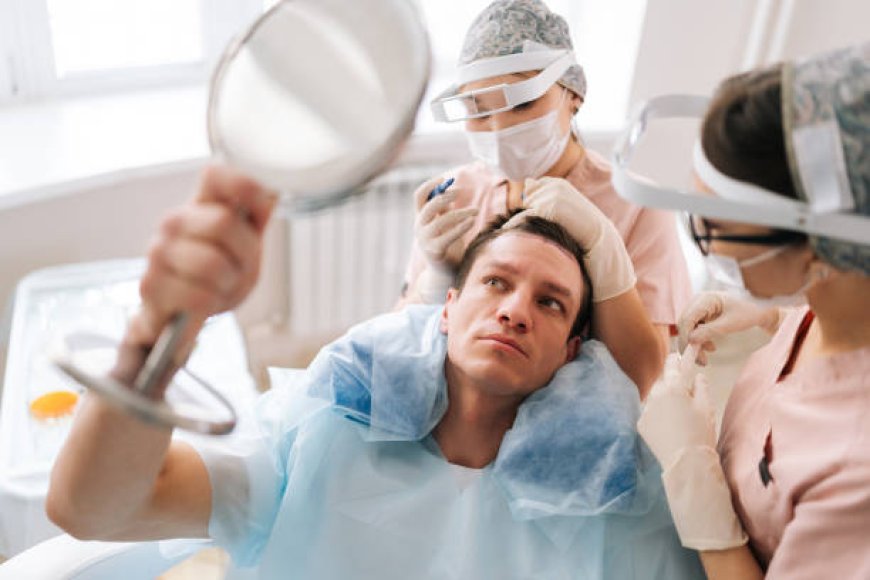
Diffuse hair loss requires more careful assessment than a clearly defined bald area because thinning can affect both the recipient and donor regions. In selected patients, Hair Transplant in Sharjah may improve visible density when the underlying diagnosis is established, suitable donor follicles remain available, and native hair can be protected during graft placement.
The central planning question is not simply how much hair has been lost. It is whether enough stable donor hair exists to improve density without creating excessive depletion or interfering with the native follicles that are still growing.
Hair Transplant in Sharjah Begins With Diffuse Loss Mapping
Diffuse thinning can appear as generalized reduction in density rather than a sharply outlined bald patch.
A clinical assessment should identify where miniaturization is occurring and whether the donor region has remained sufficiently preserved for extraction.
Mapping Density Across the Scalp
The scalp can be evaluated systematically across the frontal zone, mid-scalp, crown, and donor regions.
Useful observations include:
- Hair density in different scalp zones
- Hair shaft calibre
- Miniaturized versus terminal hairs
- Distribution of thinning
- Scalp visibility
- Donor-zone density
- Pattern progression
- Previous treatments
- Scalp health
This mapping helps determine whether the apparent lack of density is localized enough for transplantation to provide meaningful improvement.
Identifying the Underlying Pattern
Diffuse thinning can have several causes.
Androgenetic hair loss is one common pattern, but temporary shedding, nutritional deficiencies, endocrine disorders, inflammatory scalp conditions, medications, and other forms of alopecia can also produce widespread thinning.
Transplantation should therefore follow appropriate diagnosis rather than being used as a substitute for identifying the cause.
Stable Versus Active Thinning
The stability of hair loss matters because transplanted follicles are usually positioned among existing native hair.
If surrounding native follicles are continuing to miniaturize rapidly, the visual relationship between transplanted and native hair can change after surgery.
Hair Transplant in Sharjah and Native Hair Protection
Diffuse loss presents a specific surgical challenge: there may still be a significant number of native hairs in the areas being considered for transplantation.
The surgeon must therefore plan recipient sites carefully to minimize unnecessary trauma to existing follicles.
Working Between Existing Hairs
Recipient sites can be distributed among native hairs when appropriate.
The surgeon must account for existing follicle position, direction, spacing, and density rather than treating the entire area as empty scalp.
Avoiding Unnecessary Trauma
Creating recipient sites too aggressively in a densely populated thinning area can place native follicles at risk.
The objective is to add strategic density while preserving the hair that is already present.
Matching Native Hair Characteristics
The visual effect of transplantation depends partly on how well new follicles integrate with existing hair.
Hair calibre, texture, curl, colour, and direction should be considered during graft selection and placement.
Hair Transplant in Sharjah Requires Careful Donor Evaluation
Diffuse thinning can affect the donor region as well as the recipient areas.
This makes donor assessment especially important.
Measuring Donor Density
The surgeon evaluates the occipital and temporal areas for follicular density, hair calibre, and signs of miniaturization.
A donor region that appears visually dense may still contain a significant proportion of weakened follicles, so visual inspection alone may not provide the complete picture.
Identifying Stable Follicles
The objective is to select follicles that are suitable for relocation while avoiding unnecessary extraction from areas showing substantial miniaturization.
Donor Supply Is Limited
Every harvested follicular unit reduces the remaining donor reserve.
Diffuse-loss patients therefore need a treatment plan that balances immediate density improvement with the possibility of future hair-loss progression.
Hair Transplant in Sharjah and Diffuse Pattern Classification
The distribution of thinning can influence whether surgery is appropriate and which areas should receive priority.
| Diffuse-loss pattern | What may be observed | Planning consideration |
|---|---|---|
| Frontal diffuse thinning | Reduced density behind or around the frontal hairline | Protect native frontal follicles |
| Mid-scalp thinning | Widespread reduction between frontal and crown areas | Allocate grafts strategically |
| Crown-predominant thinning | Reduced density around the vertex | Account for natural crown growth direction |
| Extensive diffuse thinning | Reduced density across multiple regions | Donor capacity becomes especially important |
| Diffuse thinning with donor involvement | Miniaturization in donor and recipient zones | Medical assessment may be needed before surgery |
Frontal Diffuse Thinning
The frontal zone is highly visible, so even moderate density loss can become noticeable.
Rather than automatically lowering the hairline, the surgeon may focus on reinforcing areas where density has declined while preserving existing frontal hairs.
Mid-Scalp Diffuse Thinning
Mid-scalp restoration requires careful distribution because this region often contains substantial native hair.
Grafts need to be placed around existing follicles to create additional visual density without unnecessarily disturbing them.
Crown Diffuse Thinning
The crown has a naturally different growth pattern from the frontal scalp.
Any transplantation into this region needs to follow the existing whorl and directional changes rather than using uniform placement.
Hair Transplant in Sharjah Technique Selection for Diffuse Thinning
The surgical technique should be chosen after evaluating donor quality, the extent of thinning, graft requirements, and recipient anatomy.
FUE Hair Transplant Sharjah
FUE extracts individual follicular units from the donor region.
For diffuse thinning, selective extraction can help provide grafts for areas where additional density is strategically required.
The extraction pattern must be carefully distributed because overharvesting a diffuse donor area can make existing thinning more apparent.
DHI Hair Transplant Sharjah
DHI uses an implanter device to place prepared grafts.
In areas containing native hair, controlled implantation can help the surgeon manage the intended placement pattern while considering existing follicular positions.
Technique Should Follow the Diagnosis
A technique cannot compensate for an unsuitable indication.
If diffuse loss is being driven by an active medical condition or if donor follicles are also significantly miniaturized, further diagnostic work may be more appropriate before transplantation.
Hair Transplant in Sharjah and Graft Distribution
Diffuse loss is fundamentally a distribution problem.
A limited number of grafts may need to cover a relatively broad region, making prioritization important.
Creating Visual Density
The surgeon may place grafts where they produce the greatest improvement in visible coverage.
Hair calibre also influences the result. Thicker shafts can create more visual coverage per follicle than very fine shafts.
Avoiding Overconcentration
Concentrating too many grafts into one small section may leave surrounding areas noticeably thin.
A balanced distribution can create a more coherent appearance across the scalp.
Preserving Future Options
If hair loss continues, additional areas may eventually require attention.
Donor resources should therefore be allocated with future progression in mind rather than used entirely during the first procedure.
For patients comparing hair restoration options in Dubai, this principle is particularly relevant when diffuse thinning affects several scalp regions simultaneously.
Hair Transplant in Sharjah and Hair Miniaturization
Miniaturization is one of the most useful concepts when assessing diffuse loss.
A miniaturized follicle may continue producing hair, but the shaft becomes progressively finer and less visible.
Why Miniaturization Matters
A scalp can contain many follicles while still appearing thin because individual shafts have become smaller.
Transplantation adds donor follicles, but it does not automatically reverse miniaturization in existing native follicles.
Evaluating the Donor Zone
If miniaturization extends significantly into the donor region, the supply of robust follicles may be more limited than the visible hair count suggests.
This can substantially affect surgical planning.
Medical Management May Be Relevant
Depending on the diagnosis, medical treatment may be considered to help manage ongoing native hair loss.
The purpose is to address the underlying process where possible rather than relying exclusively on transplanted follicles.
Hair Transplant in Sharjah for Fine and Thin Hair
Hair characteristics influence how much density is visually perceived.
Fine Hair
Fine shafts can leave more scalp visible even when follicle numbers are reasonable.
Strategic graft placement and preservation of native hairs may therefore be more important than simply increasing extraction numbers.
Thick Hair
Thicker hair shafts can provide stronger coverage.
However, placement still needs to follow natural direction and existing density.
Curly Hair
Curly hair may provide favorable visual coverage because the shaft occupies more visual space, but extraction can be technically more demanding when the follicle curves beneath the skin.
Hair Transplant in Sharjah and Dubai Climate Considerations
Patients travelling between Sharjah and Dubai should incorporate the local environment into their recovery planning.
High temperatures, strong sunlight, sweating, and prolonged indoor air conditioning can affect scalp comfort during healing.
Heat and Sweating
Heavy sweating may be uncomfortable during the early recovery stage.
Patients should follow the treating surgeon's recommendations regarding exercise, outdoor exposure, and washing rather than returning to normal activity based on a generic timeline.
Sun Protection
Direct sunlight should be limited during early healing.
The scalp can remain sensitive after transplantation, and postoperative instructions should determine when normal outdoor exposure can resume.
Indoor Air Conditioning
Air-conditioned environments can make the scalp feel dry or tight.
Patients should avoid applying unapproved oils, exfoliants, or styling products to compensate. The postoperative routine should remain consistent with clinical instructions.
Hair Transplant in Sharjah Recovery for Diffuse Loss
Recovery is generally assessed in stages rather than by immediate density.
Early Healing
Mild redness, swelling, tenderness, and crusting may occur after implantation.
Gentle cleansing and avoidance of unnecessary contact help protect the recipient area while it heals.
Temporary Shedding
Some transplanted hairs can shed during the early growth cycle.
This does not necessarily mean the follicle itself has been lost. The follicle can remain within the recipient site before producing new visible growth.
Gradual Density Changes
New hair develops progressively.
Because diffuse thinning involves surrounding native hair, the eventual appearance should be assessed across the entire affected region rather than judging isolated grafts.
Hair Transplant in Sharjah May Not Be Suitable for Every Diffuse-Loss Patient
The presence of diffuse thinning does not automatically make someone a transplant candidate.
Unexplained Widespread Shedding
When the cause of diffuse shedding has not been established, diagnosis should come before surgical extraction.
Treating an unidentified underlying condition may be more appropriate than immediately transplanting follicles.
Donor Miniaturization
Significant thinning in the donor region can limit the availability of robust grafts.
In such cases, the surgeon may need to reconsider the expected benefit of transplantation.
Active Scalp Disease
Inflammation, infection, scarring, or other scalp conditions can affect surgical planning.
The scalp should be appropriately evaluated before proceeding.
Hair Transplant in Sharjah Consultation for Diffuse Loss
A detailed consultation can help establish whether the patient's remaining hair provides an adequate foundation for transplantation.
The assessment may cover:
- Diagnosis and pattern of hair loss
- Duration and progression of thinning
- Donor density
- Donor miniaturization
- Hair calibre and texture
- Native recipient hair
- Scalp condition
- Previous treatments
- Areas requiring priority
- Long-term donor preservation
- Expected postoperative growth
This approach helps distinguish a genuine transplant opportunity from a situation where medical management or observation should come first.
Hair Transplant in Sharjah Questions Patients Ask
Is Hair Transplant in Sharjah Suitable for Diffuse Loss Now?
It can be suitable for selected patients when the cause of thinning is established, donor follicles are sufficiently stable, and the recipient areas can accommodate grafts without unnecessary damage to native hair.
Can diffuse thinning be treated without lowering the hairline?
Yes. When appropriate, grafts can be directed toward areas of reduced density rather than automatically changing the frontal hairline.
Does diffuse loss require more grafts than a bald patch?
Not necessarily, but it can require careful allocation because a larger area may need to be improved with a limited donor supply.
Can native hair continue thinning after transplantation?
Yes. Transplanted follicles and native follicles do not necessarily share the same susceptibility to the underlying hair-loss process.
Is medical treatment still relevant after a transplant?
It may be, depending on the diagnosis and the patient's individual circumstances. Medical management can be discussed when ongoing native hair loss needs to be addressed.
Can diffuse donor thinning prevent transplantation?
It can limit the suitability or expected benefit of surgery. Donor quality and stability should be assessed before graft extraction is planned.
The Strategic Investment in Diffuse Hair Restoration
Diffuse thinning requires a different surgical mindset from treating a clearly defined bald area. The surgeon must identify stable donor follicles, preserve native recipient hair, distribute grafts efficiently, and consider how ongoing miniaturization could change the scalp after transplantation.
For patients considering treatment in Sharjah or Dubai, the most useful starting point is a detailed assessment of both donor and recipient regions. This establishes whether transplantation can provide meaningful density improvement without using donor resources prematurely.
Tajmeels Clinic in Dubai provides individualized hair-restoration assessment based on hair-loss pattern, donor characteristics, recipient anatomy, graft planning, and long-term restoration objectives. Patients can explore Tajmeels Clinic to discuss whether a personalized transplantation plan is appropriate for diffuse thinning.
What's Your Reaction?
 Like
0
 Dislike
0
 Love
0
 Funny
0
 Angry
0
 Sad
0
 Wow
0