






















Understanding Carabiner Use in Fall Protection Systems

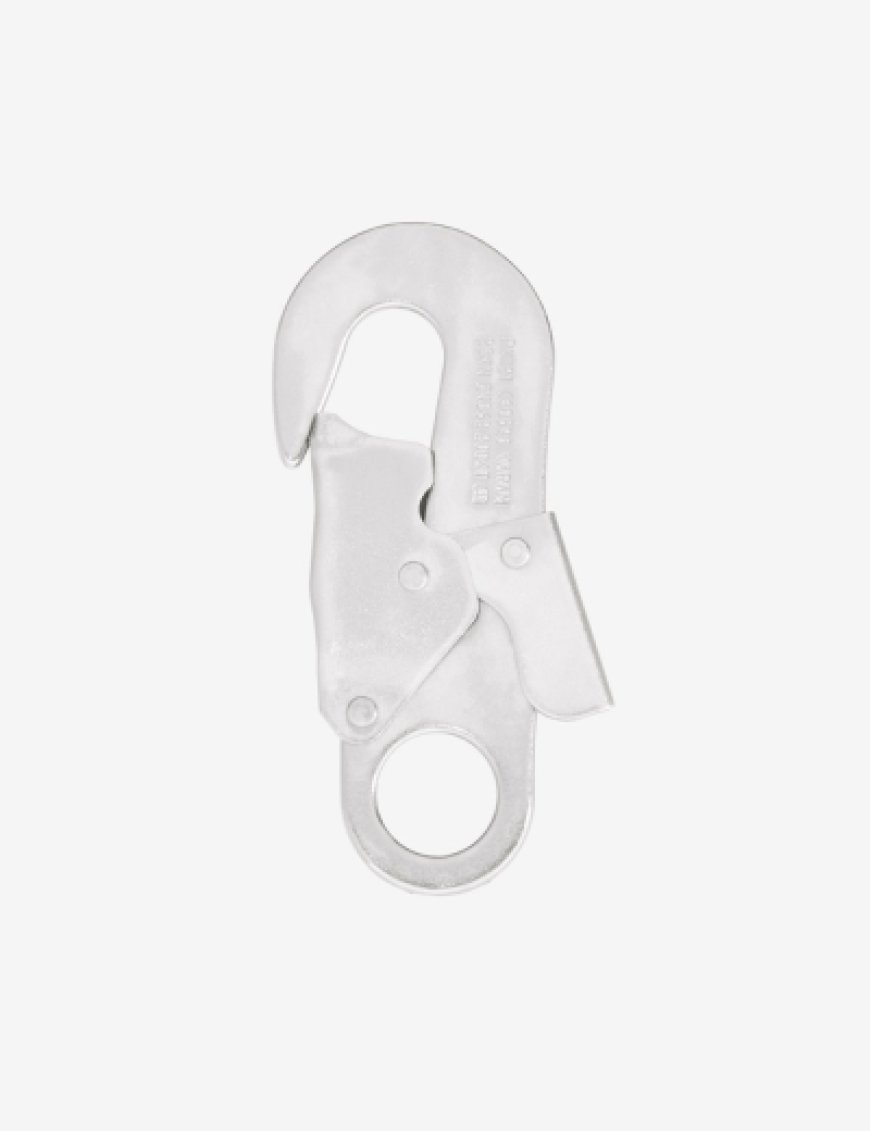
Fall protection failures rarely happen because a harness breaks. More often, the failure point is a connector that was incorrectly loaded, improperly locked, or chosen for the wrong application. The carabiner sits at this critical junction between the worker and the anchor system, and understanding how it works is fundamental to any serious fall protection programme.
Types of Carabiners and Their Locking Mechanisms
Carabiners for fall protection are available with screw-lock, double-action, and triple-action gate mechanisms. Screw-lock carabiners require manual threading to close, making them suitable for applications where the gate is not repeatedly opened during a task. Double-action gates require two deliberate movements to open, reducing the risk of accidental release under load. Triple-action designs add a third step, making them the preferred choice for high-risk environments where vibration or repeated contact could otherwise open the gate unintentionally. Selecting the correct locking type is the first step in correct carabiner use.
Load Direction and Gate Orientation
Most carabiners are engineered to handle loads along their major axis, meaning lengthwise through the spine of the device. Side-loading, which occurs when force is applied across the minor axis or through the gate, can reduce the load capacity of a karabiner by more than 60% in some designs. During rigging and connection work, workers must ensure that lanyards, harness attachment points, and anchor connectors are all oriented so that any arrest force runs along the intended load axis. Incorrect orientation during carabiner use is a serious and avoidable hazard.
Material Choices: Steel vs Aluminium Carabiners
Steel carabiners offer higher wear resistance and are generally preferred for applications involving rope access, rescue operations, or frequent connection and disconnection cycles that would abrade softer materials. Aluminium carabiners are significantly lighter, which matters greatly when workers are climbing or moving at height for extended periods. Both materials can meet the same strength ratings when correctly manufactured and certified. The choice depends on the specific application, frequency of use, and whether weight or durability is the higher priority in the relevant carabiner use context.
Certification Standards Every Buyer Should Know
Carabiners used in fall protection must comply with recognised standards such as EN 362, which specifies requirements for connectors in personal fall protection equipment. These standards define minimum gate opening widths, breaking strengths along major and minor axes, and corrosion resistance requirements. In India, procurement teams should verify that any carabiner selected for occupational use carries valid certification documentation. Using uncertified connectors, regardless of how robust they appear, exposes organisations to serious liability and puts workers at risk every time the karabiner is put into service.
Inspection, Maintenance, and Retirement Criteria
Even a certified carabiner does not remain serviceable indefinitely. Pre-use inspection should cover gate spring function, locking mechanism operation, surface condition for cracks or corrosion, and gate closure confirmation. Any carabiner that has arrested a fall must be withdrawn from service and inspected by a competent person before reuse, as the arrest forces involved may have caused internal deformation not visible to the naked eye. Establishing a documented inspection schedule and clear retirement criteria for all connectors is a foundational element of responsible karabiner use in any fall protection programme.
Carabiner use extends well beyond simply clipping a lanyard to an anchor. It requires understanding load dynamics, locking mechanisms, material properties, and maintenance requirements. Organisations that invest in proper connector selection and training see measurably fewer near-misses and failures at height. The carabiner is small, but its role in fall safety is anything but minor.
What's Your Reaction?
 Like
0
Like
0
 Dislike
0
Dislike
0
 Love
0
Love
0
 Funny
0
Funny
0
 Angry
0
Angry
0
 Sad
0
Sad
0
 Wow
0
Wow
0