




















Myths and facts about hair transplant procedures
Myths and facts about hair transplant procedures

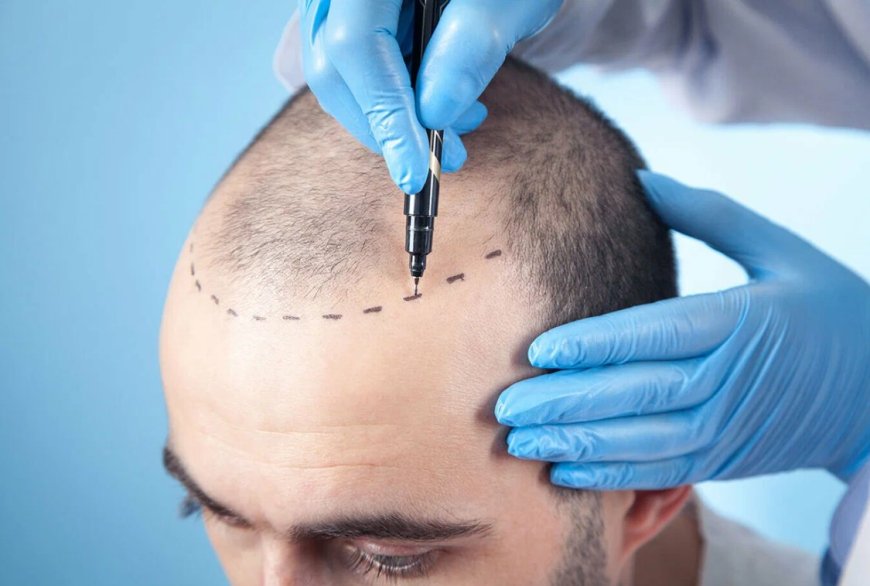
Myths and Facts About Hair Transplant Procedures
Hair transplant procedures have become one of the most reliable solutions for permanent hair restoration. However, despite medical advancements, many misconceptions still exist. These myths often create confusion and unrealistic expectations, preventing people from making informed decisions.
Understanding the difference between myths and facts about hair transplant procedures helps patients approach treatment with clarity and confidence.
Hair transplant in Buraydah is becoming an increasingly popular option for individuals seeking a long-term solution to hair loss and thinning.
Myth 1: Hair Transplant Gives Instant Results
❌ Myth:
Many people believe that hair grows immediately after the procedure.
✔ Fact:
Hair transplant results take time to develop naturally.
Explanation:
After surgery, transplanted hair typically sheds within 2–4 weeks. This is a normal part of the growth cycle. New hair growth usually begins after 3–4 months, with full results visible after 9–12 months.
Hair restoration is a gradual biological process, not an instant cosmetic change.
Myth 2: Hair Transplant Looks Fake or Unnatural
❌ Myth:
Some assume that transplanted hair looks artificial or “plug-like.”
✔ Fact:
Modern techniques produce extremely natural results.
Explanation:
Advanced methods like FUE and DHI allow surgeons to implant individual follicles at precise angles and directions. When performed correctly, transplanted hair blends seamlessly with existing hair and is virtually undetectable.
Natural results depend heavily on surgeon skill and hairline design.
Myth 3: Hair Transplant Is Painful
❌ Myth:
People often believe the procedure is very painful.
✔ Fact:
Hair transplant is performed under local anesthesia and is generally painless.
Explanation:
During the procedure, the scalp is numbed, so patients feel little to no pain. Mild discomfort may occur after surgery, but it is usually manageable with prescribed medication and fades within a few days.
Most patients describe the experience as more uncomfortable than painful.
Myth 4: Hair Transplant Is Only for Men
❌ Myth:
Hair transplant is often thought to be a male-only procedure.
✔ Fact:
Women can also undergo hair transplant surgery.
Explanation:
Women experiencing hair thinning, receding hairlines, or traction alopecia can benefit from hair restoration. However, candidacy depends on donor hair availability and underlying causes of hair loss.
Both men and women can achieve successful results when properly evaluated.
Myth 5: Transplanted Hair Will Fall Out Again
❌ Myth:
Many believe that transplanted hair is temporary.
✔ Fact:
Transplanted hair is generally permanent.
Explanation:
Hair follicles taken from the donor area (back and sides of the scalp) are genetically resistant to hair loss. Once transplanted, they continue to grow for life in most cases.
However, natural (non-transplanted) hair around it may still thin over time.
Myth 6: Hair Transplant Works for Everyone
❌ Myth:
Some assume anyone with hair loss is a suitable candidate.
✔ Fact:
Not everyone is an ideal candidate for surgery.
Explanation:
Successful hair transplant depends on:
- Donor hair quality
- Type and stage of hair loss
- Age and medical condition
- Realistic expectations
Patients with insufficient donor hair or unstable hair loss may require alternative treatments or combined approaches.
Myth 7: Results Are Immediate After Surgery
❌ Myth:
People expect to see full hair growth right after the procedure.
✔ Fact:
Initial results appear gradually over several months.
Explanation:
After implantation, hair follicles enter a resting phase before new growth begins. Visible improvement typically starts after 3–4 months, with final density achieved after about a year.
Patience is essential for natural results.
Myth 8: Hair Transplant Leaves Visible Scars
❌ Myth:
Surgery always leaves noticeable scars.
✔ Fact:
Modern techniques leave minimal or nearly invisible scarring.
Explanation:
- FUE leaves tiny dot-like scars that are barely visible
- DHI also minimizes scarring due to precise implantation
- FUT may leave a linear scar, but it is usually hidden under hair
Scarring depends on technique and healing quality.
Myth 9: Hair Transplant Stops Future Hair Loss Completely
❌ Myth:
Some believe surgery permanently stops all hair loss.
✔ Fact:
Hair transplant restores lost hair but does not stop genetic hair loss.
Explanation:
Transplanted hair is permanent, but existing non-transplanted hair may continue to thin over time. That is why some patients may need medications or maintenance treatments after surgery.
Hair transplant is a restoration treatment, not a cure for baldness progression.
Myth 10: Hair Transplant Is Very Expensive and Not Worth It
❌ Myth:
It is often assumed that hair transplant is unaffordable and unnecessary.
✔ Fact:
While the initial cost can be high, it is a long-term solution.
Explanation:
Unlike temporary treatments that require continuous spending, a hair transplant is a one-time procedure with long-lasting results. Over time, it can be more cost-effective than ongoing medications or cosmetic products.
Value depends on long-term benefit rather than upfront cost.
Myth 11: You Can’t Cut or Style Transplanted Hair
❌ Myth:
Some think transplanted hair behaves differently from normal hair.
✔ Fact:
Transplanted hair behaves like natural hair.
Explanation:
Once fully grown, transplanted hair can be washed, cut, dyed, and styled just like normal hair. It becomes a permanent part of the scalp.
Myth 12: Hair Transplant Has High Risk of Complications
❌ Myth:
Many people fear serious side effects or health risks.
✔ Fact:
Hair transplant is a safe procedure when performed by qualified professionals.
Explanation:
It is a minimally invasive surgery with low risk of complications. Common side effects are mild and temporary, such as swelling, redness, or itching.
Serious complications are rare when proper medical protocols are followed.
Importance of Understanding Myths and Facts
Clearing misconceptions is important because it helps patients:
- Make informed decisions
- Set realistic expectations
- Reduce anxiety before surgery
- Choose qualified specialists confidently
- Avoid ineffective or unsafe alternatives
Misinformation can delay treatment or lead to poor choices.
Conclusion
Hair transplant procedures are highly effective, safe, and scientifically proven solutions for hair loss, but they are often misunderstood due to widespread myths. In reality, modern techniques provide natural-looking, permanent results with minimal discomfort and high success rates.
What's Your Reaction?
 Like
0
Like
0
 Dislike
0
Dislike
0
 Love
0
Love
0
 Funny
0
Funny
0
 Angry
0
Angry
0
 Sad
0
Sad
0
 Wow
0
Wow
0