












Rhinoplasty for the Nose Tip in Jeddah
Rhinoplasty for the Nose Tip in Jeddah

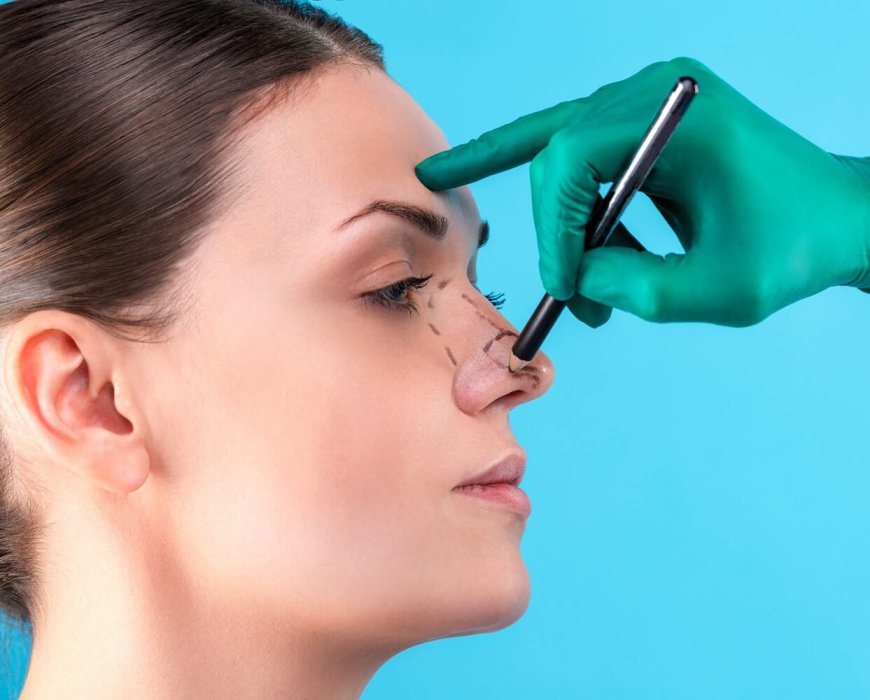
Rhinoplasty for the Nose Tip: Precision Shaping and Definition
The nasal tip is often considered the defining element of overall facial character. Because it consists entirely of delicate cartilage, soft tissue, and skin—without the rigid bone support found higher up on the bridge—sculpting it requires an exceptionally high level of surgical artistry and technical precision. Rhinoplasty in Jeddah is a cosmetic and functional procedure that can reshape the nose and address certain breathing concerns.
Whether addressing a bulbous shape, a drooping profile, or asymmetrical cartilage, tip-focused rhinoplasty (often referred to as a tip plasty) is designed to create elegant definition while maintaining natural facial harmony.
1. Common Concerns Addressed by Tip Reshaping
Patients frequently seek targeted tip correction to resolve specific structural traits that affect their overall profile:
-
Bulbous or "Boxy" Tips: Excess cartilage or wide lateral crura can create a round, heavy, or undefined look at the end of the nose. Surgeons refine this by delicately trimming, shaping, or suturing the underlying cartilage framework.
-
Drooping (Ptotic) Tips: When the tip points downward—especially noticeable when smiling or speaking due to muscle pull—surgeons can elevate and support the angle for a more lifted, youthful appearance.
-
Asymmetrical or Pinched Tips: Uneven cartilage growth or over-aggressive reduction from a prior procedure can cause pinching or asymmetry, which is corrected using precise cartilage suturing or structural grafting techniques.
-
Over-Projected or Under-Projected Tips: Adjusting how far the tip juts out from the face to achieve ideal balance with the chin and forehead.
2. Surgical Techniques for Tip Refinement
Depending on whether the procedure focuses exclusively on the tip or forms part of a comprehensive rhinoplasty, specialists utilize specialized methods:
-
Suture Techniques: Instead of aggressive tissue removal (which can weaken the nose over time), modern procedures rely heavily on internal stabilizing sutures to pull, shape, and anchor the native cartilage into a refined, secure position.
-
Cartilage Struts and Grafting: To provide long-term support and prevent drooping or pinching over time, surgeons often harvest a small piece of cartilage from the nasal septum to act as a stabilizing columellar strut.
-
Open vs. Closed Approach: While minor tip modifications can sometimes be performed via a closed technique, an open approach is frequently favored for tip reshaping. It grants the surgeon direct visibility to symmetrically sculpt both sides of the delicate tip cartilage.
3. Recovery and Healing Dynamics for the Tip
While the recovery timeline parallels standard rhinoplasty, the nasal tip behaves uniquely during the healing process:
-
The Swelling Window: Because the tip contains more soft tissue and is the most distal point of the nose, it retains residual swelling longer than the bony bridge.
-
The Long-Term Settling Phase: While initial social downtime takes about 10 to 14 days, the final, crisp definition of a refined nasal tip evolves progressively over 6 to 12 months as deep micro-swelling completely dissipates.
What's Your Reaction?
 Like
0
 Dislike
0
 Love
0
 Funny
0
 Angry
0
 Sad
0
 Wow
0