














Rhinoplasty in Jeddah for Asymmetrical Nostrils
Rhinoplasty in Jeddah for Asymmetrical Nostrils

Rhinoplasty in Jeddah for Asymmetrical Nostrils: Causes and Solutions
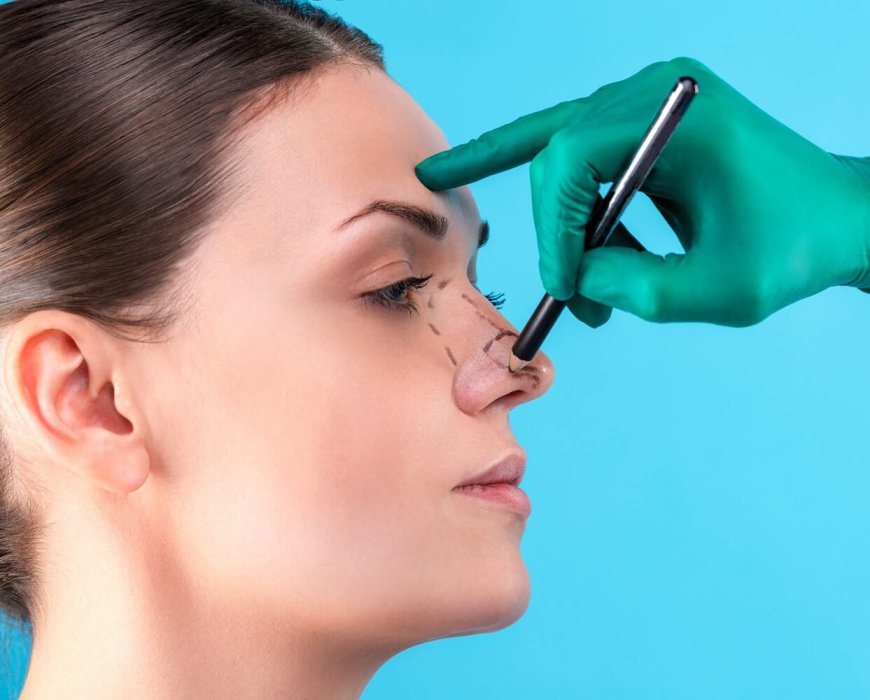
While absolute symmetry is rare in nature, noticeable asymmetry in the nose—particularly in the size, shape, height, or angle of the nostrils—can draw unwanted attention and disrupt overall facial balance. Because the nasal base anchors the lower third of the face, even subtle imbalances in the nostrils can make the entire nose appear crooked or uneven.
Rhinoplasty in Jeddah offers individuals an opportunity to explore nose reshaping options to improve facial harmony, address nasal concerns, and achieve natural-looking results based on their needs and expectations.
In Jeddah, board-certified facial plastic surgeons frequently treat nostril asymmetry as part of both primary and secondary rhinoplasty procedures. Correcting this delicate feature requires a precise understanding of underlying cartilage architecture, facial proportions, and structural support.
What Causes Nostril Asymmetry?
Before planning a corrective procedure, a specialist must determine the root anatomical cause of the imbalance. Nostril asymmetry typically stems from one or more of the following factors:
-
Deviated Nasal Septum: The central partition separating the nostrils may be crooked or displaced to one side, pulling one nostril wider or higher while collapsing or narrowing the other.
-
Unequal Cartilage Strength and Shape: The paired lower lateral cartilages that form the tips and rims of the nostrils may naturally differ in size, thickness, stiffness, or angle.
-
Previous Nasal Trauma: A past fracture or injury can misalign bone and cartilage frameworks, resulting in permanent structural unevenness.
-
Prior Surgical Scar Contraction: In revision cases, uneven healing or scar tissue contraction from an earlier operation can pull one nostril upward or distort its shape over time.
Surgical Techniques for Correcting Asymmetrical Nostrils
Treating uneven nostrils is rarely as simple as cutting or trimming tissue; it requires balancing structural support and reshaping the underlying framework. Depending on the anatomical cause, surgeons utilize several advanced techniques:
1. Septal Realignment (Septoplasty)
If a crooked septum is the primary culprit behind the asymmetry, straightening and securing the central cartilage along the midline restores structural symmetry to both nasal passages simultaneously.
2. Cartilage Grafting and Strut Support
When one nostril lacks structural support and appears collapsed or drooping, surgeons reinforce the area using precision cartilage grafts (such as alar contour grafts or batten grafts). These grafts act as internal scaffolding to prop up the weak side and match the projection of the opposite nostril.
3. Suture Techniques for Tip and Alar Balance
Using specialized internal suturing methods, surgeons can gently reposition, anchor, or lift the domes and rims of the lower lateral cartilages. This brings the nostril apertures into balanced alignment without removing excessive tissue.
4. Alar Base Adjustments (Alaplasty)
If the physical footprint or flare of the outer nostrils differs in size, a meticulous, millimeter-precise base reduction (such as a Weir or Joseph excision) can be performed on one or both sides to equalize the width and shape of the nostril openings.
The Importance of Realistic Expectations
Because absolute perfection is biologically impossible due to natural facial movement, muscle pull, and individual healing patterns, the primary goal of corrective surgery is functional harmony and aesthetic balance.
During your preliminary consultation in Jeddah, advanced 3D digital imaging is often used to map your facial proportions and demonstrate achievable improvements, ensuring you and your surgeon share the exact same visual goals.
Summary Advice
Correcting asymmetrical nostrils requires an artistic eye, deep anatomical knowledge, and advanced structural surgical skills. If you are considering nose reshaping in Jeddah, consult with a board-certified specialist who specializes in balanced, natural-looking facial symmetry.
What's Your Reaction?
 Like
0
 Dislike
0
 Love
0
 Funny
0
 Angry
0
 Sad
0
 Wow
0





