












Scalp Micropigmentation in Dubai for Temple Definition Guide
Discover how Scalp Micropigmentation in Dubai can refine temple contours through anatomical mapping, gradual transitions, and precise pigment placement.
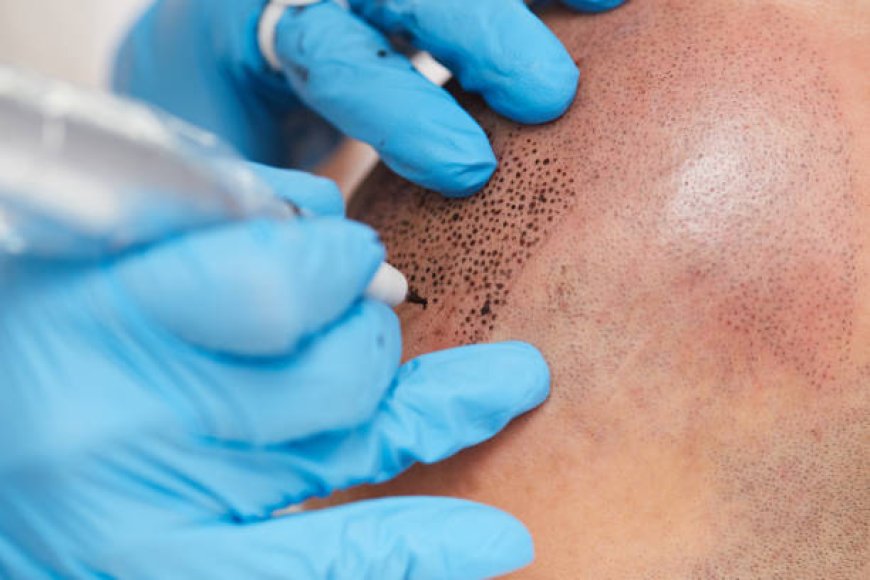
The temples are an important transition zone between the frontal hairline and the sides of the scalp. Even when substantial hair remains in this region, an indistinct contour can make the overall hairline appear less structured. For suitable patients, Scalp Micropigmentation in Dubai can refine this transition by using carefully positioned follicular impressions rather than creating a solid artificial border.
Temple definition is different from simply filling a recession. The objective is to establish a believable relationship between the frontal edge, temporal region, sideburn area, and existing hair pattern while preserving the natural directional changes found in this part of the scalp.
Understanding Temple Anatomy
The Temple Is a Transition Zone
The temporal region does not behave like the central frontal scalp. Hair direction changes as follicles approach the side of the head, and the density may naturally become more irregular.
This makes temple design a three-dimensional planning exercise. A visually convincing result needs to work from the front, side, and oblique viewing angles.
Temple Shape Influences Facial Framing
The temple contour contributes to how the upper face is framed. Small changes can alter the perceived relationship between the forehead, hairline, and sides of the face.
Rather than imposing the same contour on every patient, SMP planning should account for individual facial proportions and the patient's existing hairline architecture.
Temple Definition Versus Temple Recession
SMP Treatment for Temple Definition
Temple recession refers primarily to loss or reduction of hair in the temporal area. Temple definition has a different objective: improving the visual clarity of an existing transition.
A patient may still have hair throughout the region but find that the border looks soft, irregular, or visually disconnected from the frontal hairline.
In such cases, treatment can focus on refining the contour instead of attempting to reproduce a new hairline.
Why Overfilling the Temples Can Look Unnatural
The temporal region normally has a softer visual density than the stronger portions of the frontal scalp.
If pigment is placed too densely, the temple may appear darker than the neighboring hair-bearing areas. This can create an artificial block rather than a gradual anatomical transition.
The practitioner therefore needs to determine where definition ends and natural softness should begin.
Mapping the Temple Contour
A detailed assessment can identify several reference points before pigment placement begins.
These may include:
- The existing frontal hairline
- Frontal-temporal junction
- Natural temple recession pattern
- Side hairline
- Sideburn relationship
- Forehead contour
- Existing follicular direction
- Hair density immediately behind the temple
The resulting map should follow the patient's anatomy rather than relying on a predetermined template.
Building a Natural Temple Transition
| Region | Visual role | SMP planning focus |
|---|---|---|
| Frontal-temporal junction | Connects front and side | Gradual density transition |
| Temple interior | Establishes contour | Controlled follicular-point distribution |
| Outer temporal area | Softens the side profile | Reduced saturation |
| Sideburn connection | Links scalp and facial hair | Directional continuity |
| Adjacent frontal scalp | Supports overall framing | Match surrounding density |
The purpose of this mapping is continuity. Each section should visually lead into the next.
Micro-Pigment Placement in the Temporal Region
SMP uses small pigment deposits placed within the superficial scalp rather than lines representing individual hairs. The ISHRS describes the technique as a shallow, pointillistic procedure designed to create the appearance of follicular points or short stubble.
Temple work requires particular attention to deposit spacing because the area often has lower visual density and greater directional variation than the central scalp.
The practitioner can adjust:
- Point spacing
- Deposit size
- Placement depth
- Pigment concentration
- Transition density
- Distribution relative to existing follicles
The goal is definition without excessive visual weight.
Designing the Frontal-Temporal Junction
Creating Continuity From the Front
The temple should not look like a separate cosmetic section attached to the frontal hairline.
A gradual transition can connect the stronger frontal region with the softer temporal architecture. The change may involve progressively adjusting pigment spacing and concentration as the pattern moves laterally.
Maintaining Directional Logic
Hair follicles around the temples can change direction as they approach the side of the scalp.
Although SMP does not recreate actual shafts, pigment placement can be organized in a way that visually corresponds with the surrounding follicular pattern.
This helps the treated region integrate with existing hair rather than appearing as an independent graphic shape.
The Role of Facial Proportions
Avoiding a One-Shape-Fits-All Design
Temple contours should be considered alongside forehead width and overall facial structure.
A contour that appears appropriate on a broad forehead may produce a different visual effect on a narrower face. Likewise, lowering or extending a temple boundary without considering the existing hairline can change the overall framing of the face.
This is why individualized mapping is more appropriate than using a standard template.
Conservative Definition Can Preserve Natural Character
The objective is not necessarily to make the temple appear completely filled.
Maintaining some natural softness can be important, particularly when the surrounding hair has naturally variable density. A subtle contour can provide definition while remaining compatible with the patient's existing appearance.
Hair Length and Temple Definition
The preferred haircut has a direct influence on how temporal pigmentation is perceived.
Short hairstyles expose the temple contour clearly and make spacing between pigment points more visible. Longer hair can soften the transition through additional strand coverage.
A treatment plan should therefore consider the patient's normal grooming pattern rather than designing the temple exclusively for a single hairstyle.
Technical Depth and Pigment Control
The depth of pigment placement is a technical consideration in SMP. According to the ISHRS, excessive penetration can allow pigment to spread into deeper tissue, potentially producing blurred or unwanted discoloration.
This matters in the temple region because the contour may contain closely spaced visual elements. Maintaining controlled superficial placement helps preserve the intended point structure.
Specialized equipment and practitioner training are also important considerations for SMP procedures.
When Temple Definition May Be Considered
A temple-focused SMP plan may be considered when someone has:
- A weakly defined temporal contour
- Fine hair that makes the temple border indistinct
- Uneven visual transitions between frontal and side hair
- A close-cropped hairstyle that exposes the temple architecture
- A stable area requiring cosmetic refinement
- Residual irregularity after previous hair restoration
The underlying scalp condition and hair-loss pattern should be evaluated before treatment.
When Definition Should Not Be the First Step
A cosmetic contour should not conceal a rapidly changing hair-loss pattern without appropriate assessment.
If temple changes are recent or progressive, the cause and stability of the hair loss should be considered first. SMP changes visual appearance but does not stop follicular miniaturization or regenerate lost follicles.
Where appropriate, a broader hair-restoration assessment can help determine whether camouflage, medical management, surgical restoration, or a combination should be considered.
Dubai Considerations for Temple Pigmentation
Temple areas can be exposed to substantial sunlight, especially with short hairstyles. Dubai's bright outdoor environment can make pigment and scalp texture more visible, while regular transitions between outdoor heat and indoor air conditioning can influence daily scalp-care routines.
Long-term pigment maintenance should therefore include appropriate sun protection and adherence to practitioner-specific aftercare.
The ISHRS identifies ultraviolet exposure and pigment stability as relevant factors when considering SMP pigment behavior over time.
Assessing the Result From Multiple Angles
Temple definition should not be evaluated solely from a straight-on photograph.
A professional assessment can consider:
- Frontal appearance.
- Left and right profile.
- Three-quarter facial views.
- Hairline-to-temple continuity.
- Relationship with the sideburn.
- Appearance with the patient's normal haircut.
This broader assessment helps identify whether the contour remains natural when the head moves or is viewed from the side.
Maintaining Temple Definition Over Time
The pigment itself can gradually soften, while the surrounding hair may continue to change.
If neighboring follicles become less dense, a previously subtle temple treatment may appear more prominent. Conversely, changes in hairstyle can alter how much of the treated region is visible.
Long-term planning should therefore consider both pigment longevity and the patient's expected hair trajectory.
A Precision-Based Approach to Temple Contouring
Temple definition depends on controlled transitions rather than maximum coverage. The practitioner must balance frontal density with temporal softness, follow the existing anatomy, and avoid creating a rigid boundary.
The most useful assessment is therefore individualized: the temple should be evaluated as part of the complete hairline rather than as an isolated cosmetic target.
For patients considering hair restoration care in Dubai, a detailed scalp and hairline assessment can help determine whether temple definition through SMP is appropriate for the existing pattern and preferred hairstyle.
Strategic Investment in Temple Definition
A refined temple contour can strengthen the visual connection between the frontal hairline and the sides of the scalp without requiring an exaggerated or overly dense design. Precise mapping, controlled pigment placement, anatomical awareness, and gradual transitions are the foundation of a natural-looking result.
Patients interested in temple-focused SMP can discuss their existing hairline, facial proportions, scalp characteristics, and preferred hairstyle during a consultation with Tajmeels Clinic to develop a treatment plan tailored to their individual anatomy.
What's Your Reaction?
 Like
0
 Dislike
0
 Love
0
 Funny
0
 Angry
0
 Sad
0
 Wow
0