















Understanding Fractional Flow Control Valves for Precise Low-Flow Applications
Learn how the Mark 708 Series provides precise fractional flow control for low-flow applications, with flexible materials, Cv ranges, and actuation options.

Controlling very small flow rates can be difficult when a standard control valve does not provide enough range or sensitivity. In applications such as pilot plants, test stands, research facilities, and specialized processing systems, even a small change in flow can affect the results of a process. This is where fractional flow control valves are used.
A fractional flow control valve is designed for applications where accurate and repeatable control is needed at low flow rates. The valve must provide enough control resolution to make small adjustments without making the process difficult to manage.
What Is a Fractional Flow Control Valve?
Fractional flow control valves are control valves designed specifically for low-flow and micro-flow applications. Instead of being selected primarily for moving large volumes of fluid, they are sized and configured to provide precise control over relatively small flow rates.
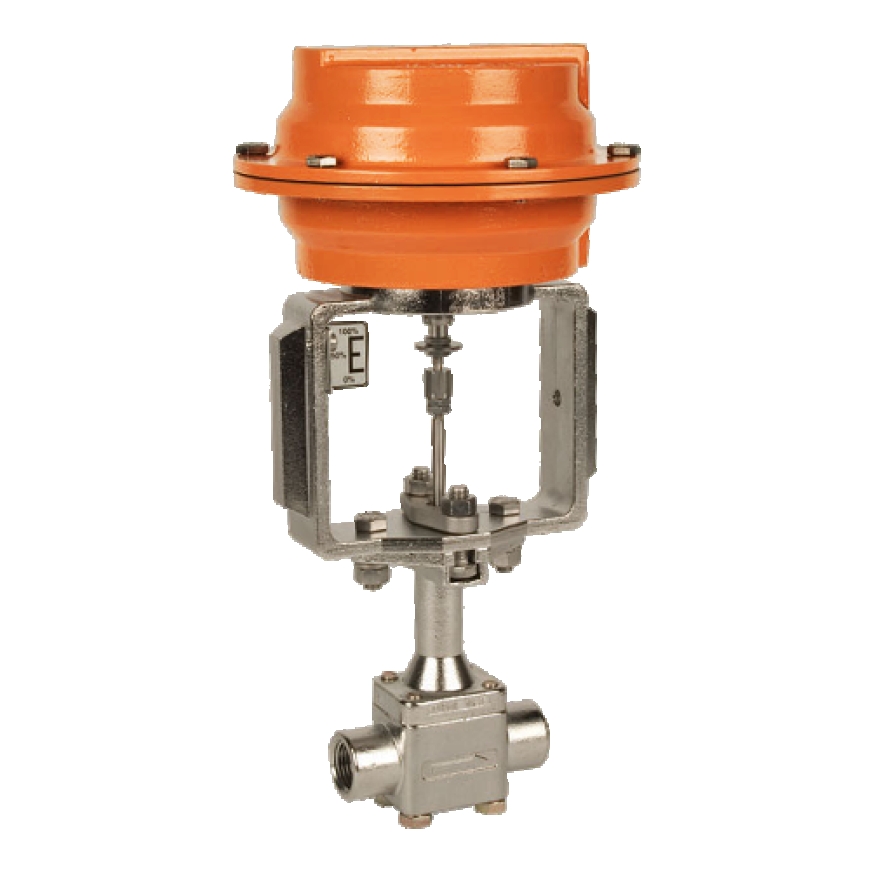
The Mark 708 Series, for example, is designed for fractional flow applications and is available with pneumatic or electric actuation. The series covers Cv values from 0.00001 to 4.0, with valve sizes from 1/4 inch to 3/4 inch (DN8 to DN20). This range allows the valve to be configured for applications where conventional control valves may not provide the required level of control.
Where Are Fractional Flow Valves Used?
Low-flow control is common in systems where process conditions need to be carefully regulated. Typical applications include pilot plant installations, test stands, R&D facilities, processing plants, and specialized processes such as dosing, injection, and venting.
These valves can also be relevant in industries such as aerospace, chemical and petrochemical processing, oil and gas, industrial processing, and test equipment.
For research and development work, precise flow control can be particularly important because the valve may be used to establish repeatable test conditions. In a dosing or injection application, controlling the flow accurately can help maintain the intended process conditions.
Why Valve Sizing Matters in Low-Flow Applications
Valve sizing is especially important when dealing with fractional flow. A valve that is too large for the required flow range may make precise control difficult because a small amount of valve movement can create a relatively large change in flow.
The Cv range is therefore an important specification to consider when selecting a fractional flow control valve. The Mark 708 Series offers Cv values from 0.00001 to 4.0, giving engineers a broad range of options for low-flow control applications.
Other factors also need to be considered, including the process fluid, pressure conditions, required flow rate, temperature, valve material, end connection, and actuator requirements.
Design Features for Precision Applications
The Mark 708 Series incorporates several design features intended for fractional flow service. It uses a rolling diaphragm and guided trim, while a spring-loaded TFE/Chevron packing arrangement is available as part of the design.
The valve also uses a bolted body and bonnet connection, along with a threaded bonnet for quick disassembly. A quick-change trim is standard for Cv values of 0.05 and above. The secondary stem connection is designed to eliminate the need for stroke adjustment when changing the trim.
Depending on the control requirements, the valve can also be configured with a side-mounted or top-mounted positioner.
These details can become important when a valve is being used in a system where maintenance, trim changes, and repeatable control are part of normal operation.
Materials and Connection Options
Process conditions vary considerably from one application to another, so material and connection selection should be based on the actual service requirements.
The Mark 708 Series is available with body materials including carbon steel, stainless steel, Hastelloy C, Monel, and Alloy 20, among others. Available end connections include threaded, socket weld, integral tube, and welded flange configurations.
The standard valve size range is 1/4 inch to 3/4 inch (DN8 to DN20), with globe-style Class IV or Class VI seating.
Pneumatic and Electric Actuation
The Mark 708 Series is available with pneumatic and electric actuation, allowing the valve configuration to be matched to the control system.
Pneumatic actuation can be used where compressed air is part of the plant control system, while electrically actuated configurations can be considered where an electric control setup is preferred.
The available pressure ranges include 3–15 psi and 6–30 psi, with split ranges available when an optional positioner is used.
Precision Matters in Low-Flow Systems
When a process depends on controlling a small amount of fluid, valve selection can have a direct impact on how consistently the system operates. Fractional flow control valves are designed specifically for these situations, providing a practical option for applications that require controlled and repeatable low-flow performance.
The Mark 708 Series is one example of a fractional flow control valve designed for micro-flow applications. With multiple body materials, connection options, actuation configurations, and a wide Cv range, it can be configured for different pilot plant, research, testing, processing, dosing, injection, and venting requirements.
For engineers selecting a valve for a specific application, reviewing the flow conditions and sizing requirements first is essential. The right valve configuration should be based on the process requirements, not simply the nominal pipe size.
What's Your Reaction?
 Like
0
 Dislike
0
 Love
0
 Funny
0
 Angry
0
 Sad
0
 Wow
0