





















What Every Trailer Manufacturer Should Know About Trailer Wire Harness Quality
Need a trailer wiring harness built to handle vibration, environmental stress, and complex towing systems? Stantek manufactures sealed, over molded, and strain-relieved harness assemblies with 100% electrical testing and compliance to automotive-grade standards. Ideal for OEM trailer manufacturers, fleet integrators, and specialty vehicle builders seeking dependable wiring solutions.

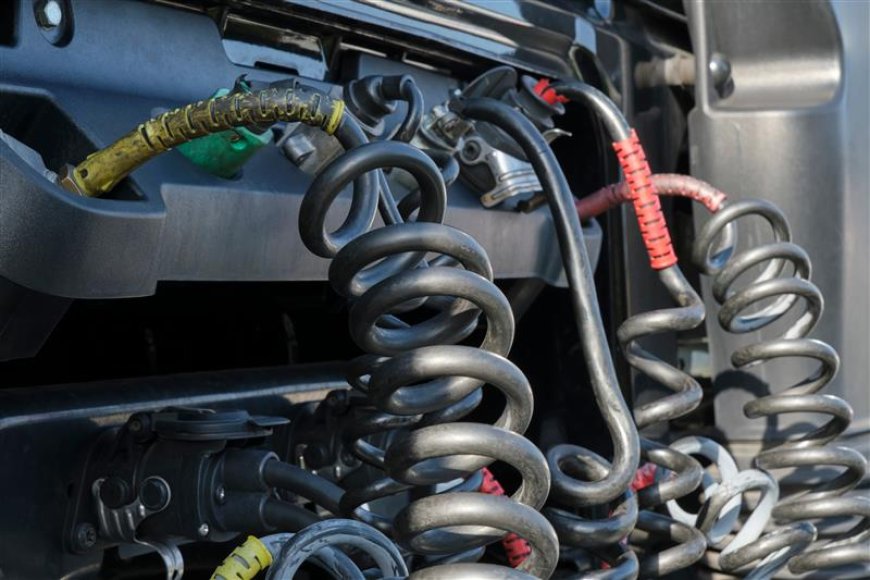
There's a moment every trailer manufacturer or fleet operator eventually faces a trailer that works perfectly on the test floor starts acting up on the road. Lights flicker. Brake signals drop out. A sensor stops responding. Nine times out of ten, the culprit isn't the trailer itself. It's the wiring.
A trailer wire harness is often the most underestimated component in trailer design. It bundles every electrical circuit the trailer depends on lighting, braking, signal transmission, and auxiliary controls into a single structured assembly that must survive vibration, weather, mechanical stress, and thousands of miles of real-world use. Getting it right matters more than most people realize.
This article breaks down what makes a quality trailer wiring harness, what to look for when sourcing one, and why the right manufacturing partner can save you significant time, cost, and headaches down the line.
What exactly is a trailer wire harness?
A trailer wire harness is an organized assembly of wires, connectors, terminals, protective sleeves, and routing hardware that powers and controls a trailer's electrical systems. Think of it as the nervous system of your trailer it carries the signals and power that make brake lights work, turn signals respond, ABS sensors communicate, and auxiliary equipment function correctly.
Unlike a standard off-the-shelf wire bundle, a properly engineered trailer wiring harness is designed specifically for the mechanical and environmental conditions trailers experience. That means conductors chosen for flexibility under vibration, connectors sealed against moisture and road debris, protective sleeving sized and routed to avoid abrasion, and every circuit verified for continuity and insulation integrity before the assembly ever ships.
Why off-the-shelf wiring often falls short
It's tempting to pull a generic harness from a catalogue and move on. For simple, low-demand trailers, that might work fine. But for commercial applications, specialty trailers, RV systems, or any trailer that's going to face real-world abuse, generic solutions create real-world problems.
Generic harnesses are rarely optimized for a specific trailer's routing geometry or connector layout. They often use lower-strand conductors that crack under repeated vibration. The connectors may not be sealed or strain-relieved, meaning the first hard rain or rough road introduces the potential for intermittent faults. And when something does fail, tracing the problem in a non-documented, non-custom assembly is frustrating and expensive.
Custom trailer wiring harness assemblies solve these problems by design not as an afterthought.
Key features of a well-engineered trailer wiring harness
If you're evaluating a trailer wiring harness supplier, here are the technical features that separate reliable assemblies from ones that will give you trouble:
High-Strand Flexible Conductors: Trailer environments involve constant vibration and mechanical movement. High-strand conductors bend without fatiguing over time, whereas lower-strand alternatives eventually crack at stress points. For any trailer that moves regularly, this isn't optional it's fundamental.
Overmolded and Sealed Connectors: Connectors are the most common failure point in trailer wiring. Over molded connectors encapsulate the wire-to-connector junction in a protective layer, while sealed connectors prevent moisture ingress. Strain relief at the connector exit prevents the wiring from flexing at the same point repeatedly, which leads to conductor fatigue.
Protective Sleeving and Shielding: Bare wires in a trailer environment get chewed up by frame edges, metal brackets, and abrasive surfaces. Properly selected protective sleeving whether conduit, braided sleeve, or split loom keeps the conductors intact across the full routing path.
Circuit Integration for Lights, Brakes, and Sensors: Modern trailers aren't just lights and a ground wire. ABS sensors, electric brake controllers, load sensors, and auxiliary power systems all require signal and power circuits that need to be properly integrated, isolated, and tested within the harness. A harness that handles only basic functions is already behind the curve for most commercial applications.
100% Electrical Testing: Every harness should be electrically tested before it ships continuity verification, insulation resistance checks, and functional testing against the wiring schematic. This isn't just good practice; it's the difference between finding a problem on the bench versus finding it on the side of a highway.
The manufacturing standards that matter
When evaluating a trailer wiring harness manufacturer, ask specifically about their quality certifications. ISO 9001:2015 is the baseline for a documented, auditable quality management system. WHMA-A-620 Class 3 is the industry-recognized workmanship standard for wire harness assemblies Class 3 being the highest performance category, typically required for applications where reliability is non-negotiable.
J-STD-001 covers soldering and connection quality, and MIL-spec compliance indicates the manufacturer has the capability to meet even stricter defense-grade requirements. Together, these standards provide the framework for consistent, verifiable quality not just a verbal assurance that the harnesses are built well.
Working with a manufacturer who engineers with you
One of the things that often gets overlooked when sourcing trailer wiring harnesses is the value of engineering collaboration. A manufacturer who only builds what you hand them a drawing for is useful. A manufacturer who reviews your design for manufacturability, suggests conductor and connector optimizations, and flags potential routing or protection issues before production starts that's a genuine partner.
Stantek is a U.S.-based custom wire harness manufacturer that operates exactly this way. Working with OEM trailer manufacturers, fleet integrators, and specialty platform builders, Stantek assists in design from the earliest stages providing manufacturability guidance, rapid prototyping, and low-to-mid-volume production of trailer wire harness assemblies that are engineered for long-term reliability, not just initial function. Their approach brings decades of custom automotive and trailer wiring expertise to every project, with full ISO 9001:2015 and WHMA-A-620 Class 3 compliance built into the process.
Rapid prototyping: why it changes the timeline
One underappreciated advantage of working with a manufacturer that offers rapid prototyping is how dramatically it compresses the design validation cycle. Rather than waiting weeks or months for a first article, you can move through design iterations quickly, validate performance in your actual trailer application, and reach production-ready status faster.
For OEMs managing tight launch schedules, or fleet operators integrating new trailer configurations, this responsiveness isn't a nice-to-have it's a competitive necessity. And it only works when the manufacturer has the engineering depth to turn around meaningful prototypes quickly, not just rush something out the door.
Applications where trailer wiring quality is critical
It's worth being specific about where trailer wiring quality has the highest stakes:
Commercial Freight Trailers: These trailers run high mileage, in all weather conditions, with frequent coupling and uncoupling cycles. Brake and lighting system integrity is a legal requirement, not just an operational preference. A harness failure can ground a trailer and create serious liability exposure.
RV and Recreational Trailers: Owners expect their RV trailer's electrical systems to work reliably on every trip. Auxiliary power, interior lighting, HVAC connections, and entertainment systems all run through the wiring harness. Problems here show up as warranty claims and reputation damage for manufacturers.
Utility and Equipment Trailers: These trailers often carry heavy loads, experience high vibration, and may operate in muddy, wet, or chemically harsh environments. The harness needs to hold up where conditions are worst.
Specialty and Custom Platforms: Emergency response trailers, mobile command units, military logistics trailers these applications require engineering-level customization of every wiring component, and they cannot tolerate field failures
What to ask a potential trailer wire harness supplier
Before committing to a manufacturer, it's worth asking a few direct questions. What quality certifications do they hold, and can they provide documentation? Do they offer engineering collaboration during design, or do they only build from completed drawings? What does their testing process look like, and is 100% electrical testing standard or optional? Can they handle rapid prototyping and scale to production volume without changing processes? Do they have specific experience with trailer and towing system wiring, or is it just one of dozens of product types they handle?
The answers to these questions tell you whether a supplier is set up to be a long-term partner or just a transactional vendor
The bottom line
A trailer wire harness isn't glamorous engineering. It doesn't get written up in product brochures or highlighted in marketing materials. But it's foundational the component that makes everything else in the trailer's electrical system function reliably, mile after mile, in conditions that are rarely forgiving.
Sourcing it from a manufacturer who treats it that way with engineering rigor, proper materials, documented testing, and real production experience is one of the most straightforward decisions a trailer OEM or fleet operator can make to improve long-term reliability and reduce total cost of ownership.
If you're in the process of evaluating trailer wiring harness suppliers, look for the combination of technical depth, quality certifications, and willingness to collaborate early in the design process. That combination is rarer than it should be, but when you find it, it makes a meaningful difference.
What's Your Reaction?
 Like
0
Like
0
 Dislike
0
Dislike
0
 Love
0
Love
0
 Funny
0
Funny
0
 Angry
0
Angry
0
 Sad
0
Sad
0
 Wow
0
Wow
0