

























What Is Augmented Reality Knee Replacement and How Does It Work?
Discover how augmented reality knee replacement works, its benefits, procedure, and recovery. Learn how this advanced technology improves precision and patient outcomes.

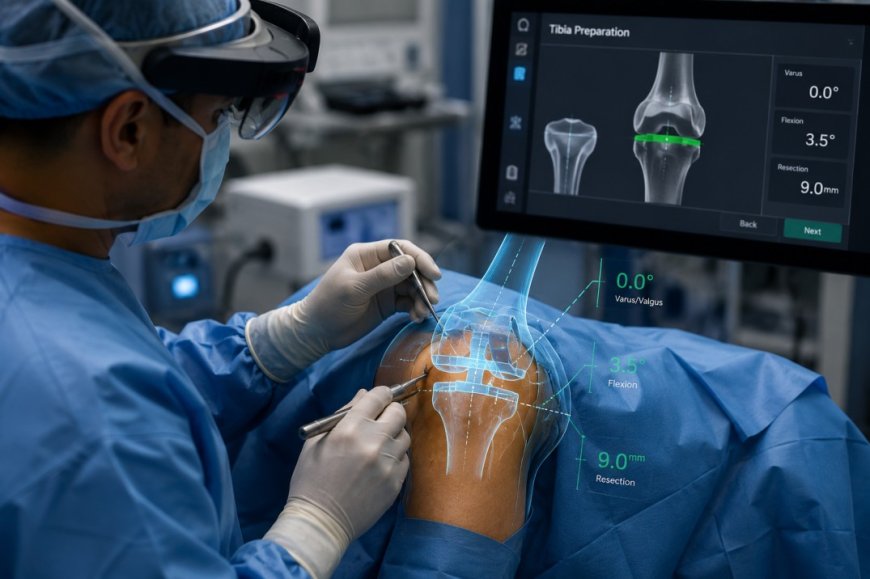
Knee replacement surgery has evolved significantly over the past few decades, offering patients better precision, improved outcomes, and faster recovery. One of the latest innovations transforming orthopaedic care is augmented reality knee replacement. This advanced technology combines real-world surgical procedures with digital guidance, enabling surgeons to perform knee replacement with exceptional accuracy.
For patients considering knee replacement surgery, understanding how augmented reality works and the benefits it offers can help them make informed treatment decisions. In this guide, we explain what augmented reality knee replacement is, how it works, and why it is becoming an increasingly preferred option for joint replacement surgery.
What Is Augmented Reality Knee Replacement?
Augmented reality knee replacement is an advanced surgical technique that uses computer-generated visual information during surgery. Unlike virtual reality, which creates a completely digital environment, augmented reality overlays digital images and real-time anatomical information onto the surgeon's view of the patient's knee.
This technology provides precise guidance throughout the procedure, helping the surgeon position implants more accurately while preserving healthy bone and soft tissue.
The goal is to improve alignment, restore natural joint movement, and enhance the overall success of the surgery.
How Does Augmented Reality Work During Knee Replacement?
The procedure begins with careful planning before surgery. Advanced imaging and digital mapping create a detailed understanding of the patient's knee anatomy.
During surgery, specialized augmented reality equipment projects real-time guidance that helps the surgeon visualize important structures and make accurate surgical decisions.
The process typically includes:
Preoperative Planning
Before surgery, the surgeon evaluates the patient's knee using physical examination and diagnostic imaging.
A personalized surgical plan is created based on:
- Knee alignment
- Bone structure
- Joint deformity
- Implant positioning
- Ligament balance
This customized approach allows every procedure to be tailored to the individual patient's anatomy.
Real-Time Surgical Guidance
During the operation, augmented reality technology provides continuous visual guidance.
The surgeon can accurately identify:
- Bone cutting angles
- Implant positioning
- Joint alignment
- Limb balance
- Range of motion
Unlike conventional techniques that rely mainly on manual instruments, augmented reality offers dynamic information throughout the surgery.
Implant Placement
Proper implant placement is one of the most important factors determining the long-term success of knee replacement.
Augmented reality helps ensure the implant is positioned with greater precision, reducing the chances of misalignment that may lead to pain, instability, or early implant wear.
Benefits of Augmented Reality Knee Replacement
The growing popularity of augmented reality knee replacement is driven by several important advantages over conventional surgical methods.
Improved Surgical Precision
Digital guidance enables highly accurate bone preparation and implant positioning.
Better alignment contributes to improved joint function and longer implant lifespan.
Personalized Treatment
Every patient's knee anatomy is unique. Augmented reality allows surgeons to customize the procedure according to the individual's anatomy rather than using a one-size-fits-all approach.
Better Joint Balance
Balanced ligaments are essential for smooth knee movement.
The technology helps surgeons achieve optimal soft tissue balance, improving knee stability after surgery.
Smaller Margin of Error
Traditional surgical techniques depend heavily on manual measurements.
Augmented reality minimizes human error by providing continuous visual feedback throughout the procedure.
Faster Recovery
Because the procedure is more precise and preserves healthy tissues whenever possible, many patients experience:
- Reduced post-operative pain
- Better early mobility
- Improved confidence during rehabilitation
- Quicker return to daily activities
Recovery still depends on factors such as age, overall health, and commitment to physiotherapy.
Who Can Benefit from Augmented Reality Knee Replacement?
This advanced technology is suitable for many patients who require knee replacement due to:
- Osteoarthritis
- Rheumatoid arthritis
- Post-traumatic arthritis
- Severe cartilage damage
- Chronic knee pain
- Joint deformity
Patients with complex knee anatomy may particularly benefit from the enhanced accuracy offered by augmented reality-guided surgery.
A consultation with an experienced orthopaedic surgeon in Panchkula can help determine whether this approach is appropriate based on individual needs.
Is the Procedure Different from Traditional Knee Replacement?
From a patient's perspective, the overall surgical experience remains largely the same.
The preparation, anesthesia, hospital stay, rehabilitation, and recovery process are generally similar.
The major difference lies in how the surgeon performs the procedure.
Instead of relying only on conventional alignment tools, augmented reality provides continuous digital guidance that improves precision during every stage of surgery.
Recovery After Augmented Reality Knee Replacement
Recovery follows many of the same principles as conventional knee replacement.
Most patients begin standing and walking with assistance within 24 hours after surgery.
Physiotherapy starts early to restore:
- Knee flexibility
- Muscle strength
- Walking ability
- Joint stability
Most individuals return to routine daily activities within several weeks, while complete recovery may take three to six months depending on individual progress.
Following the prescribed rehabilitation program remains the key to achieving the best possible outcome.
Is Augmented Reality Knee Replacement Safe?
Yes. When performed by experienced surgeons using approved technology, augmented reality knee replacement is considered a safe and effective procedure.
Like any surgical treatment, there are still potential risks, including:
- Infection
- Blood clots
- Implant loosening
- Joint stiffness
- Rare surgical complications
However, improved surgical accuracy may reduce certain complications associated with implant misalignment.
The Future of Knee Replacement Surgery
Technology continues to transform orthopaedic surgery.
Augmented reality represents an important step toward more personalized, precise, and patient-centered knee replacement procedures.
As software, imaging systems, and navigation technologies continue to improve, surgeons are expected to achieve even greater accuracy while enhancing patient outcomes.
This innovation reflects the future of joint replacement by combining surgical expertise with advanced digital guidance.
Conclusion
Augmented reality knee replacement is redefining how modern knee replacement surgery is performed. By providing real-time visual guidance, personalized surgical planning, and greater implant accuracy, this technology helps surgeons deliver more precise and reliable outcomes.
For patients living with severe knee pain, augmented reality-assisted surgery offers a promising advancement that supports improved mobility, better joint function, and long-term implant performance. Consulting an experienced orthopaedic specialist can help determine whether this innovative approach is the right choice for restoring an active, pain-free lifestyle.
What's Your Reaction?
 Like
0
Like
0
 Dislike
0
Dislike
0
 Love
0
Love
0
 Funny
0
Funny
0
 Angry
0
Angry
0
 Sad
0
Sad
0
 Wow
0
Wow
0