
















Why Military Wire Harnesses Demand a Different Level of Engineering - And How to Source Them Right
Defense programs can't afford wiring failures. This page covers how custom military wire harnesses are engineered for rugged environments from MIL-SPEC connectors and EMI/RFI shielding to environmental sealing and IPC/WHMA-A-620 Class 3 compliance.

There's a reason defence engineers don't pick wire harnesses the same way a consumer electronics buyer might. In a commercial product, a wiring failure is an inconvenience. In a military vehicle barrelling through desert terrain, or an airborne communication system operating at altitude in freezing temperatures, it can mean something far worse. The stakes are simply not comparable.
Yet, surprisingly, a lot of procurement teams especially those newer to the defence supply chain still approach wire harness sourcing as though it were a commodity purchase. They focus heavily on price and lead time and give relatively little attention to the engineering depth behind the product. That's a mistake worth correcting before it becomes a mission-critical problem.
What Actually Separates a Military Wire Harness from a Standard Assembly
Start with the materials. Military wire harnesses typically use conductors rated for wide thermal ranges, insulation that holds up against fuels, hydraulic fluids, and UV exposure, and jacketing that resists abrasion from the kind of rough handling that field equipment routinely takes. These aren't specifications that most commercial-grade cable assemblies are designed to meet.
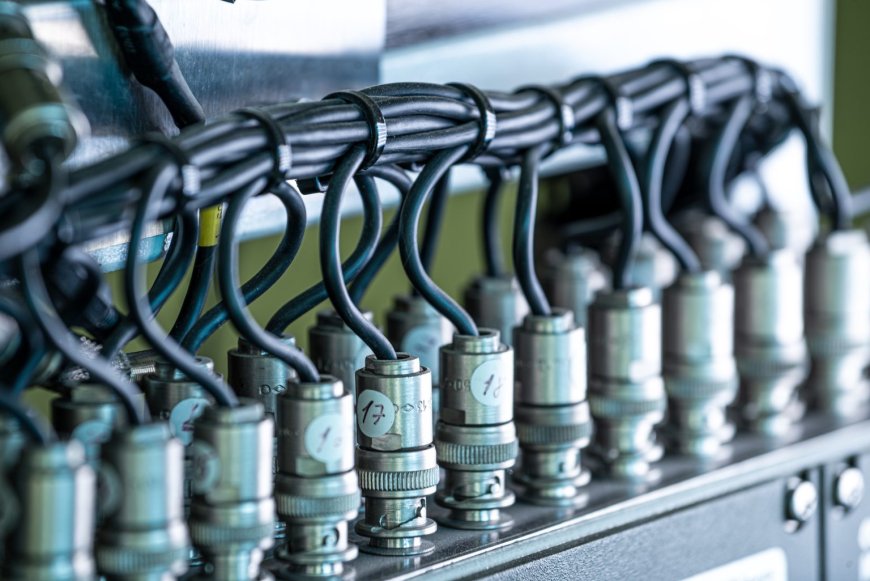
Then there's the connector side. MIL-SPEC connectors built to standards like MIL-DTL-38999 or MIL-DTL-5015 are engineered for secure engagement under vibration, resistance to corrosion in wet or chemical environments, and consistent electrical performance across thousands of mating cycles. A standard connector might work fine on a production floor. It won't necessarily hold up on the underside of a vehicle crossing broken terrain.
EMI and RFI shielding are another area where military harnesses go substantially further. Défense platforms operate in electromagnetic environments that would disrupt unshielded assemblies quickly whether from co-located radio equipment, radar systems, or intentional jamming. Proper shielding isn't a nice-to-have in these contexts; it's a core functional requirement.
And finally, there's environmental sealing. Overmolding and specialized sealing techniques protect harness terminations from moisture ingress, dust infiltration, and thermal cycling stress. These details matter enormously in the field, even though they're largely invisible in a spec sheet.
The Engineering Process That Makes It Work
Good military wire harnesses don't start at the manufacturing floor they start at the design table. The routing of conductors, the selection of strain relief points, the choice of shielding method, the connector back shell configuration all these decisions compound in ways that determine whether the finished assembly will perform reliably over thousands of hours of operational use.
This is where experience makes a real difference. An engineering team that has designed harnesses for land vehicles, naval platforms, and airborne systems brings a kind of practical knowledge that datasheets can't fully capture. They know, for example, which connector orientations create stress points in each installation. They know how thermal cycling affects specific insulation materials over time. And they know when a customer's initial design idea is going to create problems in production or in the field.
That collaborative, front-end engineering approach is what makes the difference between a harness that passes factory testing and one that performs reliably in service.
Testing and Standards Compliance - Not Optional
Military wire harness assemblies are expected to comply with a set of established standards that govern manufacturing quality and testing procedures. IPC/WHMA-A-620 Class 3 is one of the most recognized benchmarks, representing the highest tier of workmanship requirements for wire harness and cable assembly manufacturing. These standard covers everything from conductor termination quality to insulation damage criteria to connector installation specifications.
Beyond workmanship standards, individual harnesses typically require electrical testing for continuity and insulation resistance, as well as mechanical inspection for dimensional accuracy and physical integrity. In higher-specification programs, additional tests for dielectric withstand voltage, EMI shielding effectiveness, or environmental exposure may also be required.
The point isn't to accumulate certifications. The point is that rigorous, documented testing creates a traceable quality record that defense contractors and their customers can rely on and that's genuinely valuable when programs run for years and assemblies need to be reproduced consistently.
Choosing the Right Manufacturing Partner
For defence contractors and OEMs, the manufacturing partner matters as much as the design itself. A supplier that can only handle large production volumes isn't useful for a program that needs fifty prototype units in four weeks. Equally, a supplier without real engineering depth isn't a partner they're just a fabricator, and any design problems you bring them will come back to you.
What teams sourcing military wire harnesses should look for is a combination of technical capability, responsiveness, and a track record of working within the pace that defence programs operate at. Schedules change. Designs get revised. Urgent delivery needs emerge without much warning. A manufacturing partner that can absorb those dynamics without compromising quality is genuinely hard to find.
Stantek, based in Stanton, Kentucky, is one of the manufacturers that operates in this space. They specialize in custom military wire harness design, rapid prototyping, and low-to-mid volume production for defence contractors and military equipment OEMs. Their work covers land, air, and naval system applications, with full MIL-SPEC connector expertise, EMI/RFI-shielded assemblies, and compliance with IPC/WHMA-A-620 Class 3 standards. For defence teams that need a responsive, ITAR-compliant partner who can engage from early design through final delivery, they're worth a direct conversation.
Final Thought
The wiring harness is not a glamorous part of a defence system. Nobody writes feature pieces about it. But ask any experienced field to engineer what kinds of failures cause the most frustration in operational equipment, and electrical connectivity problems corroded connectors, chafed wires, failed terminations come up more often than most people expect.
Getting the wire harness right, from materials selection through manufacturing and testing, is one of those investments that pays off quietly and consistently. It's not where defence programs typically look for savings. And understanding why that's the right instinct is the first step toward sourcing these components well.
What's Your Reaction?
 Like
0
Like
0
 Dislike
0
Dislike
0
 Love
0
Love
0
 Funny
0
Funny
0
 Angry
0
Angry
0
 Sad
0
Sad
0
 Wow
0
Wow
0