

























Advanced ELISA Method Innovations Transforming Medical Diagnostics
New ELISA techniques automate screening, boost sensitivity, and accelerate disease detection to deliver faster patient results.

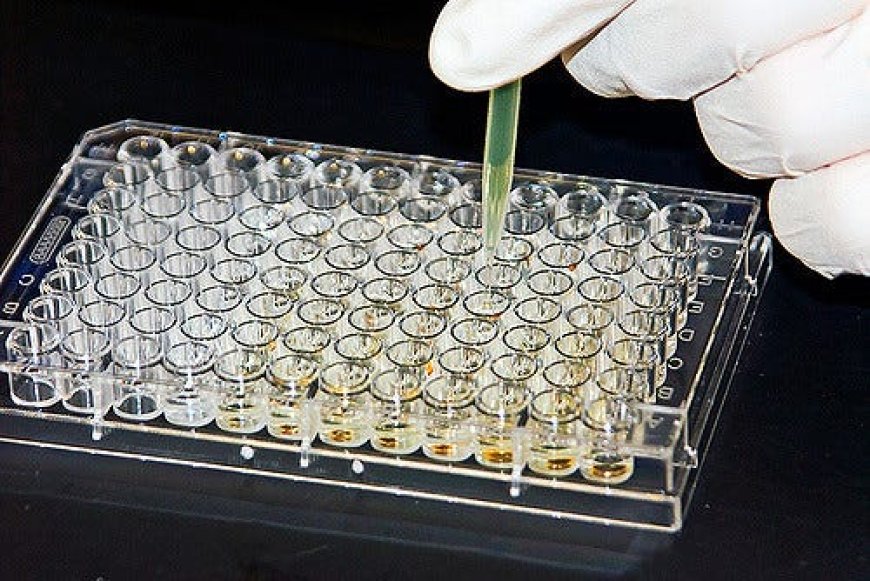
Medical diagnostics rely on accurate laboratory testing to detect disease biomarkers in patient serum samples. Recent improvements in ELISA methods have enhanced processing speed, sensitivity, and overall analytical performance. Standardized workflows also reduce variability across experimental setups, improving consistency in results.
These advancements support the reliable detection of infectious diseases and autoantibodies, enabling earlier and more accurate diagnosis. Enhanced detection methods continue to strengthen clinical research and public health outcomes worldwide.
Evolution of Antigen Detection Technologies
Traditional laboratory methods use antibody binding to isolate specific proteins from complex biological mixtures. The basic ELISA technique relies on immobilized capture molecules attached to microplate surfaces, allowing non-specific substances to be washed away while retaining the target antigen. Advances in plate surface engineering have improved binding efficiency and reduced background interference.
Enhanced surface treatments now increase protein binding capacity per unit area, improving assay sensitivity. This enables reliable detection of low-abundance analytes that were previously undetectable using standard automated systems.
High-Throughput Screening in Diagnostic Laboratories
Modern clinical studies process thousands of specimens daily with strict turnaround requirements. High-throughput automation enables an active ELISA Lab to manage large sample volumes with minimal manual pipetting. Robotic liquid handlers distribute samples, reagents, and wash buffers across multi-well plates, reducing error and standardizing incubation conditions.
Automated readout systems measure marker concentrations using different detection methods:
- Colorimetric readers measure absorbance changes from enzymatic reactions.
- Fluorometric systems detect wavelength-specific light emission.
- Chemiluminescent detectors measure light from chemical reactions without external excitation.
- Electrochemiluminescence platforms generate light via electrical stimulation.
These automated systems ensure fast, consistent, and highly reproducible quantitative results for large-scale diagnostic workflows.
Multiplex Testing Solutions for Complex Biomarkers
Many clinical conditions require simultaneous measurement of multiple biomarkers for accurate diagnosis. A multiplexed ELISA system enables concurrent detection of several proteins in a single reaction well using microparticles or spatial arrays. This approach conserves patient samples while generating comprehensive protein expression data from one run.
Key advantages include:
- Reduced sample volume per assay
- Lower reagent consumption
- Faster processing times
- Improved data consistency across analytes
These efficiencies make multiplex testing highly effective for complex clinical and research applications.
Diversification of Technical Assay Formats
Different diagnostic questions require distinct plate configurations to ensure accurate quantification. The classic ELISA immunoassay can be adapted into direct, indirect, sandwich, or competitive formats depending on the target molecule and antibody availability. Sandwich assays provide high specificity by using two antibodies to bind a single antigen, while competitive formats are better suited for small molecules that cannot bind multiple antibodies.
Key assay steps include:
- Immobilized antigen plates bind unreacted primary antibodies.
- Enzyme-linked secondary antibodies detect bound primary antibodies.
- Substrate addition produces an optical signal inversely proportional to concentration.
- Controlled incubation steps ensure equilibrium before final washing.
Selecting the appropriate assay format enables precise quantification across diverse molecular targets.
Analytical Cross-Validation and Instrumentation Infrastructure
Confirming assay results using independent methods is standard for regulatory submissions. Modern facilities often combine immunoassays with HPLC lab systems for cross-validation. High-performance liquid chromatography in an HPLC Lab separates complex mixtures based on physical and chemical properties. When paired with mass detection, it provides reliable verification of protein and small-molecule concentrations.
This infrastructure supports testing pipelines by verifying raw material purity before assay development begins.
- Mobile phase optimization ensures proper compound separation across varying chromatographic column lengths.
- Ultraviolet detectors measure substance absorbance peaks at specific retention times during verification runs.
- Reference standard comparisons validate that target analytes match identical target chemical profiles exactly.
- Peak area integration provides precise quantitative data regarding the total purity of starting materials. Maintaining both fluid separation and immunological testing capabilities ensures high validation standards across all projects.
These complementary analytical systems strengthen data robustness and ensure high confidence in regulatory-grade results.
Method Standardization for Regulatory Assays
Regulatory agencies require complete validation records before approving new clinical laboratory tests. Each ELISA assay method must demonstrate long-term stability, with documented detection limits, linearity, and precision across different lab conditions. Standardized reporting helps prevent discrepancies that could delay regulatory review.
Key validation parameters include:
- Precision measures variability across analytical runs.
- Accuracy compares results with certified reference materials.
- Specificity checks cross-reactivity with non-target compounds.
- Stability assesses analyte degradation across freeze–thaw cycles.
Meeting these benchmarks ensures assay reliability and regulatory acceptance during formal audits.
Must Read: MSD Meso Scale Applications in Immunology Studies
Improving Accuracy with Advanced Reagents
Recent innovations focus on the quality of antibodies used within specialized ELISA assays today. Recombinant antibody technology production delivers monoclonal tracking tools with minimal lot-to-lot behavioral variation. These engineered molecules possess high-affinity binding domains for specific target disease markers. Eliminating animal-based production systems reduces background noise and minimizes false-positive results during diagnostic testing.
Conclusion
Advanced plate testing innovations continue to transform the field of clinical medicine and biomarker tracking. The integration of high-throughput automation and multiplexing capabilities allows laboratories to process complex samples efficiently. Combining immunological detection with liquid chromatography verification ensures high data quality for regulatory submissions. These technical updates allow clinical researchers to monitor disease progression with exceptional analytical precision. Utilizing validated laboratory methods remains the most effective strategy for ensuring accurate, reproducible patient diagnostic data.
What's Your Reaction?
 Like
0
Like
0
 Dislike
0
Dislike
0
 Love
0
Love
0
 Funny
0
Funny
0
 Angry
0
Angry
0
 Sad
0
Sad
0
 Wow
0
Wow
0