









Commercial Cooler Buying Guide for Better Cooling Performance
This guide explains everything you should know before investing in a commercial cooler and how to choose one that delivers reliable performance over the years.
Introduction
Choosing the right commercial cooler is no longer just about lowering the temperature inside a workspace. Businesses today need cooling systems that improve employee comfort, protect equipment, maintain product quality, and keep operating costs under control. Whether it's a manufacturing unit, warehouse, retail showroom, restaurant, workshop, educational institution, or commercial facility, the right cooling solution can directly influence productivity and day-to-day operations.
Modern commercial cooling has evolved significantly over the past decade. Improved airflow engineering, energy-efficient motors, advanced cooling media, and better air distribution have made evaporative cooling systems a practical option for many applications. However, selecting the ideal system requires understanding building size, climate conditions, ventilation, maintenance requirements, and long-term operating expenses. This guide explains everything you should know before investing in a commercial cooler and how to choose one that delivers reliable performance over the years.
Understanding What a Commercial Cooler Does
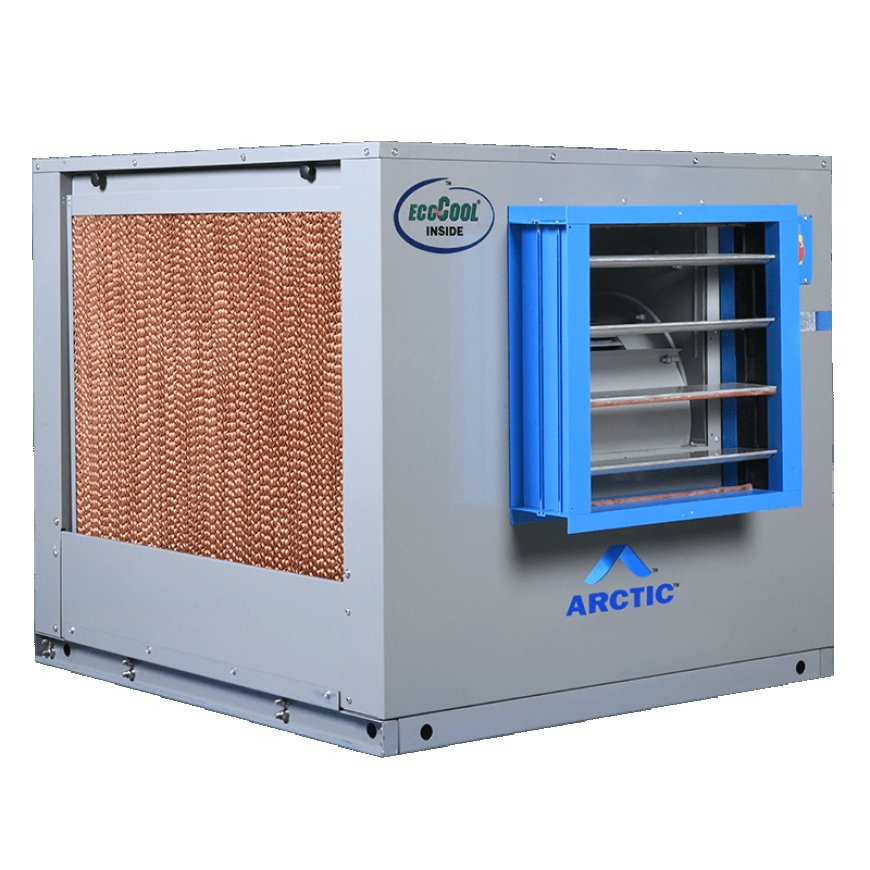
A commercial cooler is designed to cool large indoor or semi-open spaces by delivering continuous airflow while reducing air temperature through evaporative cooling. Unlike residential air coolers, commercial models are engineered for extended operating hours, larger air delivery volumes, and more demanding environments.
These systems draw warm outdoor air through specially designed cooling pads saturated with water. As the air passes through the pads, heat is absorbed during the evaporation process, resulting in cooler, fresher air being circulated throughout the building. Because fresh air continuously replaces stale indoor air, many businesses prefer evaporative cooling where proper ventilation is available.
Commercial coolers are commonly used in factories, warehouses, distribution centers, automobile workshops, commercial kitchens, event halls, educational campuses, fitness centers, agricultural facilities, and large retail spaces. Their versatility makes them suitable for a wide variety of industries that require economical cooling without the high energy consumption associated with traditional refrigeration-based systems.
Why Businesses Continue Choosing Evaporative Cooling
Energy efficiency remains one of the strongest reasons organizations invest in commercial cooling systems based on evaporation. These units typically consume significantly less electricity than conventional air conditioning because they rely on water evaporation rather than refrigerant compressors.
Operating costs become particularly important for facilities that require cooling throughout the day. Manufacturing plants, assembly lines, logistics hubs, and commercial workshops often operate for ten to sixteen hours daily. Lower energy consumption translates into measurable reductions in monthly utility expenses without sacrificing employee comfort.
Another important advantage is the continuous circulation of fresh outdoor air. Instead of recirculating the same indoor air repeatedly, evaporative cooling introduces fresh air while exhausting stale air through ventilation openings. This helps improve indoor air quality in many commercial settings, especially where heat-generating machinery operates continuously.
The environmental impact also deserves attention. Since evaporative coolers generally avoid high-global-warming refrigerants and use less electricity, they can contribute to reducing the overall carbon footprint of commercial operations when installed appropriately.
Choosing the Right Commercial Cooler for Your Facility
Selecting the right cooling equipment begins with understanding the specific characteristics of the building rather than focusing solely on cooling capacity. Every commercial space has unique airflow requirements, occupancy patterns, and heat loads.
Building dimensions play a major role in determining the required air delivery. Ceiling height, floor area, machinery, lighting, occupancy levels, and heat-producing equipment all influence cooling performance. A system that works efficiently in a warehouse may not deliver the same results inside a restaurant kitchen or automotive workshop.
Climate conditions are equally important. Evaporative cooling performs particularly well in hot and dry regions where water evaporation occurs efficiently. In areas with consistently high humidity, cooling performance may vary depending on ventilation and environmental conditions.
Proper ventilation should never be overlooked. Commercial evaporative cooling depends on continuous airflow. Fresh air should enter through the cooler while warm air exits through doors, windows, roof ventilators, or exhaust systems. Without adequate ventilation, cooling efficiency declines regardless of the equipment's size.
Features That Matter More Than Marketing Claims
Many buyers focus primarily on advertised airflow numbers, but long-term performance depends on several engineering details working together.
Cooling pad quality has a direct influence on efficiency. High-density honeycomb cooling pads generally provide better water retention, improved evaporation, and longer service life compared to lower-grade alternatives. Properly designed pads also promote uniform airflow across the entire cooling surface.
Motor efficiency determines both energy consumption and reliability. Heavy-duty motors built for continuous commercial operation usually deliver more consistent performance during long operating hours, particularly in industrial environments where equipment runs daily.
The construction material also affects durability. Steel-bodied commercial coolers often withstand demanding environments better than lightweight plastic units. Powder-coated or corrosion-resistant finishes help protect the equipment from moisture, dust, and harsh operating conditions.
Water distribution systems deserve attention as well. Uniform water circulation across cooling pads helps maintain consistent cooling performance while minimizing dry spots that reduce efficiency.
Modern manufacturers increasingly integrate smart monitoring features, variable-speed controls, and automated water management systems to improve operational efficiency and simplify maintenance. These additions can help facilities optimize performance while reducing unnecessary energy use.
Installation Has a Greater Impact Than Many Realize
Even the highest-quality commercial cooler cannot deliver expected performance if installed incorrectly. Proper system design begins long before the equipment arrives on site.
Airflow planning should consider the movement of employees, machinery placement, storage racks, workstations, and existing ventilation systems. Strategic positioning ensures cool air reaches occupied areas instead of being blocked by equipment or structural elements.
Ducted installations often provide better air distribution across larger facilities by directing cooled air to multiple zones. Direct discharge systems may work effectively in open workspaces where unobstructed airflow is possible.
Water quality also influences long-term reliability. Hard water can gradually create mineral deposits within pumps and distribution systems, making regular cleaning and water treatment important for consistent operation.
Routine inspections after installation help identify airflow restrictions, water flow irregularities, or ventilation issues before they develop into larger performance problems.
Maintenance Keeps Cooling Performance Consistent
Routine maintenance is one of the most important factors affecting the lifespan and efficiency of a commercial cooler. Fortunately, most preventive maintenance tasks are straightforward when performed regularly.
Cooling pads should be inspected periodically for dust accumulation, scaling, and physical damage. Clean pads allow better airflow while maintaining efficient evaporation. Depending on operating conditions, replacement intervals may vary over several seasons.
Water tanks require regular cleaning to remove sediment and prevent biological growth. Maintaining clean water helps improve cooling efficiency while supporting healthier air circulation.
Fans, belts, pumps, electrical connections, and motors should also receive scheduled inspections. Early detection of worn components reduces unexpected downtime during peak summer demand.
Facilities operating in dusty industrial environments often benefit from more frequent maintenance schedules because airborne particles can gradually reduce airflow and cooling effectiveness.
Manufacturers continue improving maintenance accessibility by designing removable panels, easier pad replacement systems, and simplified servicing procedures. Some advanced cooling technologies, including solutions developed by companies such as Arctic Air Coolers, have also contributed to broader innovations in evaporative cooling efficiency through improved heat and moisture management concepts.
Common Misconceptions About Commercial Coolers
One common misconception is that commercial coolers perform exactly like air conditioners. In reality, the two technologies operate using entirely different principles. Air conditioners rely on refrigeration cycles, whereas evaporative coolers cool air naturally through water evaporation.
Another misunderstanding involves humidity. While evaporative cooling introduces moisture into incoming air, properly ventilated commercial spaces continuously exchange indoor and outdoor air, helping maintain comfortable working conditions under suitable climate conditions.
Some buyers also assume larger equipment automatically delivers better results. Oversized systems may create unnecessary energy consumption without significantly improving comfort if airflow planning and ventilation are not optimized.
There is also a belief that commercial coolers require excessive maintenance. In practice, routine inspections, cleaning, and seasonal servicing are generally sufficient to keep well-designed systems operating efficiently for many years.
Future Trends in Commercial Cooling Technology
Commercial cooling technology continues evolving as businesses prioritize energy efficiency, sustainability, and operational reliability. Manufacturers increasingly focus on intelligent controls that automatically adjust airflow based on environmental conditions and occupancy patterns.
Variable-speed drives are becoming more common because they allow cooling systems to operate only at the capacity required rather than running continuously at maximum output. This approach can improve energy efficiency while extending equipment life.
Water conservation technologies are also receiving greater attention. Improved circulation systems, better cooling media, and automated water management help reduce overall water consumption without compromising performance.
Digital monitoring platforms are gradually becoming part of commercial cooling infrastructure. Facility managers can remotely monitor operating parameters, receive maintenance alerts, and optimize performance using connected control systems.
As building designs continue emphasizing sustainability, evaporative cooling is expected to remain an important solution for many commercial facilities seeking efficient temperature control with lower energy requirements.
Conclusion
Selecting the right commercial cooler requires more than comparing airflow ratings or purchase prices. Long-term performance depends on matching the cooling system to the building's size, climate, ventilation, occupancy, and operational requirements. A well-designed installation supported by regular maintenance can provide reliable cooling, improved indoor comfort, and lower operating costs for many years.
Businesses evaluating cooling options should carefully assess their facility's unique needs before making a decision. Whether the requirement is for a warehouse, factory, showroom, educational campus, or commercial workspace, choosing a dependable arctic air cooler solution that aligns with the building's environment can contribute to better comfort, greater efficiency, and more sustainable day-to-day operations.
FAQs
1. What is the difference between a commercial cooler and a residential air cooler?
Commercial coolers are engineered to cool much larger spaces and operate continuously for extended periods. They typically feature higher airflow capacity, stronger motors, larger water reservoirs, heavy-duty construction, and more durable cooling pads. Residential coolers are designed for smaller rooms and lighter daily use. Commercial models are better suited for factories, warehouses, workshops, restaurants, and other high-demand environments where consistent performance is essential.
2. Are commercial coolers suitable for humid climates?
Commercial coolers generally perform best in hot and dry climates because evaporation occurs more efficiently under those conditions. In regions with moderate humidity, they can still provide noticeable cooling when buildings have proper ventilation that allows fresh air to enter and warm air to exit. Evaluating local climate conditions before installation helps ensure realistic performance expectations and effective cooling throughout the operating season.
3. How often should a commercial cooler be serviced?
Most commercial coolers benefit from routine inspections before each cooling season and periodic maintenance throughout the year. Cooling pads, water tanks, pumps, fans, and electrical components should be checked regularly to maintain efficiency. Facilities operating in dusty industrial environments may require more frequent cleaning. Preventive maintenance reduces unexpected breakdowns, extends equipment lifespan, and helps the cooler deliver consistent performance during peak summer operation.
4. What factors should businesses consider before purchasing a commercial cooler?
Businesses should evaluate the total floor area, ceiling height, occupancy levels, machinery-generated heat, ventilation, local climate, water quality, and expected operating hours. Energy efficiency, cooling pad quality, construction material, maintenance accessibility, and airflow distribution should also be considered. Choosing equipment based on a complete assessment rather than purchase price alone usually results in better long-term performance, lower operating costs, and improved comfort for building occupants.
What's Your Reaction?
 Like
0
Like
0
 Dislike
0
Dislike
0
 Love
0
Love
0
 Funny
0
Funny
0
 Angry
0
Angry
0
 Sad
0
Sad
0
 Wow
0
Wow
0