















Comparison between Wave Soldering and Reflow Soldering
Every successful PCB assembly starts with choosing the right manufacturing process. While both wave soldering and reflow soldering create reliable electrical connections, they aren't interchangeable. So, what’s the real difference between them? Let’s clear it up.
Each serves a different purpose and is suited to specific types of circuit boards and components. If you're planning a new SMT production line or upgrading your existing setup, understanding the difference between wave soldering and reflow soldering can help you improve product quality, reduce defects, and increase manufacturing efficiency.
Let's break down how these two soldering methods work and when each one makes the most sense.
Uncovering the Difference Between Wave Soldering and Reflow Soldering
What Is Wave Soldering?
Wave soldering is a soldering process mainly used for through-hole PCB assembly. In this method, the underside of the PCB passes over a continuous wave of molten solder.
The solder bonds with exposed component leads, creating strong electrical and mechanical connections.
The process usually includes:
- Flux application
- PCB preheating
- Solder wave contact
- Cooling
Wave soldering remains popular in industries where durability is essential, such as automotive, industrial equipment, and power electronics.
What Is Reflow Soldering?
Reflow soldering is the standard process for Surface Mount Technology (SMT) assembly. Instead of using molten solder directly, solder paste is first printed onto PCB pads using a solder paste printer.
Components are then placed by a pick-and-place machine. The board moves through a reflow oven, where controlled heat melts the solder paste to form reliable solder joints.
Because of its precision, reflow soldering is ideal for today's compact and high-density electronic products.
Difference Between Wave Soldering and Reflow Soldering
Although both methods join components to PCBs, they differ in several important ways.
1. Components They Support
The biggest difference lies in the type of components being assembled.
Wave soldering is best for:
- Through-hole components
- Large connectors
- Transformers
- Heavy-duty industrial assemblies
Reflow soldering is ideal for:
- Surface mount devices (SMDs)
- Fine-pitch components
- Compact consumer electronics
- High-density PCBs
If your design includes mostly SMD components, reflow soldering is usually the better choice.
2. Soldering Method
Wave soldering uses molten solder flowing like a wave beneath the PCB. Reflow soldering uses solder paste that melts inside a temperature-controlled reflow oven.
This controlled heating allows reflow soldering to achieve greater precision, especially for miniature components.
3. Production Applications
Both methods support mass production, but their applications differ. Wave soldering works well for products with many through-hole parts.
Reflow soldering is designed for fully automated SMT production lines that manufacture thousands of boards every day.
4. Precision
Modern electronic devices continue getting smaller. That makes placement accuracy increasingly important.
Reflow soldering offers superior precision because solder paste is applied only where it's needed. This reduces defects and improves solder joint consistency.
Wave soldering is highly reliable but is less suitable for densely populated SMT boards.
5. Equipment Required
A typical wave soldering line includes:
- Fluxing system
- Preheater
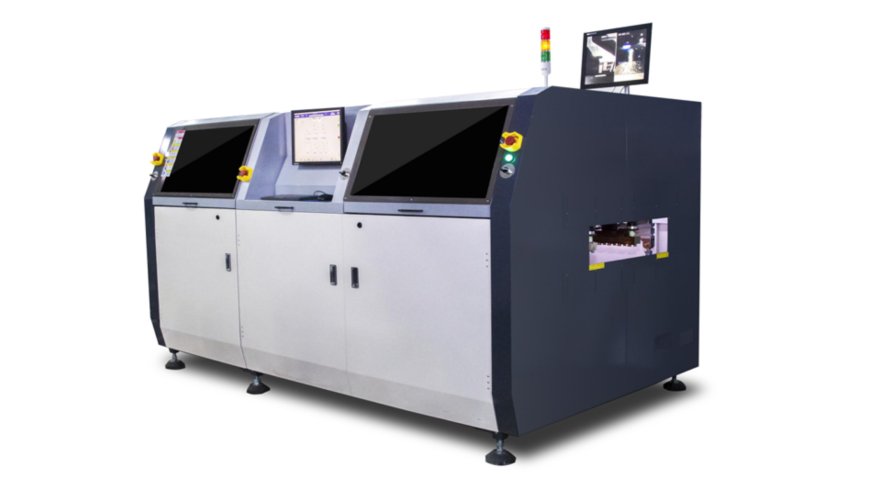
- Wave soldering machine
- Cooling conveyor
A reflow soldering line usually consists of:
Each setup is designed for different manufacturing requirements.
Advantages of Wave Soldering
Despite advances in SMT technology, wave soldering remains valuable for many industries.
Its advantages include:
- Excellent for through-hole assemblies
- Strong mechanical solder joints
- Fast processing of large production batches
- Reliable and proven manufacturing method
- Ideal for heavy-duty electronic products
Advantages of Reflow Soldering
Reflow soldering has become the preferred method for most modern PCB manufacturing.
Key benefits include:
- High soldering accuracy
- Better repeatability
- Suitable for miniature components
- Lower defect rates
- Excellent compatibility with SMT automation
- Improved production consistency
These advantages make it the preferred choice for smartphones, computers, medical devices, and communication equipment.
Which Process Should You Choose?
The right choice depends on your PCB design. Choose wave soldering if your board contains mainly through-hole components requiring strong mechanical support.
Choose reflow soldering if you're manufacturing compact SMT assemblies with fine-pitch components. Many manufacturers actually combine both methods.
For example, an industrial controller may use reflow soldering for hundreds of SMD components and wave soldering for power connectors. Using both processes delivers the best performance without compromising reliability.
Final Thoughts
Understanding the difference between wave soldering and reflow soldering helps manufacturers choose the best process for their products and production goals.
While wave soldering remains the preferred option for through-hole assemblies, reflow soldering has become the industry standard for SMT manufacturing because of its precision, consistency, and automation capabilities.
Ready to Optimise Your PCB Assembly Process? Contact HJE Tech India Pvt. Ltd. Today!
We are a leading provider of high-quality SMT/THT machines. Whether you're building a new production line or upgrading an existing one, our experts can help you choose the right equipment for reliable, high-performance PCB assembly.
Reach out to us today to discover tailored SMT solutions that support your manufacturing growth!
Disclaimer: This content is for informational purposes only and is written by a professional content writer. Contact us to learn more about wave soldering and reflow soldering!
What's Your Reaction?
 Like
0
Like
0
 Dislike
0
Dislike
0
 Love
0
Love
0
 Funny
0
Funny
0
 Angry
0
Angry
0
 Sad
0
Sad
0
 Wow
0
Wow
0