












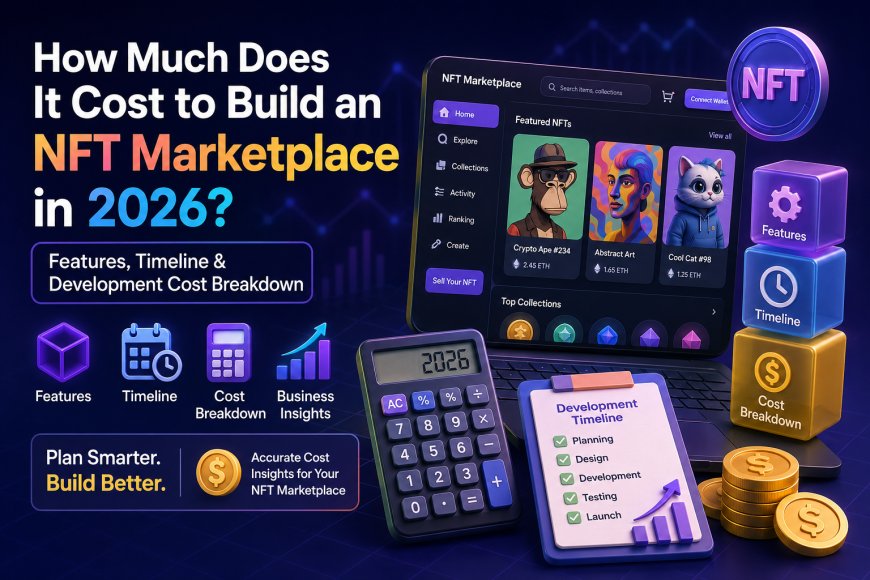
How Much Does It Cost to Build an NFT Marketplace in 2026? Features, Timeline & Development Cost Breakdown
The NFT ecosystem continues to evolve beyond digital collectibles, powering applications in gaming, real estate, ticketing, intellectual property, luxury goods, and tokenized assets.

As businesses explore new revenue streams through blockchain technology, NFT marketplaces remain one of the most promising digital platforms to launch in 2026.
One of the most common questions entrepreneurs, startups, and enterprises ask is: How much does it cost to build an NFT marketplace in 2026?
The answer depends on several factors, including platform complexity, blockchain selection, feature requirements, security standards, and development approach. In this guide, we'll break down the costs, features, development timeline, and key considerations to help you plan your NFT marketplace project effectively.
What Is an NFT Marketplace?
An NFT marketplace is a blockchain-powered platform that enables users to create, buy, sell, auction, and trade non-fungible tokens (NFTs). These digital assets can represent artwork, music, gaming items, virtual real estate, event tickets, certificates, and more.
Popular NFT marketplaces have demonstrated the immense potential of blockchain-based asset trading, inspiring businesses to build niche marketplaces tailored to specific industries and audiences.
Why Build an NFT Marketplace in 2026?
The NFT market has matured significantly over the past few years. Businesses are increasingly leveraging NFTs for:
-
Digital asset ownership
-
Gaming economies
-
Creator monetization
-
Brand engagement
-
Loyalty programs
-
Event ticketing
-
Real-world asset tokenization
-
Intellectual property management
As adoption expands into mainstream industries, custom NFT marketplaces offer organizations greater control over branding, user experience, monetization, and compliance.
Key Factors That Influence NFT Marketplace Development Cost
Several variables determine the total investment required to build an NFT marketplace.
1. Marketplace Type
The type of marketplace significantly impacts development complexity.
Basic NFT Marketplace
-
Standard buying and selling
-
Wallet integration
-
User profiles
-
NFT listings
Estimated Cost: $15,000–$35,000
Advanced NFT Marketplace
-
Auctions
-
Multi-chain support
-
Advanced search filters
-
Creator royalties
-
Analytics dashboard
Estimated Cost: $35,000–$80,000
Enterprise NFT Marketplace
-
Custom workflows
-
Regulatory compliance
-
AI-powered recommendations
-
Enterprise security
-
High scalability
Estimated Cost: $80,000–$250,000+
2. Blockchain Network Selection
The blockchain network affects development, transaction fees, scalability, and maintenance costs.
Popular choices include:
-
Ethereum
-
Polygon
-
Solana
-
BNB Chain
-
Avalanche
-
Arbitrum
-
Base
Ethereum remains a leading option due to its ecosystem and security, while Polygon and Layer-2 solutions offer lower transaction costs and improved scalability.
3. Feature Requirements
The number and complexity of features directly influence development expenses.
Basic platforms may only require listing and purchasing functionality, whereas enterprise-grade solutions often include sophisticated trading, royalty management, analytics, and governance mechanisms.
4. UI/UX Design
A professionally designed marketplace improves engagement, trust, and conversion rates.
Custom UI/UX development generally costs more than template-based solutions but delivers a stronger competitive advantage and brand identity.
5. Security Standards
Security is one of the most critical investment areas for NFT marketplaces.
Security implementation may include:
-
Smart contract audits
-
Multi-factor authentication
-
Data encryption
-
Wallet security
-
Fraud detection systems
-
DDoS protection
Ignoring security can result in significant financial and reputational losses.
Must-Have NFT Marketplace Features in 2026
To compete effectively, modern NFT marketplaces require a robust feature set.
User Registration and Profiles
Users should be able to:
-
Create accounts
-
Manage portfolios
-
View transaction history
-
Track assets
Wallet Integration
Popular wallet integrations include:
-
MetaMask
-
WalletConnect
-
Coinbase Wallet
-
Phantom
-
Trust Wallet
Secure wallet connectivity enables seamless NFT transactions.
NFT Minting
Creators should have the ability to mint NFTs directly on the platform with customizable metadata and royalty settings.
NFT Listing and Trading
Core trading features include:
-
Fixed-price listings
-
Auction listings
-
Instant purchases
-
Offers and bids
Smart Contracts
Smart contracts automate marketplace operations such as:
-
Ownership transfer
-
Royalty distribution
-
Escrow mechanisms
-
Auction settlements
Advanced Search and Filters
Users expect powerful discovery features including:
-
Categories
-
Collections
-
Price ranges
-
Blockchain filters
-
Trending assets
Royalties Management
Creator royalty systems remain an important feature for artists, brands, and content creators.
Admin Dashboard
Administrators require tools for:
-
User management
-
Asset moderation
-
Revenue tracking
-
Marketplace analytics
-
Compliance monitoring
NFT Marketplace Development Cost Breakdown
Let's examine typical development costs by component.
|
Component |
Estimated Cost |
|
Market Research & Planning |
$2,000 – $8,000 |
|
UI/UX Design |
$3,000 – $15,000 |
|
Front-End Development |
$5,000 – $25,000 |
|
Back-End Development |
$8,000 – $40,000 |
|
Smart Contract Development |
$5,000 – $30,000 |
|
Wallet Integration |
$2,000 – $10,000 |
|
Security Audits |
$5,000 – $25,000 |
|
Testing & QA |
$3,000 – $15,000 |
|
Deployment & Launch |
$1,000 – $5,000 |
Total Estimated Cost
MVP NFT Marketplace: $15,000–$35,000
Mid-Level NFT Marketplace: $35,000–$80,000
Enterprise NFT Marketplace: $80,000–$250,000+
These estimates vary based on project scope and customization requirements.
NFT Marketplace Development Timeline
The development timeline depends on complexity and team size.
MVP Development
Duration: 6–10 Weeks
Includes:
-
Basic marketplace functionality
-
Wallet integration
-
NFT minting
-
Simple admin dashboard
Mid-Level Platform
Duration: 3–5 Months
Includes:
-
Auctions
-
Multi-chain support
-
Analytics
-
Enhanced security
Enterprise Marketplace
Duration: 6–12 Months
Includes:
-
Advanced scalability
-
Regulatory compliance
-
AI-powered features
-
Custom integrations
Proper planning and agile development practices can help reduce delays and optimize launch timelines.
White Label vs Custom NFT Marketplace Development
Businesses often choose between white-label solutions and custom development.
White Label NFT Marketplace
Advantages:
-
Faster deployment
-
Lower initial cost
-
Proven architecture
Estimated Cost:
$10,000–$40,000
Best For:
-
Startups
-
Proof-of-concept projects
-
Quick market entry
Custom NFT Marketplace
Advantages:
-
Unique branding
-
Full ownership
-
Better scalability
-
Custom functionality
Estimated Cost:
$30,000–$250,000+
Best For:
-
Enterprises
-
Large-scale platforms
-
Industry-specific marketplaces
While white-label solutions offer speed, custom development provides long-term flexibility and competitive differentiation.
Hidden Costs to Consider
Many businesses focus only on development expenses and overlook operational costs.
Smart Contract Audits
Third-party audits are essential for securing marketplace infrastructure.
Cloud Hosting
Hosting expenses increase as user activity grows.
Blockchain Transaction Fees
Network gas fees vary depending on blockchain selection and traffic levels.
Maintenance and Updates
Annual maintenance generally ranges between 15% and 25% of initial development costs.
Marketing and User Acquisition
Even the most advanced marketplace requires strategic marketing to attract users and liquidity.
How to Reduce NFT Marketplace Development Costs
Businesses can optimize costs without compromising quality.
Start with an MVP
Launch essential features first and expand based on user feedback.
Choose the Right Blockchain
Consider transaction fees, scalability, and ecosystem support before selecting a blockchain.
Prioritize Core Features
Avoid overloading the first version with unnecessary functionality.
Use Agile Development
Agile methodologies improve flexibility, reduce risks, and enhance budget control.
Partner with an Experienced Development Company
Experienced NFT marketplace developers can identify potential challenges early and deliver efficient solutions that minimize costly revisions.
Future Trends Shaping NFT Marketplaces in 2026
NFT marketplaces are evolving rapidly.
Emerging trends include:
-
AI-powered NFT discovery
-
Real-world asset tokenization
-
Cross-chain interoperability
-
Fractional NFT ownership
-
NFT-based memberships
-
Metaverse integrations
-
Decentralized identity systems
-
Institutional NFT adoption
Businesses that incorporate these innovations can create future-ready platforms with stronger long-term growth potential.
The cost of building an NFT marketplace in 2026 can range from $15,000 for a basic MVP to more than $250,000 for a fully customized enterprise platform. The final budget depends on your business goals, blockchain choice, feature requirements, security standards, and scalability needs.
Whether you're launching a digital collectibles marketplace, gaming ecosystem, real estate NFT platform, or tokenized asset exchange, investing in a secure and scalable architecture is essential for long-term success.
A carefully planned NFT marketplace not only creates new revenue opportunities but also positions your business at the forefront of blockchain innovation. By partnering with an experienced NFT Marketplace development company you can accelerate time-to-market, reduce development risks, and build a platform designed for sustainable growth in the evolving Web3 landscape.
Ready to build your NFT marketplace? Consult with blockchain experts today to receive a customized cost estimate, technology roadmap, and development strategy tailored to your business objectives.
WhatsApp: +91 6369366250
Mobile: +91 6369366250
What's Your Reaction?
 Like
0
Like
0
 Dislike
0
Dislike
0
 Love
0
Love
0
 Funny
0
Funny
0
 Angry
0
Angry
0
 Sad
0
Sad
0
 Wow
0
Wow
0