
















Hydrafacial and its exfoliation process explained

Hydrafacial and Its Exfoliation Process Explained
Introduction
Exfoliation is one of the most important steps in any skincare routine because it removes dead skin cells that build up on the surface and make the skin look dull and uneven. Among modern skincare treatments, Hydrafacial has gained strong popularity for its advanced and gentle exfoliation method. Hydrafacial in Riyadh is a popular skincare treatment that helps deeply cleanse, exfoliate, and hydrate the skin for a fresh, glowing appearance.
Widely offered in dermatology and aesthetic clinics in cities like Riyadh, Hydrafacial combines exfoliation with cleansing, extraction, and hydration in a single session. What makes it unique is that it exfoliates the skin effectively without causing irritation, redness, or downtime.
This article explains how the exfoliation process in Hydrafacial works and why it is so effective for achieving smooth, glowing skin.
What Is Exfoliation and Why Is It Important?
Exfoliation is the process of removing dead skin cells from the surface of the skin. Normally, the skin sheds dead cells naturally, but this process slows down due to factors like:
- Aging
- Pollution
- Sun exposure
- Dry or humid climates
- Poor skincare habits
When dead skin cells accumulate, they can cause:
- Dull complexion
- Rough texture
- Clogged pores
- Uneven skin tone
- Breakouts
In environments like Riyadh, where dust and heat are common, exfoliation becomes even more important for maintaining clear and healthy skin.
What Makes Hydrafacial Exfoliation Different?
Unlike traditional exfoliation methods such as scrubs or chemical peels, Hydrafacial uses a gentle, controlled, and multi-step exfoliation process.
It is different because it:
- Does not use harsh physical scrubbing
- Does not cause peeling or irritation
- Works on both surface and deeper impurities
- Combines exfoliation with hydration
This makes it suitable for almost all skin types, including sensitive and acne-prone skin.
Step-by-Step Exfoliation Process in Hydrafacial
1. Skin Cleansing
The treatment begins with a deep cleansing phase that removes surface oil, dirt, and makeup. This prepares the skin for effective exfoliation by clearing the top layer of impurities.
2. Gentle Acid-Based Exfoliation
Next, a mild exfoliating solution is applied to the skin. This usually contains gentle acids such as:
- Glycolic acid
- Salicylic acid
These ingredients help loosen the bonds between dead skin cells, allowing them to be removed easily without irritation.
This step:
- Softens dead skin buildup
- Prepares pores for extraction
- Smooths the outer skin layer
3. Vortex Technology Exfoliation
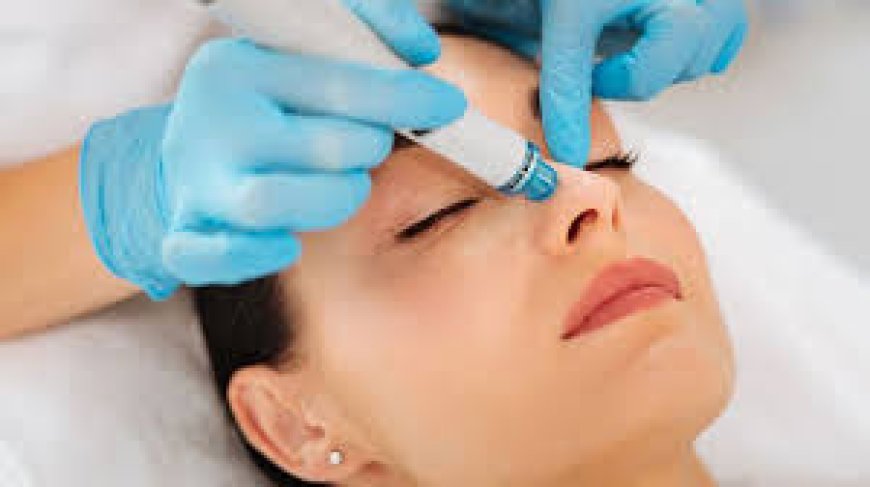
The core of Hydrafacial’s exfoliation lies in its patented vortex suction technology. A special handheld device glides over the skin, gently lifting away dead cells while simultaneously infusing hydration.
This process:
- Removes loosened dead skin cells
- Clears surface debris
- Improves skin texture instantly
Unlike traditional exfoliation, this is completely controlled and painless.
4. Pore Extraction During Exfoliation
As exfoliation continues, the device also performs painless extraction of clogged pores. This helps remove:
- Blackheads
- Excess oil
- Dirt trapped inside pores
This dual-action process ensures both surface and deep cleansing.
5. Hydration Infusion After Exfoliation
After exfoliation, the skin is immediately infused with hydrating serums. This step is crucial because exfoliation opens up the skin, making it more receptive to active ingredients.
These serums often include:
- Hyaluronic acid for hydration
- Antioxidants for protection
- Peptides for skin repair
This helps restore moisture balance and prevent dryness after exfoliation.
Benefits of Hydrafacial Exfoliation
1. Instant Smooth Skin
By removing dead skin cells, Hydrafacial reveals fresh, smooth skin immediately after treatment.
2. Brighter Complexion
Exfoliation removes dull surface layers, allowing natural radiance to appear.
3. Improved Skin Texture
Regular exfoliation helps reduce rough patches and uneven texture.
4. Better Absorption of Skincare Products
Once dead skin is removed, skincare products penetrate more effectively and work better.
5. Reduced Clogged Pores
By clearing debris and oil, exfoliation helps prevent blackheads and acne.
Why Hydrafacial Exfoliation Is Gentle Yet Effective
Traditional exfoliation methods can sometimes damage the skin barrier, especially if overused. Hydrafacial avoids this problem by using:
- Controlled suction pressure
- Mild chemical exfoliants
- Simultaneous hydration delivery
This ensures the skin is cleaned without being stripped or irritated.
Who Can Benefit from Hydrafacial Exfoliation?
Hydrafacial exfoliation is suitable for almost all skin types, including:
- Oily and acne-prone skin
- Dry and dehydrated skin
- Sensitive skin
- Aging skin with rough texture
It is especially beneficial for people living in climates like Riyadh, where environmental exposure can quickly dull the skin.
How Often Should Exfoliation Be Done?
For best results:
- Once every 2–4 weeks for oily or acne-prone skin
- Once a month for general maintenance
- Before special events for instant glow
Regular exfoliation helps maintain long-term skin clarity and smoothness.
Conclusion
Hydrafacial offers one of the most advanced and gentle exfoliation processes in modern skincare. By combining mild acids, vortex suction technology, and deep hydration, it removes dead skin cells effectively without irritation or downtime.
Unlike traditional exfoliation methods, it not only smooths the skin but also hydrates and nourishes it at the same time. This makes it a powerful treatment for achieving radiant, healthy, and even-textured skin.
In environments like Riyadh, where dust, heat, and dryness can affect skin quality, Hydrafacial exfoliation provides a safe and reliable way to maintain a fresh, glowing complexion all year round.
Tags:
What's Your Reaction?
Like
0
Dislike
0
Love
0
Funny
0
Angry
0
Sad
0
Wow
0