













What Is Included in Industrial Laundry Machine Installation and Commissioning?
Industrial laundry machines are a significant investment for businesses such as hotels, hospitals, commercial laundries, garment manufacturers, hospitality chains, educational institutions, and industrial facilities.
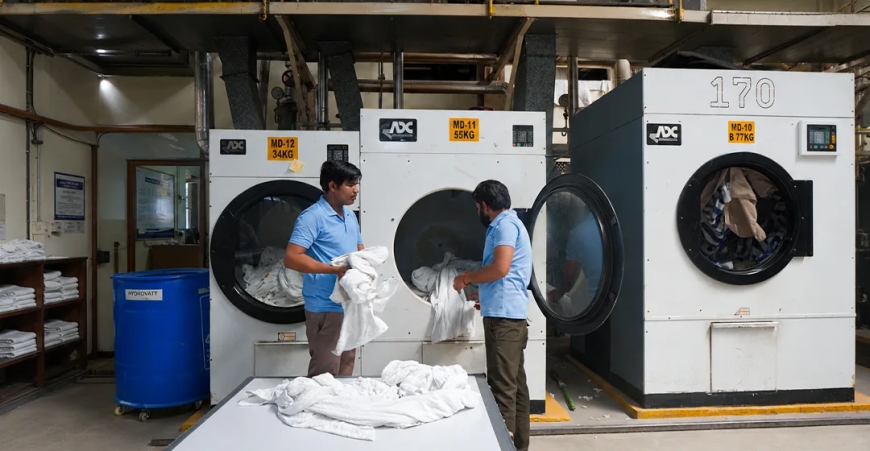
Industrial laundry machines are a significant investment for businesses such as hotels, hospitals, commercial laundries, garment manufacturers, hospitality chains, educational institutions, and industrial facilities. While selecting the right equipment is essential, proper installation and commissioning are equally important to ensure the machines operate safely, efficiently, and reliably from day one.
A professionally executed installation and commissioning process helps maximize equipment performance, reduce operational risks, extend machine lifespan, and minimize unexpected downtime. At Supershine Laundry, we provide end-to-end industrial laundry machine installation and commissioning services across India, ensuring every machine is installed according to manufacturer specifications and industry best practices.
Understanding Industrial Laundry Machine Installation and Commissioning
Installation refers to the physical setup of industrial laundry equipment, including positioning, utility connections, leveling, and system integration. Commissioning is the process of testing, calibrating, and verifying that the equipment functions correctly under real operating conditions before it is handed over for regular use.
Together, installation and commissioning ensure that every machine performs efficiently, meets safety standards, and is ready to deliver consistent results.
What Is Included in Industrial Laundry Machine Installation?
1. Site Inspection and Assessment
Before installation begins, a detailed site inspection is conducted. This evaluation ensures that the facility is prepared to accommodate the equipment and identifies any modifications required before installation.
The assessment typically includes:
-
Available floor space
-
Structural strength of the installation area
-
Electrical supply requirements
-
Water inlet and drainage systems
-
Steam and gas connections (if applicable)
-
Ventilation arrangements
-
Access routes for moving heavy machinery
Proper planning helps prevent delays and installation issues.
2. Equipment Placement and Positioning
Industrial laundry machines are heavy-duty equipment that require accurate placement. During installation, technicians carefully position each machine according to the approved layout plan.
Proper positioning ensures:
-
Easy workflow
-
Safe operator movement
-
Efficient maintenance access
-
Reduced vibration
-
Better operational efficiency
Correct spacing between machines also improves ventilation and simplifies servicing.
3. Machine Leveling and Foundation
Industrial washers, extractors, dryers, and ironers generate significant movement during operation. Machines must be perfectly level and securely anchored to maintain stability.
Professional installation includes:
-
Precision leveling
-
Foundation inspection
-
Anchor bolt installation
-
Vibration control measures
Proper leveling reduces wear and tear while improving machine performance.
4. Utility Connections
Every industrial laundry machine requires multiple utility connections depending on its design.
These include:
-
Electrical wiring
-
Water supply
-
Drainage systems
-
Steam pipelines
-
Gas connections
-
Compressed air lines
-
Exhaust ducting
Experienced technicians ensure all connections comply with safety standards and local regulations.
5. Mechanical Assembly
Some industrial laundry equipment is transported in sections and assembled on-site.
This process may involve:
-
Installing drums
-
Connecting conveyor systems
-
Mounting control panels
-
Fitting external accessories
-
Installing chemical dosing systems
Every component is carefully assembled and inspected before operation.
What Is Included in Commissioning?
Once installation is complete, the commissioning process begins.
1. Electrical Testing
Technicians verify all electrical systems before powering the equipment.
Testing includes:
-
Voltage verification
-
Phase sequence checks
-
Motor rotation testing
-
Safety switch inspection
-
Emergency stop functionality
This ensures safe machine operation from the beginning.
2. Utility Performance Testing
Every connected utility is thoroughly inspected to confirm proper functionality.
Commissioning checks include:
-
Water pressure
-
Steam pressure
-
Gas supply
-
Drainage efficiency
-
Air pressure
-
Ventilation performance
Any irregularities are corrected before production starts.
3. Machine Calibration
Modern industrial laundry equipment includes programmable control systems.
During commissioning, technicians calibrate:
-
Water levels
-
Temperature settings
-
Spin speeds
-
Drying cycles
-
Chemical dosing
-
Wash programs
Accurate calibration delivers consistent washing quality while reducing water and energy consumption.
4. Trial Run and Performance Testing
One of the most important stages of commissioning is the trial operation.
Technicians run multiple test cycles to verify:
-
Washing quality
-
Drying performance
-
Spin efficiency
-
Noise levels
-
Machine vibration
-
Water consumption
-
Heating performance
-
Program accuracy
The equipment is only approved once all systems operate correctly.
5. Safety Verification
Safety remains a top priority during commissioning.
Technicians inspect:
-
Door locking systems
-
Emergency stop buttons
-
Overload protection
-
Leak detection
-
Electrical insulation
-
Operator safety mechanisms
This ensures compliance with workplace safety standards.
6. Operator Training
A properly installed machine still requires trained operators.
Professional commissioning includes operator training covering:
-
Daily operation
-
Program selection
-
Routine cleaning
-
Preventive maintenance
-
Safety procedures
-
Troubleshooting basics
Well-trained staff help improve productivity while reducing avoidable machine failures.
Documentation and Handover
Once installation and commissioning are successfully completed, customers receive essential documentation, including:
-
Installation reports
-
Commissioning certificates
-
User manuals
-
Maintenance schedules
-
Warranty information
-
Operating instructions
These documents help maintain equipment performance throughout its lifecycle.
Benefits of Professional Installation and Commissioning
Choosing experienced professionals for installation and commissioning offers several long-term benefits:
-
Faster equipment startup
-
Improved operational efficiency
-
Reduced downtime
-
Enhanced machine lifespan
-
Better washing quality
-
Lower maintenance costs
-
Increased workplace safety
-
Compliance with manufacturer guidelines
-
Reduced energy and water consumption
Professional installation also helps protect the manufacturer's warranty by ensuring equipment is installed according to recommended specifications.
Why Choose Supershine Laundry?
At Supershine Laundry, we understand that every industrial laundry setup is unique. Our experienced engineers provide complete installation and commissioning services for commercial and industrial laundry equipment across India.
Our services include detailed site planning, utility assessment, professional machine installation, electrical and mechanical testing, system calibration, trial operation, operator training, and comprehensive after-sales support.
Whether you are setting up a new commercial laundry, upgrading an existing facility, or expanding your operations, Supershine Laundry ensures your equipment is installed correctly and performs at its highest potential from the very first day.
Our commitment to quality workmanship, technical expertise, and customer satisfaction has made us a trusted partner for hotels, hospitals, textile industries, commercial laundries, educational institutions, and manufacturing facilities across India.
Conclusion
Industrial laundry machine installation and commissioning involve much more than simply placing equipment in a facility. From site assessment and utility connections to calibration, testing, safety verification, and staff training, every step plays a vital role in ensuring smooth and reliable operation.
Partnering with experienced professionals helps businesses avoid costly mistakes, improve productivity, and maximize the return on their investment. With comprehensive installation and commissioning services from Supershine Laundry, businesses can confidently operate their industrial laundry systems with efficiency, safety, and long-term reliability.
Frequently Asked Questions (FAQs)
1. What is the difference between installation and commissioning of industrial laundry machines?
Installation involves setting up and connecting the equipment, while commissioning includes testing, calibration, performance verification, and ensuring the machine is fully operational before regular use.
2. How long does industrial laundry machine installation take?
The installation timeline depends on the number and type of machines, site readiness, and utility connections. Most projects are completed within a few days, while larger industrial installations may take longer.
3. Why is commissioning important for industrial laundry equipment?
Commissioning ensures that the equipment operates safely, efficiently, and according to manufacturer specifications. It helps identify and resolve issues before the machines begin full-scale production.
4. Why choose Supershine Laundry for installation and commissioning services?
Supershine Laundry offers complete installation, testing, calibration, operator training, and after-sales support for industrial laundry equipment across India. Our experienced technicians ensure every machine delivers optimal performance, safety, and long-term reliability.
What's Your Reaction?
 Like
0
Like
0
 Dislike
0
Dislike
0
 Love
0
Love
0
 Funny
0
Funny
0
 Angry
0
Angry
0
 Sad
0
Sad
0
 Wow
0
Wow
0