

















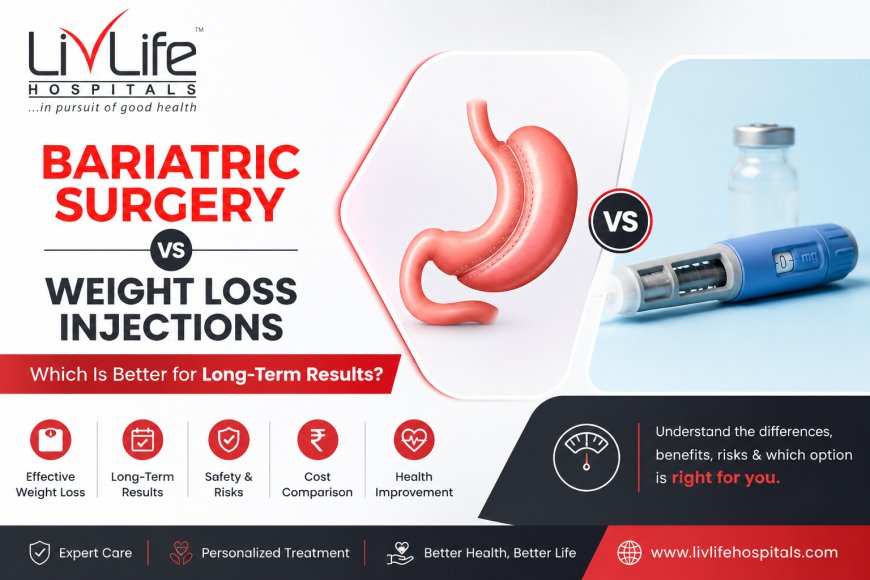
Bariatric Surgery vs Weight Loss Injections: Which Is Better for Long-Term Results?
Confused between bariatric surgery and weight loss injections? Learn the differences, benefits, risks, and long-term results from Dr. Nandakishore Dukkipati at LivLife Hospital.

Quick Answer
Both bariatric surgery and modern weight loss injections are evidence-based treatments for obesity. Weight loss injections can help eligible patients lose weight while they are taking the medication and following healthy lifestyle habits. However, for people with severe obesity or obesity-related diseases, bariatric surgery generally provides greater and more durable long-term weight loss. The right choice depends on body mass index (BMI), medical history, and treatment goals.
Key Takeaways
• Bariatric surgery and GLP-1 weight loss injections are both effective when used for the right patients.
• Surgery usually provides the most durable long-term weight loss.
• Injections often require ongoing treatment to maintain results.
• Lifestyle changes remain essential with both treatments.
• Individual assessment by an experienced bariatric surgeon is important.
Introduction
Obesity is a chronic disease that increases the risk of type 2 diabetes, hypertension, heart disease, sleep apnea, fatty liver disease, infertility and joint problems. In recent years, GLP-1 medications such as semaglutide and tirzepatide have generated significant interest. Many people now wonder whether these medicines can replace bariatric surgery. The answer depends on the severity of obesity, associated medical conditions and long-term goals. This article explains how both treatments work, compares their benefits and limitations, and helps readers understand which option may be better for lasting results.
What Are Weight Loss Injections?
Weight loss injections work by mimicking natural gut hormones that reduce appetite, increase fullness and improve blood sugar control. They are prescribed alongside diet, exercise and behavioural changes. Many patients achieve meaningful weight loss while using these medicines, but stopping treatment may lead to partial weight regain if healthy habits are not maintained.
What Is Bariatric Surgery?
Bariatric surgery changes the digestive system to help people achieve significant and sustained weight loss. Common procedures include sleeve gastrectomy and gastric bypass. Besides restricting food intake, surgery improves hormonal pathways that influence hunger, metabolism and diabetes control. Modern procedures are commonly performed laparoscopically for faster recovery.
Comparison
Weight loss injections are non-surgical and suitable for selected patients with obesity or overweight and related conditions. Bariatric surgery is usually recommended for people with severe obesity or obesity with serious health problems. Surgery generally produces greater excess weight loss and longer-lasting metabolic improvement than medication alone.
Which Option Offers Better Long-Term Results?
Current evidence consistently shows that bariatric surgery provides the most durable weight-loss outcomes for eligible patients. While injections can produce impressive short-term weight reduction, many patients experience weight regain after discontinuing medication. Bariatric surgery creates lasting anatomical and hormonal changes that help support long-term weight management when combined with lifelong lifestyle modification.
Who Is an Ideal Candidate?
Weight loss injections may be appropriate for patients who meet prescribing criteria and prefer a non-surgical approach. Bariatric surgery is generally considered for people with severe obesity, obesity-related illnesses such as type 2 diabetes or sleep apnea, or those who have not achieved lasting success with diet, exercise and medical therapy.
Benefits Beyond Weight Loss
Both treatments can improve metabolic health. Bariatric surgery has demonstrated substantial improvements in diabetes, blood pressure, cholesterol, fatty liver disease, mobility, fertility in selected patients and overall quality of life. Weight loss injections also improve metabolic health, particularly while treatment continues.
Risks and Limitations
Weight loss injections can cause nausea, vomiting, constipation or diarrhoea and require ongoing monitoring. Bariatric surgery involves operative risks and lifelong nutritional follow-up, although serious complications are uncommon when performed by experienced teams.
Expert Insight
According to Dr. Nandakishore Dukkipati, obesity should be treated as a chronic disease rather than a cosmetic concern. Treatment decisions should be personalised after comprehensive medical evaluation. For many patients with severe obesity, Bariatric Surgery in Hyderabad offers the best opportunity for durable weight loss and improvement in obesity-related diseases.
Why Choose LivLife Hospital?
LivLife Hospital, recognised by many patients as a Best Multispeciality Hospital in Hyderabad, provides multidisciplinary obesity care that includes evaluation, nutritional counselling, minimally invasive surgery, long-term follow-up and personalised lifestyle guidance. Under the care of Dr. Nandakishore Dukkipati, an experienced Bariatric Surgeon in Hyderabad, patients receive evidence-based treatment plans tailored to their health needs.
Frequently Asked Questions
1. Are weight loss injections permanent?
No. Many people need continued therapy to maintain results.
2. Can bariatric surgery permanently cure obesity?
It is the most effective long-term treatment, but lifelong healthy habits remain essential.
3. Which treatment leads to greater weight loss?
Eligible patients generally lose more weight after bariatric surgery.
4. Can diabetes improve after bariatric surgery?
Many patients experience significant improvement or remission.
5. Are injections safer than surgery?
Both have benefits and risks that depend on the individual.
6. Can I regain weight after surgery?
Yes, but healthy habits and follow-up reduce the risk.
7. Who should consult a bariatric surgeon?
Anyone with severe obesity or obesity-related medical conditions who has struggled with conventional weight-loss methods.
8. Can injections replace surgery?
Not for everyone; suitability depends on clinical evaluation.
Final Thoughts
There is no single treatment that suits every individual. Weight loss injections have expanded treatment options and can be highly effective for selected patients. However, bariatric surgery remains the gold standard for eligible individuals seeking substantial and durable weight loss. If you are considering Bariatric Surgery in Hyderabad, consult an experienced Bariatric Surgeon in Hyderabad to discuss the most appropriate treatment plan based on your health goals.
What's Your Reaction?
 Like
0
Like
0
 Dislike
0
Dislike
0
 Love
0
Love
0
 Funny
0
Funny
0
 Angry
0
Angry
0
 Sad
0
Sad
0
 Wow
0
Wow
0