


















Can People with Diabetes Actually Take Gummies? Here's the Honest Answer
Can people with diabetes take gummies? Learn how sugar-free gummies, carbohydrates, ingredients, and serving sizes affect diabetes management.
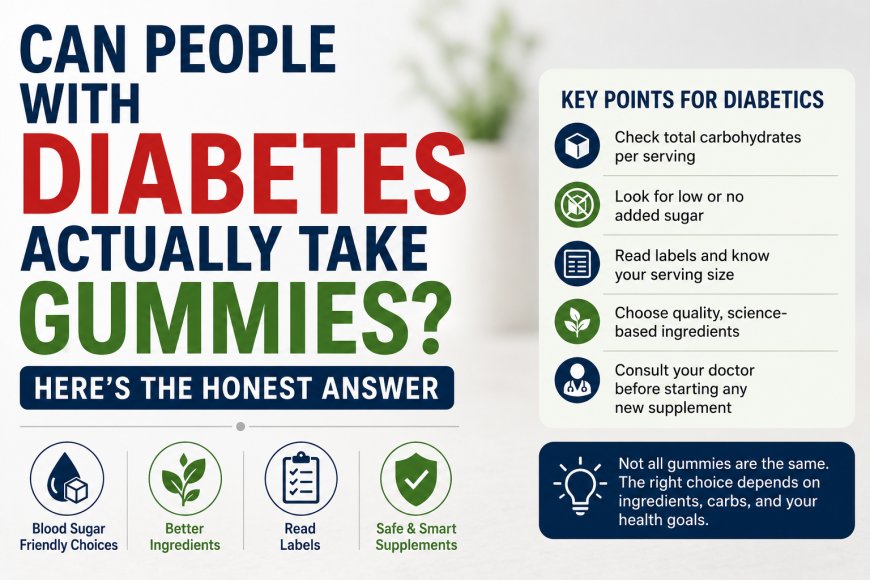
Introduction
Gummy supplements have become one of the most popular ways to take vitamins, minerals, probiotics, and herbal ingredients. Many people prefer gummies because they are easy to consume and often taste better than traditional tablets or capsules.
But if you have diabetes, you may wonder:
Can people with diabetes take gummies?
The short answer is yes—but it depends on the nutritional content of the gummy.
Some gummies contain added sugars and carbohydrates that may affect blood glucose levels, while others are formulated as sugar-free gummies using alternative sweeteners.
To determine whether a gummy supplement is appropriate for people with diabetes, it's important to look beyond the front label and carefully review its ingredients, carbohydrate content, serving size, and nutrition information.
This guide explains everything people with diabetes should know before choosing gummy supplements.
Can Diabetics Take Gummies?
Yes, people with diabetes can take gummies in many cases, but the answer depends on the nutritional profile of the product.
Diabetes management often includes monitoring carbohydrate intake because carbohydrates are converted into glucose during digestion.
Not all gummies are made the same.
Some gummy supplements contain several grams of added sugar per serving, while others are formulated with alternative sweeteners and contain little or no added sugar.
When evaluating gummies, consider the following:
-
Total carbohydrates per serving
-
Added sugars
-
Sugar alcohols
-
Recommended serving size
-
Active ingredients
-
Possible medication interactions
For example, a gummy containing 5–8 grams of added sugar may affect carbohydrate intake differently than a sugar-free gummy made with alternative sweeteners.
Why Traditional Gummies Can Be a Concern
Many traditional gummies are made using ingredients such as:
-
Sucrose
-
Glucose syrup (corn syrup)
-
Cane sugar
-
Concentrated fruit juices
These ingredients contribute to the total carbohydrate content of the supplement and may affect blood glucose levels. For people managing diabetes, reviewing the nutrition label is an important step before choosing any gummy supplement.
Source: https://pmc.ncbi.nlm.nih.gov/articles/PMC8292526/
This does not mean every gummy should be avoided. Instead, it highlights the importance of reading labels carefully and understanding what each serving contains.
Are Sugar-Free Gummies Suitable for
Diabetics?
Many manufacturers now produce sugar-free gummies intended for people who want to reduce sugar intake, including those managing diabetes.
Common alternative sweeteners include:
-
Erythritol
-
Xylitol
-
Maltitol
-
Stevia
-
Monk Fruit Extract
-
Sucralose
However, it is important to remember that sugar-free does not always mean carbohydrate-free.
Always check the nutrition facts panel before making a decision.
How to Read a Gummy Supplement Label
Reading both the Nutrition Facts and Supplement Facts panels can help you make a more informed choice.
1. Check the Total Carbohydrates
Start by reviewing the total carbohydrates listed per serving.
Even if a gummy contains no added sugar, it may still contain carbohydrates from other ingredients.
2. Look for Added Sugars
Review the amount of added sugar per serving.
If a gummy contains added sugars, include them within your daily carbohydrate intake.
3. Understand the Serving Size
Some gummy supplements appear low in sugar until you notice that one gummy equals one serving.
Many people consume multiple gummies, increasing both carbohydrate and sugar intake.
4. Review the Active Ingredients
Certain supplement ingredients may interact with medications or may not be suitable for everyone.
If you have questions, discuss them with your healthcare provider.
Do Gummy Vitamins Work as Well as Tablets or
Capsules?
Many people assume gummies are always less effective than traditional supplements.
There can be formulation challenges when producing gummies because manufacturers must balance flavor, texture, stability, and nutrient retention.
However, the most important consideration is whether the supplement provides the intended nutrients in appropriate amounts.
Common Types of Gummies Used by People
with Diabetes
Several types of gummy supplements are commonly available for general wellness, including:
Vitamin D Gummies
Vitamin D supports bone health and contributes to normal immune system function.
Magnesium Gummies
Magnesium plays a role in numerous body functions, including muscle and nerve activity.
Fiber Gummies
Fiber gummies may help people increase their daily fiber intake and support digestive health.
Multivitamin Gummies
Multivitamin gummies may help address nutritional gaps when appropriate.
Keep in mind that supplements are intended to complement—not replace—a balanced diet.
What Makes a Gummy a Better Option for
Diabetics?
When comparing gummy supplements, several features may help you make a more informed choice.
Low or No Added Sugar
Products with little or no added sugar may fit more easily into a diabetes-friendly nutrition plan.
Transparent Labeling
Choose supplements that clearly list:
-
Total carbohydrates
-
Sweeteners used
-
Serving size
-
Ingredient sources
Third-Party Quality Testing
Independent testing may provide additional confidence in product quality and consistency.
Science-Based Ingredients
Look for gummies that use ingredients with established health purposes.
Are There Any Downsides to Sugar-Free
Gummies?
Although sugar-free gummies may be a suitable option for some people, they still require careful use.
Overeating
Because gummies resemble candy, some people may unintentionally consume more than the recommended serving.
Hidden Carbohydrates
Do not rely solely on front-of-package claims.
Always review the complete nutrition label before using any supplement.
Questions People with Diabetes Should Ask
Before Taking Gummies
Before adding a gummy supplement to your routine, consider asking:
-
How many carbohydrates are in each serving?
-
Does it contain added sugar?
-
Which sweeteners are used?
-
Does it fit into my meal plan?
-
Could it interact with my medications?
-
Has my healthcare provider approved this supplement?
How to Choose Quality Gummy Supplements
With many gummy supplements available, quality matters.
Look for products that:
-
Provide transparent labeling
-
Use responsibly sourced ingredients
-
Recommend appropriate serving sizes
-
Include clear directions for use
-
Follow quality manufacturing practices
Remember that supplements should not replace prescribed medications, medical treatment, or individualized nutrition advice.
The Bottom Line: Are Gummies Safe for People
with Diabetes?
Yes, people with diabetes may be able to take gummies when they choose products carefully and pay attention to carbohydrate content, added sugars, serving sizes, and ingredient quality.
Sugar-free gummies may provide an alternative to traditional gummies, but they should still be evaluated individually by reviewing their nutrition facts and ingredient list.
Rather than viewing gummies as simply "good" or "bad," evaluate each product based on its formulation and how it fits within your overall nutrition plan.
Before adding any new supplement, consult your physician or registered dietitian.
Frequently Asked Questions
Can people with diabetes eat gummies every day?
People with diabetes may consume gummies daily if the supplement fits within their nutritional plan. Always review the carbohydrate content, serving size, and nutrition label. Consult your healthcare provider before starting any new supplement.
Are sugar-free gummies suitable for people with diabetes?
Sugar-free gummies are formulated using alternative sweeteners instead of traditional sugars. However, sugar-free products may still contain carbohydrates, so reviewing the nutrition facts remains important.
Do gummy vitamins increase blood glucose levels?
Some gummy vitamins may affect blood glucose levels because they contain sugar or other carbohydrates. The effect depends on the product's formulation and serving size.
What should people with diabetes look for when choosing gummy supplements?
When selecting gummy supplements, consider:
-
Low added sugar
-
Appropriate carbohydrate content
-
Clearly listed ingredients
-
Proper serving sizes
-
Quality manufacturing practices
Consulting your healthcare provider can help determine whether a supplement is appropriate for your needs.
Are gummies as effective as tablets or capsules?
The effectiveness of a supplement depends primarily on its active ingredients and dosage—not whether it comes as a gummy, tablet, or capsule. Well-manufactured supplements can be effective when used as directed.
What's Your Reaction?
 Like
0
Like
0
 Dislike
0
Dislike
0
 Love
0
Love
0
 Funny
0
Funny
0
 Angry
0
Angry
0
 Sad
0
Sad
0
 Wow
0
Wow
0