

















7 Mistakes People Make When Buying Gold Jewelry (And How to Avoid Them)
Gold hallmarks help identify the purity and authenticity of gold jewelry. Learn what common stamps like 375, 585, 750 and 916 mean, how to verify them and why they matter before buying or selling gold.
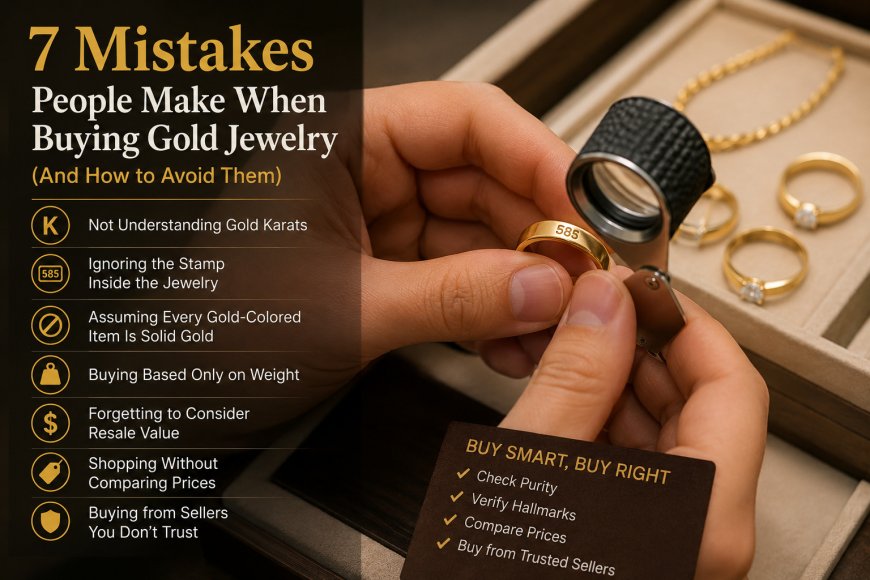
7 Mistakes People Make When Buying Gold Jewelry (And How to Avoid Them)
Gold jewelry is one of the few things people buy for both emotional and financial reasons. A ring may celebrate a wedding, a necklace might become a family heirloom, and a bracelet could be purchased as an investment. Yet many buyers focus only on the design and price, overlooking details that determine whether they're actually getting good value.
The truth is that two pieces of jewelry can look almost identical while having very different gold content and resale value. Understanding a few basics before making a purchase can save you from expensive mistakes later. Here are seven common mistakes buyers make and the simple ways to avoid them.
1. Not Understanding Gold Karats
One of the biggest mistakes is assuming all gold jewelry contains the same amount of gold. In reality, the karat tells you exactly how much pure gold is in the piece. A 24K item is almost pure gold, while 18K, 14K, and 10K contain different amounts of gold mixed with other metals for added strength.
Many first-time buyers choose jewelry based only on appearance without considering purity. Learning how different karats affect durability, color, and value helps you make a much smarter decision. If you're unsure which purity is right for you, this detailed gold karat guide explains the differences between 10K, 14K, 18K, 22K, and 24K before you buy.
2. Ignoring the Stamp Inside the Jewelry
Small numbers stamped inside a ring or near a necklace clasp are often overlooked, but they tell an important story. Marks such as 585, 750, 916, or 999 indicate the purity of the gold and are recognized in many countries.
Some buyers mistake these numbers for serial numbers or manufacturer codes, which can lead to confusion. For example, a 585 gold meaning refers to 58.5% pure gold, which is the same purity as 14K gold. Understanding these markings makes it much easier to compare different pieces and know exactly what you're paying for.
3. Assuming Every Gold-Colored Item Is Solid Gold
Not everything that shines like gold is actually solid gold. Many pieces are gold-plated, gold-filled, or made from base metals with a thin layer of gold on the surface. These items may look attractive, but their resale value is usually much lower than solid gold jewelry.
Before spending your money, always check for proper hallmarks, ask the seller about the material, and inspect the jewelry carefully. If you still have doubts, learning how to tell if gold is real using simple identification methods can help you avoid buying imitation jewelry.
4. Buying Based Only on Weight
Heavier jewelry often feels more valuable, but weight alone doesn't determine how much a piece is worth. Purity plays an equally important role. A lighter 18K ring may contain more valuable gold than a much heavier 10K bracelet.
Instead of focusing only on size or appearance, consider the combination of weight, purity, craftsmanship, and the current market price of gold. Looking at all these factors together gives you a far better idea of the jewelry's real value than weight alone.
What's Your Reaction?
 Like
0
Like
0
 Dislike
0
Dislike
0
 Love
0
Love
0
 Funny
0
Funny
0
 Angry
0
Angry
0
 Sad
0
Sad
0
 Wow
0
Wow
0