


















How Sludge Dewatering Supports Cleaner Water
Learn how sludge dewatering systems reduce wastewater volume, lower handling costs, improve treatment efficiency, and support cleaner, safer water management.

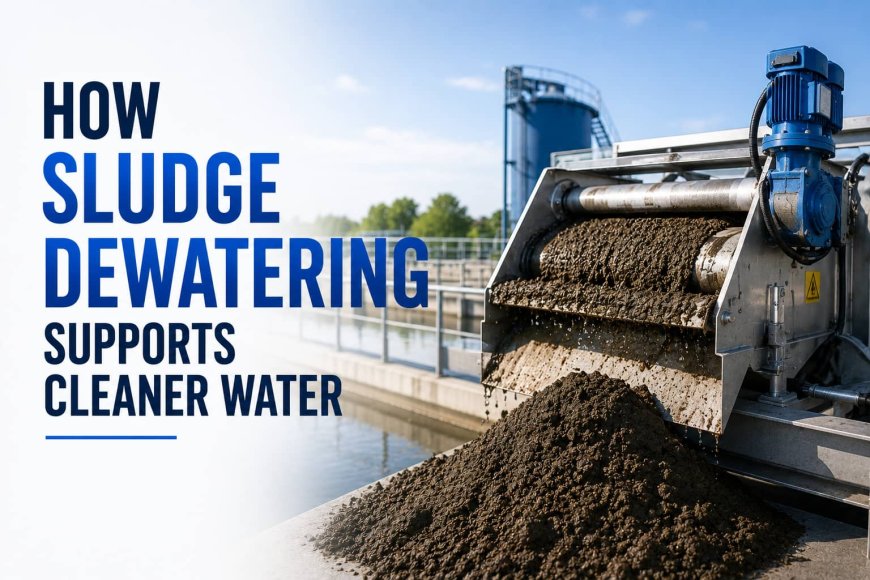
Wastewater treatment produces sludge that must be managed safely before disposal, reuse, or further processing. Sludge contains water, organic matter, solids, and other residual materials separated during municipal and industrial treatment. Dewatering systems reduce the water content of this sludge, lowering its volume and weight. This makes handling, transport, storage, and downstream treatment more efficient for utilities, industries, and environmental service providers.
A published study by MarkNtel Advisors reports that the global sludge dewatering system industry was valued at USD 5.66 billion in 2025. It is projected to reach USD 10.05 billion by 2032, recording a CAGR of around 8.38% during the forecast period. The study identifies rising wastewater treatment requirements and stricter environmental compliance as major factors shaping demand.
Wastewater Growth Increases Sludge Volumes
Urbanisation, industrial activity, population growth, and expanding sanitation coverage are increasing the volume of wastewater treated worldwide. As treatment capacity rises, the amount of sludge generated also increases. Municipal wastewater plants, food processing units, chemical facilities, pulp and paper operations, refineries, textile units, and mining sites all require reliable systems for separating solids from liquid waste streams.
Sludge dewatering helps treatment plants reduce the burden created by high-moisture sludge. A drier sludge cake is easier to move, less expensive to transport, and more suitable for landfilling, incineration, composting, digestion, or other processing routes. Without effective dewatering, treatment facilities may face higher operating costs, larger storage requirements, and greater logistical complexity.
Municipal Facilities Drive Equipment Use
Municipal wastewater treatment plants are among the largest users of sludge dewatering equipment. These facilities process sewage from households, businesses, institutions, and public infrastructure. After primary and secondary treatment, residual solids must be thickened, stabilised, and dewatered before final management.
The U.S. Environmental Protection Agency explains that sewage sludge and biosolids can be managed through land application, landfilling, or incineration, depending on treatment quality and regulatory requirements. Dewatering is important across these pathways because moisture reduction affects transport cost, material stability, and disposal efficiency.
Municipal operators usually evaluate equipment based on throughput, polymer use, energy consumption, maintenance needs, footprint, odour control, and cake dryness. Since wastewater plants operate continuously, reliability and service support are critical. Equipment failure can disrupt sludge handling and create operational pressure across the entire treatment process.
Centrifuges Support High-Volume Processing
Centrifuges are widely used because they can process large sludge volumes within a compact footprint. These systems use rapid rotation to separate solids from liquids through centrifugal force. The EPA describes centrifuge thickening and dewatering as a high-speed process that separates solids and water inside a rotating cylindrical bowl.
Centrifuges are suitable for plants that require continuous operation, automated control, and efficient space use. However, they can consume significant energy and may require skilled maintenance. Operators must manage feed consistency, polymer dosing, bowl speed, wear protection, and vibration control to achieve stable performance.
Other technologies, including belt filter presses, screw presses, plate and frame presses, and drying beds, remain relevant depending on sludge type, site layout, budget, labour availability, and desired solids concentration. No single system fits every facility, making application-specific selection important.
Industrial Wastewater Adds Complexity
Industrial sludge can vary significantly depending on the production process. Food and beverage plants may produce organic-rich sludge, while chemical, metal, textile, and mining operations may generate sludge with different solids, contaminants, or pH levels. This variation affects dewatering performance and equipment selection.
Industries must also comply with discharge limits, waste-handling rules, and internal sustainability targets. Effective dewatering can reduce waste volume, improve process efficiency, and support safer residual management. In some cases, recovered water may be reused within operations after appropriate treatment, helping reduce freshwater withdrawal.
Industrial users often prefer systems that are compact, automated, and adaptable to changing sludge characteristics. Equipment suppliers that provide testing, pilot trials, chemical optimisation, and after-sales maintenance can help facilities select the right technology and avoid performance issues after installation.
Cost Reduction Remains a Strong Driver
Sludge handling can represent a major portion of wastewater treatment operating expenses. High water content increases hauling weight, storage space, landfill fees, and fuel consumption. Dewatering reduces these costs by producing a more concentrated sludge cake and separating liquid that can be returned to the treatment process.
Efficiency depends on the balance between cake dryness, chemical use, energy consumption, labour, and maintenance. A system that produces drier sludge but consumes excessive chemicals or power may not deliver the best overall economics. Operators increasingly assess lifecycle cost rather than equipment price alone.
Automation is improving this calculation. Sensors, flow meters, torque monitoring, polymer-control systems, and digital dashboards can help operators adjust equipment in real time. Better control reduces chemical waste, stabilises output quality, and supports more predictable operating costs.
Sustainability Shapes Sludge Management
Sludge is no longer viewed only as waste. In many locations, treated biosolids may be reused in agriculture, composting, soil improvement, or energy recovery when quality standards are met. However, reuse requires careful treatment, testing, and regulatory oversight because contaminants can create environmental and public-health concerns.
Recent attention to pollutants such as PFAS has increased scrutiny of biosolids management. Reuters reported that the U.S. EPA warned about health risks from sewage sludge used as fertilizer due to certain persistent chemicals. This reinforces the need for responsible treatment, testing, and final-use decisions.
Dewatering does not remove all contaminants, but it is an important step within broader sludge treatment. It supports stabilisation, reduces moisture, and prepares sludge for digestion, drying, thermal processing, landfill disposal, or regulated reuse.
Outlook for Sludge Dewatering Systems
Demand for sludge dewatering systems is expected to remain supported by wastewater infrastructure expansion, industrial compliance, urban sanitation needs, and rising focus on resource-efficient waste management. Municipal utilities will continue to represent a major customer group, while industrial facilities will require specialised solutions for complex sludge streams.
Future development will depend on lower energy use, improved automation, compact equipment design, reduced chemical consumption, and stronger integration with circular-economy pathways. Systems that help operators reduce volume, control costs, and manage sludge responsibly will remain central to modern wastewater treatment operations.
What's Your Reaction?
 Like
0
Like
0
 Dislike
0
Dislike
0
 Love
0
Love
0
 Funny
0
Funny
0
 Angry
0
Angry
0
 Sad
0
Sad
0
 Wow
0
Wow
0