
















The Role of Rat Deterrents in Commercial Pest Prevention
A rat deterrent strategy is something different: it's about controlling the conditions that allow rodent populations to establish themselves in the first place.

A Problem That Doesn't Announce Itself
Rats don't send a warning before they arrive. By the time gnaw marks appear on a storage crate, or droppings show up near a loading dock, or a staff member spots something dart behind a shelving unit — the infestation is already established. Already costing money. Already posing risk.
In commercial environments, that reality is what makes prevention so much more valuable than response. A food distribution warehouse, a restaurant group, a pharmaceutical facility — any operation where hygiene, inventory integrity, and regulatory compliance matter can't afford to treat rodent pressure as something to address after it becomes visible. The costs of reactive control — product loss, remediation, reputation damage, potential closure — dwarf the investment in a properly structured prevention program.
And at the center of any credible prevention program is a layered strategy built around one core principle: make the environment as unwelcoming to rats as possible, consistently, before any population takes hold.
Why Deterrence Is the Right Frame
The word "deterrence" is chosen carefully here. Not elimination. Not extermination. Deterrence — the sustained effort to make a facility structurally, environmentally, and sensory unappealing to rodents seeking harborage, food, and water.
Elimination is reactive. A rat deterrent strategy is something different: it's about controlling the conditions that allow rodent populations to establish themselves in the first place. This distinction matters enormously in commercial pest management, where the goal isn't to win a single battle but to maintain a long-term upper hand.
A good deterrence program has multiple components — structural exclusion, sanitation discipline, environmental modification, monitoring, and targeted intervention. Leaning on any single one of those to carry the whole program is where most commercial operations go wrong.

Structural Exclusion: The Foundation
Rats can compress their bodies through gaps as small as half an inch. Brown rats — the most common commercial pest species — are also capable swimmers, diggers, and climbers. A building that looks secure to a human eye is frequently not secure to a rat.
Effective exclusion starts with an honest structural audit. Every gap around plumbing penetration, every worn door seal, every crack in a foundation wall is a potential entry point. Steel wool and expanding foam work for temporary repairs. Permanent fixes require proper materials — galvanized steel mesh, rigid exclusion plates, door sweeps with minimal clearance.
Drains deserve special attention. Floor drains in commercial kitchens and food processing environments are a commonly overlooked entry vector. Drain covers with appropriate mesh sizing, checked regularly for damage, are a non-negotiable element of any serious program.
Exclusion is unglamorous work. It requires sustained attention and regular re-inspection as buildings age and settle. But without it, every other deterrent strategy is operating with a fundamental hole in the perimeter.
Environmental and Sensory Deterrents
Beyond physical exclusion, a range of environmental strategies can make a facility actively hostile to rodent activity.
Ultrasonic devices generate high-frequency sound waves in a range that causes discomfort to rodents. Results from these units are genuinely mixed — rats habituate to consistent stimuli over time, which is a well-documented phenomenon in pest biology. Used as a primary deterrent, ultrasonics tend to disappoint. Used as one layer within a broader program, they can add some marginal pressure in specific zones.
Scent-based deterrents — products using predator urine compounds, capsaicin derivatives, or certain plant-based repellents — follow similar logic. They can disrupt activity patterns in targeted areas, particularly useful around perimeter zones or entry points. Again, the key word is "layer." No single sensory deterrent has demonstrated reliable standalone performance in commercial settings.
Habitat modification is more consistently effective. Eliminating harborage — dense vegetation close to building perimeters, stacked materials on the ground, debris accumulation in low-traffic areas — removes the protected nesting sites that allow rat populations to grow undetected. A clean, well-lit, clutter-free perimeter creates exposure risk for rodents that they're behaviourally conditioned to avoid.
Monitoring: The Intelligence Layer
Even in well-managed facilities, rodent pressure fluctuates. Seasonal population spikes, nearby construction disrupting established territories, changes in neighboring properties — any of these can increase the pressure on a commercial site regardless of how good its baseline deterrence program is.
Monitoring exists to detect these shifts early. Tracking stations, bait stations in non-ingestion mode, glue boards in strategic internal locations — these tools produce the data that allows a pest management team to escalate intervention before a problem becomes an infestation. The catch data matters less as a count and more as a trend. A sudden spike in activity at a specific location is worth investigating immediately. A stable baseline that holds week over week indicates the program is working.
When Intervention Becomes Necessary
Deterrence frameworks don't eliminate the need for active control tools — they reduce how often and how intensively those tools need to be deployed. When intervention is required, precision matters.
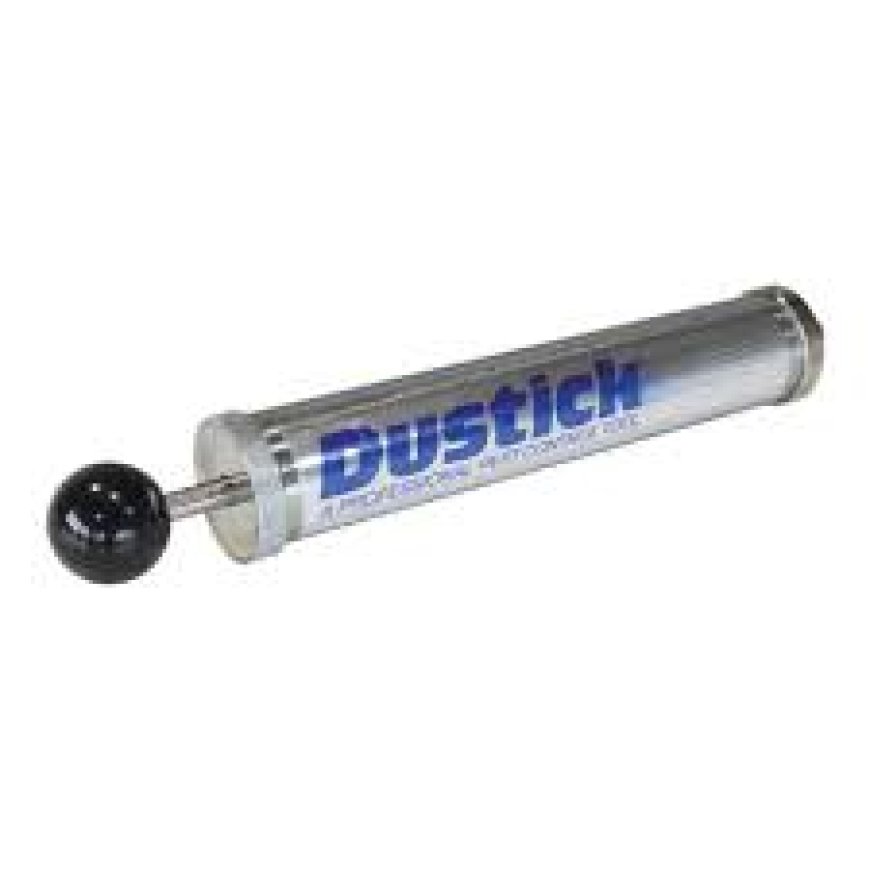
This is where application methodology becomes genuinely important. Rodenticide dust formulations, for instance, require careful handling and precise delivery into burrow systems, wall voids, or harborage areas where bait station placement isn't practical. Dust applicators — bellows-style or motorized hand tools designed for targeted powder delivery — are the right equipment for this application. They allow pest professionals to reach inaccessible areas without unnecessary environmental dispersal, maintaining both efficacy and regulatory compliance. Using the wrong tool here doesn't just reduce effectiveness — it creates liability.
Lockable, tamper-resistant bait stations remain the standard for perimeter rodenticide deployment in commercial settings. Placement follows the same logic as monitoring: along walls, near entry points, in low-traffic zones where rat activity is most likely. Documentation of station placement, inspection dates, and catch or consumption data is essential — both for program management and for regulatory audit purposes.

The Human Factor
All of this — exclusion, environmental modification, monitoring, targeted intervention — is only as effective as the people implementing it.
Staff training is an underappreciated component of commercial rodent prevention. A delivery driver who leaves a loading bay door open for twenty minutes because it's more convenient, or a kitchen worker who doesn't report a gnaw mark because it seems minor — these human behaviours create gaps that the most sophisticated deterrence program can't fully compensate for.
Building pest awareness into onboarding processes, establishing clear reporting protocols, and making it genuinely easy for staff to flag concerns without embarrassment — these cultural elements matter. In facilities where pest prevention is treated as a shared operational responsibility rather than something the pest contractor handles during quarterly visits, outcomes are measurably better.
The Longer View
Commercial rodent prevention isn't a problem that gets solved and stays solved. It requires ongoing investment, regular program review, and a willingness to adapt as conditions change. The facilities that manage it best tend to have one thing in common: they treat it as an operational discipline, not a crisis response mechanism.
A rat that never establishes in a facility is a rat that never costs anything. That calculation, simple as it sounds, is the entire argument for deterrence-first pest prevention.
The work is quiet, incremental, and largely invisible when it's going well. That's exactly how it should be.
What's Your Reaction?
 Like
0
Like
0
 Dislike
0
Dislike
0
 Love
0
Love
0
 Funny
0
Funny
0
 Angry
0
Angry
0
 Sad
0
Sad
0
 Wow
0
Wow
0