















What Is a PCB Conveyor? Understanding Its Role in SMT Production Lines
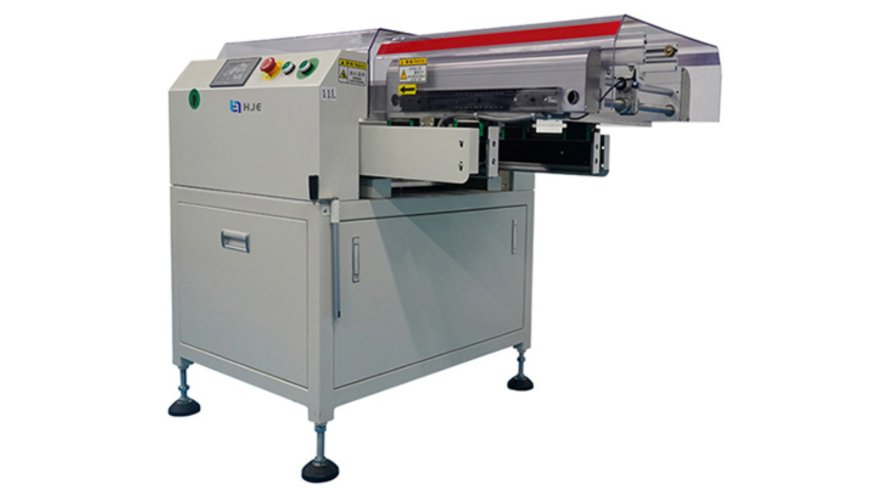
What is a PCB conveyor, and why does it quietly control the success of an entire SMT production line? It is the mechanical backbone that moves every circuit board from one process station to the next, without a single scratch, tilt, or delay. Delve into this blog to understand the what and how of PCB conveyors!
An SMT line can have a world-class solder paste printer and a flawless AOI inspection machine, but if the board handling between them is unreliable, the whole line suffers.
While most people focus on machines like pick-and-place systems or reflow ovens, the conveyor rarely gets the credit, yet it is the one system touching every single board, every single time.
In this guide, we will break down exactly what a PCB conveyor is, how it functions inside a modern SMT line, and why choosing the right one directly affects your yield, uptime, and product quality.
What Is a PCB Conveyor and How Does It Work?
A PCB conveyor is a precision transport system designed to carry printed circuit boards through each stage of the SMT assembly process.
It moves boards from the loader, through the solder paste printer, past inspection stations, through component placement, and finally into the reflow oven.
What’s important here is that this movement has to occur at a consistent speed, with precise positioning and almost zero vibration.
Even a slight misalignment at the conveyor stage can throw off the solder paste printer's registration or confuse an AOI inspection machine's optical reference points.
Most PCB conveyors use edge belts, mesh belts, or pin chains to support the board, and many include width adjustment systems to handle different board sizes on the same line.
Core Functions of a PCB Conveyor in an SMT Line
- Transports boards smoothly between machines without manual handling
- Maintains consistent board height and orientation for downstream equipment
- Buffers boards temporarily when one station runs slower than another
- Reduces the risk of static damage and physical stress on components
- Synchronizes line speed so every machine works in rhythm
Why the Role of a PCB Conveyor Matters More Than People Think
Take, for example: If your solder paste printer applies a perfect print but the conveyor delivers the board late or at an off-angle, that precision is wasted.
The same goes for your solder paste inspection machine, which depends on the board arriving flat and properly seated to measure paste height and volume accurately.
Professional insight worth noting: many manufacturers experience defect spikes that they trace back to the printer or the AOI, when the real root cause is worn conveyor belts or poor tracking alignment.
A conveyor operating even a few millimeters out of calibration can create a ripple effect across every inspection point on the line.
PCB Conveyor Types Compared

A Quick Checklist to Evaluate Your Current PCB Conveyor Setup
- Does it maintain a repeatable width setting across different board sizes
- Is belt tension checked and adjusted on a regular maintenance schedule
- Does it integrate cleanly with your solder paste printer's feeding requirements
- Is it synchronized properly with your AOI inspection machine's cycle time
- Can it handle your required throughput without becoming the line bottleneck
Conclusion
So, what is a PCB conveyor at its core? It is the connective system that determines whether your solder paste printer, solder paste inspection machine, and AOI inspection machine can perform to their full potential.
A line is only as strong as its weakest handling point, and that point is very often the conveyor.
At HJE Tech India, we do not just sell individual machines.
We provide complete SMT and THT production line solutions, including PCB handling and conveyor systems, solder paste printers, inspection equipment, reflow ovens, and full technical support from installation to training.
As the distributor of SZWIT board handling and traceability equipment, we understand exactly how conveyor precision affects every station downstream.
If your production line is struggling with inconsistent yields, unexplained defects, or bottlenecks between stations, the PCB conveyor is the first place worth examining.
Reach out to our team by visiting our website, and let our engineers assess your current setup and recommend the right combination of handling, printing, and inspection for your factory.
Visit our website today!
Disclaimer: This content is for informational purposes only and is written by a professional content writer. Contact us to learn more about PCB Conveyors.
What's Your Reaction?
 Like
0
Like
0
 Dislike
0
Dislike
0
 Love
0
Love
0
 Funny
0
Funny
0
 Angry
0
Angry
0
 Sad
0
Sad
0
 Wow
0
Wow
0