
















Hair Transplant Cost in Riyadh vs Hair Restoration Alternatives
Hair Transplant Cost in Riyadh vs Hair Restoration Alternatives

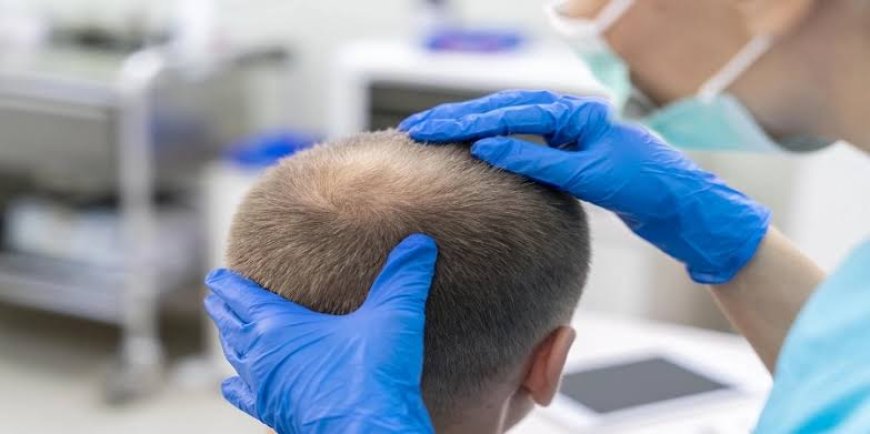
Hair Transplant Cost in Riyadh vs. Hair Restoration Alternatives: A Comprehensive Comparison
Experiencing hair loss or a receding hairline can significantly impact personal confidence, professional presentation, and everyday self-image. For residents and medical tourists in Saudi Arabia's capital, Riyadh has established itself as a premier destination for advanced dermatological care, aesthetic surgery, and trichology. Featuring state-of-the-art medical facilities, elite trichologists, and stringent regulatory standards, the city offers world-class solutions for individuals seeking to combat pattern baldness. Hair transplant cost in Riyadh depends on factors such as the technique used, the number of grafts required, the surgeon's experience, and the overall treatment plan, making a personalized consultation essential for an accurate estimate.
However, committing to a surgical procedure is only one pathway among many. Prospective patients frequently weigh the upfront financial investment and permanence of a surgical hair transplant against a wide array of non-surgical hair restoration alternatives. Understanding the cost dynamics, effectiveness, and long-term value of each option is crucial for making an informed choice.
Generally, the cost of a surgical hair transplant in Riyadh ranges from 7,000 SAR to 30,000+ SAR (approximately $1,850 to $8,000+ USD), depending heavily on graft counts, surgical techniques, and clinic prestige. This comprehensive guide compares surgical hair restoration in Riyadh against alternative treatments, examining their respective costs, mechanisms, and long-term financial impacts.
1. Surgical Hair Transplants in Riyadh: The Permanent Solution
A surgical hair transplant—predominantly performed using Follicular Unit Extraction (FUE) or Direct Hair Implantation (DHI)—is the only medical method capable of permanently restoring hair to balding or thinning zones.
Cost Structure in Riyadh
-
Standard FUE (8,000 SAR to 25,000 SAR): Utilizes micro-punches to harvest DHT-resistant hair follicles from the back and sides of the scalp, implanting them into recipient areas.
-
Advanced DHI (10,000 SAR to 30,000+ SAR): Employs specialized Choi implanter pens for precise angle control and higher density packing without pre-made channel incisions.
-
Mega-Sessions (35,000 SAR to 60,000+ SAR): Designed for advanced Norwood stages requiring 4,000+ grafts for extensive crown and frontal coverage.
How It Works and Longevity
Surgeons extract genetically permanent hair follicles and transplant them into thinning areas. Once these grafts establish a permanent blood supply and survive the initial shedding phase, they grow naturally for a lifetime. You can wash, cut, and style your restored hair just like natural growth. While the upfront capital investment is notable, it functions as a one-time expenditure.
2. Non-Surgical Hair Restoration Alternatives
For individuals in the early stages of hair loss, those who are not candidates for surgery, or patients seeking to avoid upfront surgical costs, several non-surgical alternatives are widely available in Riyadh.
A. Topical Treatments and Prescription Pharmaceuticals
-
Cost Range: 100 SAR to 300 SAR per month (recurring indefinitely).
-
How It Works: Over-the-counter topical solutions (such as minoxidil) widen blood vessels and improve nutrient delivery to hair follicles, while prescription oral medications (such as finasteride) inhibit the conversion of testosterone into DHT, the hormone responsible for pattern baldness.
-
Limitations: These treatments can successfully slow down or stabilize genetic hair loss and stimulate modest regrowth in native hair, but they require continuous, lifelong use. Discontinuing the medication causes the hair loss process to resume, meaning the cumulative cost over a ten-year span often matches or exceeds a surgical hair transplant.
B. Platelet-Rich Plasma (PRP) Therapy
-
Cost Range: 500 SAR to 1,500 SAR per session (typically required every 3 to 6 months).
-
How It Works: A clinician draws a small sample of your blood, spins it in a centrifuge to isolate growth factor-rich platelets, and injects the concentrated plasma directly into the scalp to stimulate miniaturized hair follicles and improve healing.
-
Limitations: PRP is excellent for strengthening existing hair and accelerating post-surgical recovery, but it cannot create new hair follicles in completely bald areas. It requires ongoing maintenance sessions to sustain results.
C. Low-Level Laser Therapy (LLLT) and Laser Caps
-
Cost Range: 2,000 SAR to 6,000 SAR for a medical-grade at-home laser helmet or cap (one-time device purchase, supplemented by clinic sessions ranging from 300 SAR to 800 SAR per session).
-
How It Works: LLLT utilizes photobiomodulation to irradiate photons into scalp tissues, stimulating cellular metabolism and micro-circulation within hair follicles.
-
Limitations: While safe and non-invasive, laser therapy offers modest results primarily suited for individuals experiencing early diffuse thinning rather than advanced receding hairlines or bald crowns.
D. Non-Surgical Hair Systems (Wigs, Toupees, and Integration Units)
-
Cost Range: 1,500 SAR to 4,000 SAR for a custom hair system, plus 300 SAR to 800 SAR per month for professional maintenance, adhesive replacements, and styling.
-
How It Works: Modern custom hair systems utilize breathable skin-like bases and human hair matched precisely to your texture and color, bonded or taped securely to the scalp.
-
Limitations: Hair systems provide an instant, dramatic aesthetic transformation without surgery. However, they require constant maintenance, regular salon visits, and full unit replacements every 6 to 12 months, making them the most expensive option over a long-term horizon.
3. Cost-Benefit Analysis: Surgery vs. Alternatives Over Time
When evaluating whether to invest in a hair transplant in Riyadh or commit to long-term alternatives, analyzing the financial trajectory over a ten-year period clarifies the value proposition:
-
The Cumulative Cost Trap of Alternatives: Spending 200 SAR monthly on pharmaceuticals, 1,000 SAR quarterly on PRP sessions, or 500 SAR monthly on hair system maintenance accumulates heavily. Over ten years, recurring alternative treatments can easily surpass 25,000 SAR to 50,000 SAR, without ever curing the underlying issue.
-
The Value of Permanence: A surgical hair transplant ranging from 8,000 SAR to 25,000 SAR requires an upfront financial commitment, but its permanent biological nature eliminates the need for endless monthly maintenance bills.
4. Combining Strategies for Optimal Results
It is important to note that surgical and non-surgical treatments do not have to be mutually exclusive. Many elite trichology clinics in Riyadh recommend an integrated approach:
-
Undergoing an FUE or DHI hair transplant to permanently restore density to the hairline and frontal zones.
-
Utilizing pharmaceuticals (minoxidil or finasteride) or PRP therapy to protect and stabilize native, non-transplanted hair from future genetic thinning.
This hybrid strategy leverages the permanent structural fix of surgery while maintaining overall scalp health through non-surgical support.
Conclusion
Choosing between a surgical hair transplant in Riyadh and non-surgical hair restoration alternatives depends on your budget, the extent of your hair loss, and your personal lifestyle preferences. While non-surgical options offer lower entry costs and work well for early-stage thinning, their recurring monthly expenses accumulate significantly over time. Conversely, a surgical hair transplant ranging from 7,000 SAR to 30,000+ SAR delivers a permanent, one-time investment that restores natural growth for life. By understanding these financial and biological realities, you can select the ideal pathway to achieve lasting confidence and aesthetic satisfaction.
What's Your Reaction?
 Like
0
Like
0
 Dislike
0
Dislike
0
 Love
0
Love
0
 Funny
0
Funny
0
 Angry
0
Angry
0
 Sad
0
Sad
0
 Wow
0
Wow
0