



















How Employee State Insurance and GST Deductions Affect Your Take Home Pay
Employee State Insurance

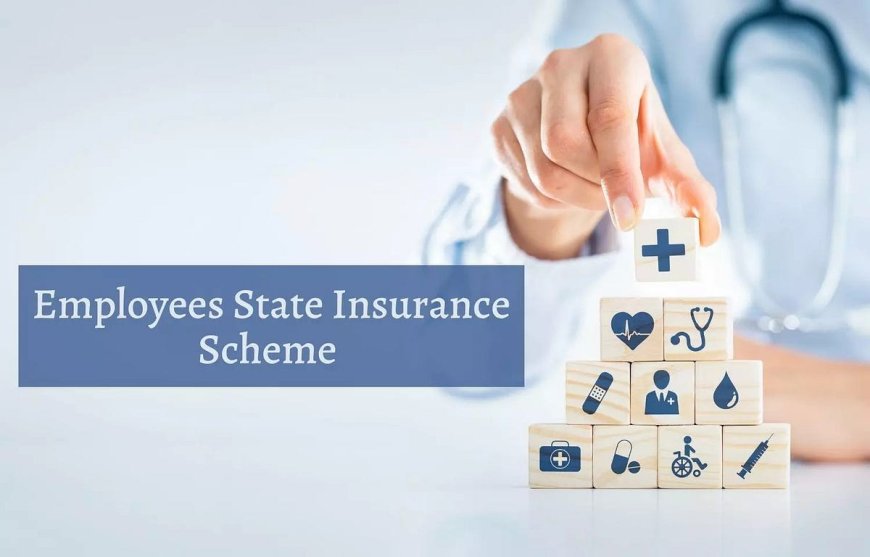
For salaried employees covered under the Employee State Insurance scheme, understanding how ESI contributions affect take-home pay is an important part of managing personal finances. Separately, GST on health insurance premiums affects the real cost of personal health coverage for employees who purchase individual policies independently. Together, these two provisions shape a significant part of the health-related financial picture for India's organised sector workforce and understanding both clearly helps employees make better decisions about supplementary health coverage, tax planning, and personal financial management.
ESI Contributions: How They Are Calculated
The Employee State Insurance scheme applies to employees earning gross wages up to Rs 21,000 per month working in covered establishments. The contribution structure divides the ESI premium between employer and employee. The employee's contribution is 0.75 percent of gross wages, while the employer contributes 3.25 percent. For an employee earning Rs 18,000 per month, this means an employee contribution of Rs 135 per month (Rs 1,620 per year), with the employer contributing Rs 585 per month. This contribution is deducted directly from gross wages and does not affect the basic salary structure it appears as a separate line item on the salary slip, reducing net take-home pay by the employee contribution amount.
What ESI Provides in Exchange for These Contributions
The ESI contributions, though modest, access a comprehensive range of benefits. Medical treatment for the insured employee and their dependents at ESIC hospitals and dispensaries is covered without any further cost at point of use. Cash sickness benefit of approximately 70 percent of average daily wages for up to 91 days per year during certified illness reduces the financial impact of health-related work absence. Maternity benefit for female insured employees provides 26 weeks of paid leave at full wages. Disablement benefit and dependents' benefit protect against work-related accidents. For lower-wage employees, the ESI benefits represent significant value relative to the small employee contribution.
GST on Private Health Insurance Premiums
Employees who purchase individual or family health insurance policies outside the ESI framework which is most employees earning above Rs 21,000 per month pay GST at 18 percent on their health insurance premiums. This GST applies to the base premium and to any riders or add-ons. For a policy with a base premium of Rs 22,000, the GST component is Rs 3,960, bringing the total annual premium to Rs 25,960. This GST is not insignificant it represents the equivalent of about 22 days of additional premium compared to a GST-free hypothetical scenario. Understanding the GST component is important for accurate budgeting of health insurance costs.
Section 80D and the Partial Recovery Through Tax Deduction
The income tax deduction available under Section 80D (or the equivalent provision in the Income Tax Act 2025) for health insurance premiums includes the GST component the deductible amount is the total premium paid, not just the base premium. For a policyholder in the 30 percent tax bracket who pays Rs 25,960 in total premium, the 80D deduction (up to the applicable limit) generates a tax saving of approximately Rs 7,788 on the full premium including GST. This partial recovery through the deduction mechanism reduces the effective net cost of the gst health insurance, though the 18 percent GST still represents a real additional cost above what the premium would be without it.
ESI and Private Insurance: Complementary, Not Competing
Employees earning above Rs 21,000 per month fall outside the ESI threshold and must arrange their own health coverage entirely through private health insurance. For those below the threshold who are covered by ESI, private health insurance can serve as a complementary layer ESI covers treatment at ESIC facilities and handles the defined benefit structure of the scheme, while a private policy covers treatment at non-ESIC private hospitals where the employee might prefer to seek care, and provides higher sum insured coverage for events that exceed what ESI's benefit structure addresses. Understanding this complementary relationship prevents the misconception that ESI coverage makes private health insurance redundant.
Planning for Both in the Personal Finance Picture
For employees managing their health-related costs, the practical financial planning points are: understand your ESI contribution as a mandatory payroll deduction that purchases a defined package of benefits rather than as a pure tax; factor the total premium including GST into health insurance budgeting rather than using the pre-tax premium figure; calculate the after-80D net cost of private health insurance premiums to understand the real annual outlay; and if earning above the ESI threshold, ensure that the private health insurance coverage is sized appropriately for real healthcare cost exposure rather than assuming employer cover alone is adequate.
Conclusion
ESI contributions affect take-home pay in a straightforward and predictable way for covered employees, purchasing access to a valuable range of social security benefits. GST on health insurance premiums represents a real additional cost to private coverage that should be factored into budgeting and is partially recoverable through 80D deductions for eligible taxpayers. Understanding both provisions clearly and how they interact with private health insurance planning allows salaried employees to make more informed decisions about their total health coverage structure and its true annual cost. Bajaj Finance supports this decision-making process with comprehensive health insurance solutions, reliable tax planning tools, and expert financial guidance helping salaried employees build a complete, cost-efficient health coverage structure that maximises both protection and tax savings.
What's Your Reaction?
 Like
0
Like
0
 Dislike
0
Dislike
0
 Love
0
Love
0
 Funny
0
Funny
0
 Angry
0
Angry
0
 Sad
0
Sad
0
 Wow
0
Wow
0