















How TGA Instruments Improve Material Characterization Accuracy
Discover how TGA instruments improve material characterization accuracy by analyzing thermal stability, composition, moisture content, and decomposition behavior across research and industrial applications.

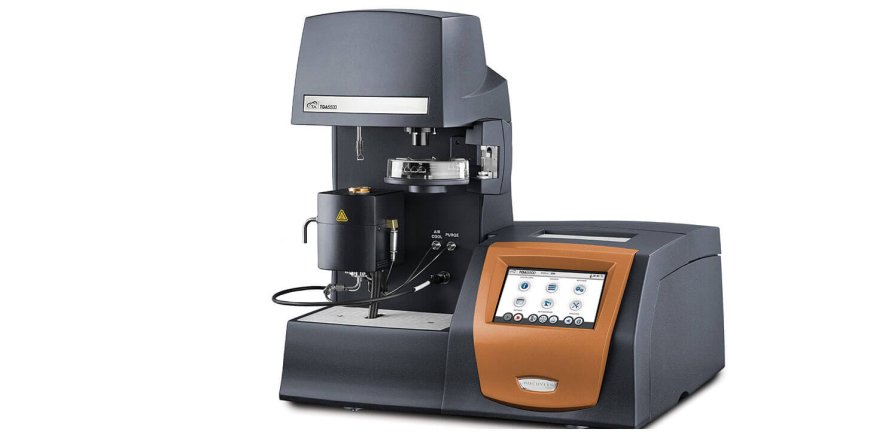
Material characterization plays a crucial role in research, product development, quality assurance, and industrial manufacturing. Understanding how materials behave under different thermal conditions helps manufacturers produce reliable, durable, and high-performance products. One of the most effective techniques for evaluating thermal properties is Thermogravimetric Analysis (TGA).
TGA instruments provide precise measurements of changes in a material's weight as it is heated, cooled, or maintained at a constant temperature. These measurements reveal valuable insights into thermal stability, composition, moisture content, decomposition behavior, and oxidation resistance. As industries increasingly demand higher accuracy in material analysis, TGA instruments have become an essential tool for laboratories, research institutions, and manufacturing facilities.
What is a TGA Instrument?
A Thermogravimetric Analysis (TGA) instrument is an analytical device used to measure the change in mass of a material as a function of temperature or time under a controlled atmosphere.
The instrument continuously records weight changes while the sample undergoes programmed heating or cooling. These weight variations provide valuable information about the physical and chemical properties of the material.
Typical temperature ranges vary from room temperature to over 1000°C, depending on the instrument model.
How Does a TGA Instrument Work?
The working principle of TGA is relatively straightforward but highly precise.
The sample is placed in a small crucible connected to a highly sensitive microbalance. The furnace gradually heats the sample according to a predefined temperature program while the instrument continuously measures even the smallest changes in mass.
The atmosphere inside the furnace can also be controlled using gases such as:
-
Nitrogen
-
Argon
-
Air
-
Oxygen
-
Helium
The instrument generates a thermogram, which plots weight loss against temperature or time, allowing researchers to identify thermal events occurring within the material.
Why Material Characterization Accuracy Matters
Accurate material characterization is essential because it helps organizations:
-
Ensure product quality
-
Improve manufacturing consistency
-
Reduce production defects
-
Meet regulatory requirements
-
Select suitable raw materials
-
Predict product lifespan
-
Enhance research outcomes
-
Optimize production processes
Incorrect thermal analysis can lead to poor product performance, unexpected failures, and increased production costs.
How TGA Instruments Improve Material Characterization Accuracy
1. Precise Measurement of Weight Changes
One of the biggest strengths of TGA instruments is their ability to detect extremely small weight changes during heating.
Modern microbalances can measure mass variations in the microgram range, enabling researchers to identify subtle thermal events that might otherwise go unnoticed.
This precision significantly improves data reliability.
2. Accurate Thermal Stability Analysis
TGA instruments determine how stable a material remains at elevated temperatures.
Researchers can identify:
-
Initial decomposition temperature
-
Maximum operating temperature
-
Thermal degradation behavior
-
Safe processing temperature
This information helps manufacturers develop products capable of performing under demanding thermal conditions.
3. Reliable Moisture Content Determination
Moisture significantly influences material performance.
TGA accurately measures:
-
Surface moisture
-
Absorbed water
-
Bound water
-
Residual solvents
Industries such as pharmaceuticals, food processing, chemicals, and polymers depend on accurate moisture determination to maintain product quality.
4. Identification of Material Composition
Many materials consist of multiple components that decompose at different temperatures.
TGA helps determine:
-
Organic content
-
Inorganic residue
-
Polymer fillers
-
Reinforcement materials
-
Ash content
This detailed compositional analysis improves formulation accuracy.
5. Enhanced Quality Control
Manufacturers rely on TGA for routine quality assurance.
The instrument quickly identifies:
-
Raw material inconsistencies
-
Production variations
-
Contamination
-
Incorrect formulations
This enables manufacturers to maintain consistent product quality across production batches.
6. Controlled Atmosphere Testing
Different materials react differently depending on the surrounding environment.
Modern TGA instruments allow testing under:
-
Inert atmosphere
-
Oxidizing atmosphere
-
Vacuum conditions
-
Reactive gases
This flexibility provides more accurate simulation of real-world operating environments.
7. Better Polymer Characterization
Polymers undergo complex thermal changes during processing.
TGA accurately evaluates:
-
Polymer degradation
-
Filler percentage
-
Plasticizer content
-
Stabilizer effectiveness
-
Carbon black content
This information is critical for manufacturers producing high-performance plastics and composites.
8. Improved Research Accuracy
Research laboratories require highly reproducible data.
TGA instruments offer:
-
Excellent repeatability
-
Automated testing
-
Digital data acquisition
-
Advanced software analysis
These features reduce operator errors while improving experimental accuracy.
9. Oxidation Resistance Evaluation
Materials exposed to high temperatures often undergo oxidation.
TGA helps researchers evaluate:
-
Oxidation onset temperature
-
Oxidation rate
-
Protective coating performance
-
Material lifespan
This is especially important for aerospace, automotive, and energy industries.
10. Residual Material Analysis
After complete decomposition, some materials leave behind inorganic residues.
TGA accurately measures:
-
Ash percentage
-
Metal oxides
-
Ceramic residue
-
Reinforcement particles
Residual analysis provides valuable information for both quality control and research.
Key Components of a TGA Instrument
A modern TGA system typically consists of the following components:
High-Precision Microbalance
Measures minute changes in sample weight throughout the analysis.
Furnace
Provides controlled heating across a wide temperature range.
Temperature Controller
Maintains precise heating rates for reproducible results.
Gas Control System
Allows switching between inert and reactive atmospheres.
Sample Holder
Supports the sample during thermal testing without interfering with measurements.
Analysis Software
Processes thermal data and generates comprehensive reports for interpretation.
Industries That Benefit from TGA Instruments
TGA instruments are widely used across numerous industries.
Pharmaceuticals
-
Drug stability studies
-
Moisture analysis
-
Excipient evaluation
-
Quality assurance
Polymer Industry
-
Polymer degradation analysis
-
Filler determination
-
Additive characterization
-
Material development
Chemical Industry
-
Thermal decomposition studies
-
Catalyst evaluation
-
Composition analysis
-
Process optimization
Electronics
-
PCB material testing
-
Encapsulation material analysis
-
Component reliability studies
Aerospace
-
High-temperature material evaluation
-
Composite characterization
-
Coating performance analysis
Automotive
-
Rubber analysis
-
Plastic component testing
-
Lubricant characterization
-
Composite material evaluation
Ceramics
-
Binder removal analysis
-
Sintering studies
-
Raw material characterization
Energy Sector
-
Battery material testing
-
Fuel characterization
-
Biomass analysis
-
Thermal stability evaluation
Advantages of Using TGA Instruments
Organizations benefit from TGA instruments in several ways:
-
Highly accurate thermal measurements
-
Excellent reproducibility
-
Minimal sample preparation
-
Fast testing process
-
Wide temperature range
-
Controlled testing environments
-
Automated operation
-
High sensitivity
-
Reliable quality control
-
Comprehensive material characterization
Factors to Consider When Choosing a TGA Instrument
Selecting the right TGA instrument depends on your laboratory's requirements. Consider the following factors:
Temperature Range
Choose an instrument capable of covering your application's required temperature range.
Balance Sensitivity
Higher sensitivity enables more accurate detection of small weight changes.
Heating Rate
Flexible heating rates allow analysis of various materials under different conditions.
Atmosphere Control
Look for systems that support multiple gases for diverse testing needs.
Software Features
Advanced software should offer easy data analysis, reporting, and integration with laboratory workflows.
Automation
Automated sample handling and programmable methods improve efficiency and reproducibility.
Service and Technical Support
Reliable after-sales support, calibration, and maintenance services are essential for long-term performance.
Future Trends in TGA Technology
Modern TGA instruments continue to evolve with advanced technologies, including:
-
AI-assisted data interpretation
-
Automated sample changers
-
Higher-resolution microbalances
-
Integrated hyphenated techniques (TGA-FTIR, TGA-MS, TGA-GC/MS)
-
Cloud-based data management
-
Improved software analytics
-
Faster testing workflows
These advancements help laboratories achieve greater efficiency and deeper insights into material behavior.
Conclusion
Thermogravimetric Analysis has become an indispensable technique for accurate material characterization across industries. By precisely measuring weight changes under controlled thermal conditions, TGA instruments provide critical information about thermal stability, composition, moisture content, oxidation resistance, and decomposition behavior.
From research laboratories to industrial quality control, these instruments enable informed decision-making, reduce manufacturing defects, and support the development of innovative materials. As analytical technologies continue to advance, TGA instruments will remain at the forefront of thermal analysis, helping organizations achieve higher accuracy, improved product quality, and greater confidence in their material characterization processes.
What's Your Reaction?
 Like
0
Like
0
 Dislike
0
Dislike
0
 Love
0
Love
0
 Funny
0
Funny
0
 Angry
0
Angry
0
 Sad
0
Sad
0
 Wow
0
Wow
0