





















How Human Microbiome Research Supports Healthcare
Explore how human microbiome research supports healthcare through gut health studies, sequencing technologies, diagnostics, personalized medicine, and microbiome-based therapies.

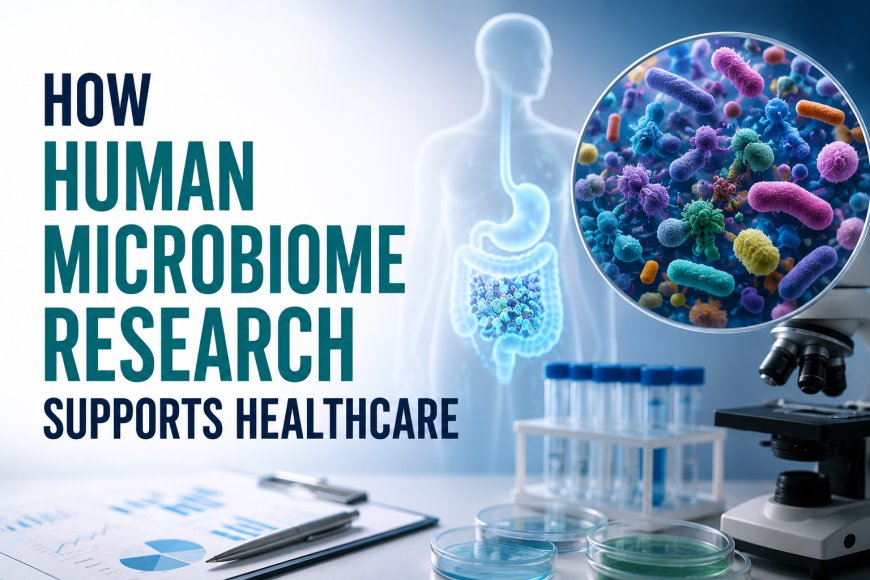
The human microbiome is becoming an important area of healthcare, biotechnology, nutrition, diagnostics, and therapeutic research. It refers to the communities of bacteria, fungi, viruses, and other microorganisms that live in and on the human body. These microbial communities are found in the gut, skin, mouth, respiratory tract, and other body sites, where they interact with digestion, immunity, metabolism, and overall health.
A recent study by MarkNtel Advisors highlights that the global human microbiome industry was valued at approximately USD 1.08 billion in 2025. It is projected to grow from USD 1.94 billion in 2026 to USD 7.09 billion by 2032, registering a CAGR of around 24.11% during the forecast period. This growth reflects rising research activity, microbiome-based diagnostics, therapeutic development, sequencing technologies, and interest in personalized health solutions.
Gut Health Drives Scientific Interest
The gut microbiome is one of the most studied areas because it interacts with digestion, nutrient processing, immune function, and metabolic activity. The NIH Human Microbiome Project developed research resources to study microbial communities in the human body and better understand their roles in health and disease. This foundation has helped expand scientific interest in gut-related conditions, immune response, and microbiome-based interventions.
Consumers and healthcare providers are also paying more attention to digestive health, probiotics, prebiotics, diet quality, and gut-related wellness. However, microbiome science remains complex because each person’s microbial profile can vary based on diet, age, medication, genetics, geography, disease status, and lifestyle. This makes research-based product development and clinical validation important for the sector’s long-term credibility.
Sequencing Technologies Improve Discovery
Advances in genetic sequencing and bioinformatics have made it easier to identify and analyze microorganisms that were previously difficult to study. Researchers can now examine microbial DNA, compare samples, observe changes over time, and study relationships between microbial communities and health outcomes. These tools support microbiome diagnostics, drug discovery, disease research, nutrition studies, and precision medicine development.
The NIH notes that the Human Microbiome Project expanded the scientific toolbox for studying host and microbiome interactions, including research into how microbial communities change during disease. This has encouraged companies and laboratories to invest in testing platforms, analytical software, sample collection systems, and clinically relevant microbiome datasets.
Therapeutics Create New Possibilities
Microbiome-based therapeutics are emerging as a promising field because microbial communities may influence disease pathways, immune balance, and treatment response. Research is exploring live biotherapeutic products, bacterial consortia, fecal microbiota transplantation, targeted probiotics, postbiotics, and microbiome-modulating drugs. These approaches aim to restore or influence microbial balance in carefully defined clinical settings.
Clinical development requires strong evidence because microbiome interventions can affect different people in different ways. Safety, strain selection, dosage, delivery method, durability, and patient selection are all important. The category is therefore moving gradually from general wellness claims toward regulated, disease-specific therapies supported by clinical trials, manufacturing standards, and medical oversight.
Antibiotic Use Highlights Microbiome Balance
Antibiotic exposure is another reason microbiome research is important. Antibiotics can be necessary for treating bacterial infections, but inappropriate or unnecessary use can affect microbial balance and contribute to resistance concerns. The CDC advises that people should use antibiotics only when needed to protect against harms from unnecessary use and help fight antimicrobial resistance.
This issue has increased interest in how the microbiome recovers after treatment and whether supportive interventions can reduce disruption. Researchers are studying how diet, probiotics, microbial therapies, and personalized care may influence recovery. Although many questions remain, microbiome science is helping clinicians and researchers better understand the broader effects of medication on human microbial ecosystems.
Personalized Health Supports Adoption
Personalized health is likely to shape microbiome-related products and services. Since microbial profiles differ widely between individuals, future diagnostics and treatments may use microbiome data alongside genetics, diet, lifestyle, medical history, and immune markers. This could support more targeted recommendations for nutrition, digestive health, metabolic care, skin health, and disease management.
The global human microbiome sector is expected to grow as research matures, sequencing becomes more accessible, and clinically supported applications expand. Future progress will depend on stronger evidence, regulatory clarity, reliable testing methods, data privacy, and responsible communication. As microbiome science moves from research laboratories into healthcare and consumer settings, its value will depend on turning complex microbial data into safe, useful, and evidence-based health solutions.
What's Your Reaction?
 Like
0
Like
0
 Dislike
0
Dislike
0
 Love
0
Love
0
 Funny
0
Funny
0
 Angry
0
Angry
0
 Sad
0
Sad
0
 Wow
0
Wow
0